★ LATEST REVIEWS


Say the word “movies” almost anywhere on Earth and one place answers back: Hollywood. It is a neighbourhood in Los Angeles, a way of making films, and a promise — that a story told with enough craft, scale and feeling can travel anywhere. For more than a century, Hollywood movies have set the grammar the rest of the world speaks: the close-up that tells you what a character is hiding, the final-reel rescue, the star whose face alone can open a film on five continents.
But Hollywood is not one thing. It is a golden-age romance and a gritty seventies crime saga, a cowboy riding into a painted sunset and a superhero falling out of a computer-generated sky. If you have ever felt that this ocean of films is too big to enter, this guide is your map. We will walk through how Hollywood began, how the studio system worked and fell, which genres built its reputation, which directors bent it to their will, and — most importantly — which films to watch first, and why they still matter.
At FlickZada we review films from twenty industries, and Hollywood is the one every other industry measures itself against, argues with, and sometimes beats at its own game. Understanding Hollywood does not just explain American cinema. It explains modern movies, full stop.
Hollywood began as geography. In the early twentieth century, filmmakers fled the grey winters and patent lawyers of the American East Coast for southern California, where the sunlight lasted all year, the landscapes could double for deserts, mountains and jungles within a day’s drive, and land was cheap. A small suburb of Los Angeles filled with studios, and the name of the place slowly became the name of the industry.
By the 1920s, “Hollywood” meant something bigger than a location: a system. Studios signed actors, directors, writers and composers to long contracts, owned the theatres that showed their films, and released a new picture almost every week. A Hollywood movie came to mean a film built for the widest possible audience — clear storytelling, emotional payoffs, production polish, and endings that sent you home satisfied, even when the story itself was tragic.
That system no longer exists in its old form, but the instinct survives. Whether a film comes from a historic major studio or a streaming platform, a “Hollywood movie” still signals a certain scale of ambition and a belief that a story should grip a stranger in any country. It is less a place now than a standard — one that filmmakers from Mumbai to Seoul happily borrow, remix and challenge.
Cinema’s first decades were fast and inventive. Silent films developed a universal visual language, and stars like Charlie Chaplin became the most famous people alive without ever being heard. When sound arrived in the late 1920s, Hollywood reinvented itself almost overnight: dialogue writers were imported from Broadway, musicals exploded, and the industry settled into what we now call its Golden Age.
Through the 1930s and 1940s, the studio system ran like a factory of dreams. Five major studios dominated, each with its own personality — polished glamour here, gritty street stories there, lavish musicals somewhere else. Directors worked at astonishing speed, genres were refined to formulas that still work today, and censorship rules known as the Production Code quietly shaped what could be shown, forcing filmmakers to suggest what they could not say. Constraint bred ingenuity: some of the most romantic, witty and suspenseful films ever made were created by artists working around the rules.
After the Second World War, television arrived, audiences shrank, and court rulings broke the studios’ grip on theatres. The old machine sputtered. Into the gap stepped a generation of young, film-obsessed directors in the late 1960s and 1970s — the New Hollywood. They had grown up watching European art films and Golden Age classics alike, and they wanted both: popular stories told with personal vision.
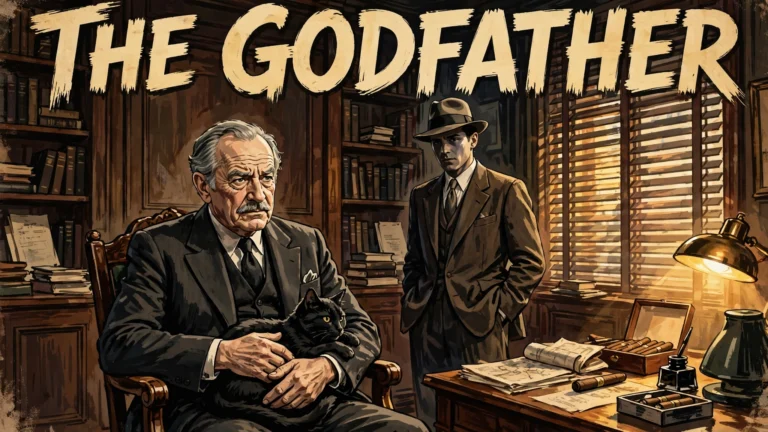
This is the era of morally tangled crime epics, ambiguous endings and antiheroes. It is the era that produced Francis Ford Coppola’s The Godfather, a film so complete in its portrait of family, power and corruption that it still sits at or near the top of almost every serious list of the greatest movies ever made. Martin Scorsese, Steven Spielberg, Brian De Palma and their peers turned the director into the star — a revolution whose effects we still live with, visible decades later in Scorsese’s own The Wolf of Wall Street, where that same restless energy is aimed at American greed.
In the mid-1970s, two films changed the economics of everything. Spielberg’s shark thriller and George Lucas’s space adventure proved a single film could open everywhere at once, sell toys and lunchboxes, and earn sums that made the old studio bosses blush. The blockbuster was born: big-concept, big-budget, engineered for opening weekends and repeat viewings.
The 1980s and 1990s industrialised the formula — action heroes, high-concept comedies, and sequels that printed money. Yet the era’s biggest phenomenon was not an action film at all. James Cameron’s Titanic fused an old-fashioned Golden Age romance with blockbuster spectacle and became a cultural event that crossed every demographic line imaginable. The lesson Hollywood learned — spectacle plus genuine emotion equals phenomenon — is one it has been chasing ever since.
The twenty-first century reorganised Hollywood around franchises: connected universes, sequels planned a decade ahead, and superheroes above all. The Marvel era reached its commercial and emotional peak with Avengers: Endgame, the culmination of a storytelling experiment spread across more than twenty films. Christopher Nolan’s The Dark Knight had already proved a comic-book film could also be a serious crime drama, and the genre’s range keeps widening — from the operatic darkness of Joker to the animated invention of Spider-Man: Across the Spider-Verse, which turned the superhero film into a living comic book and a genuine work of visual art.
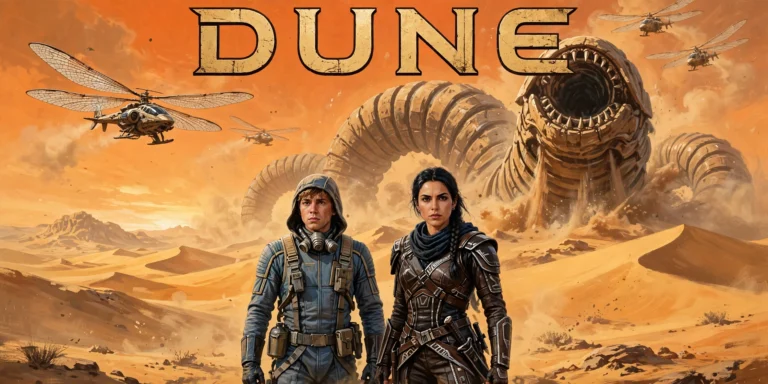
At the same time, streaming platforms redrew the map again, financing personal films the studios would not touch and taking movies straight to living rooms. Directors now move between tentpoles and intimate dramas, sometimes in the same year. When Denis Villeneuve’s Dune: Part Two can fill cinemas with a demanding science-fiction epic while a wordless-feeling character study thrives online, the honest summary is this: Hollywood is more fragmented than ever, and more varied than it has been in decades.
The Golden Age was ruled by the “Big Five” — MGM, Paramount, Warner Bros., 20th Century Fox and RKO — with smaller players like Universal, Columbia and United Artists completing the “Little Three.” Each major ran its lot like a small city, with contract stars, house directors and standing sets. When people picture old Hollywood — the premieres, the studio gates, the moguls — this is the world they mean.
The names on today’s studio gates are mostly familiar, but the companies behind them are new. Disney grew from an animation studio into the industry’s dominant force by acquiring Pixar, Marvel and Lucasfilm. Warner Bros., Paramount and Universal remain major players, while the old Fox library now sits inside Disney. Columbia lives on within Sony. And the newest “studios” have no backlots at all: Netflix, Amazon and Apple commission films the way the majors once did, then premiere them on screens in your pocket.
What survives from the studio era is the idea of the studio as a brand of promise. A certain logo before a film still sets an expectation — of scale, of polish, of a particular flavour of spectacle. The factories became corporations, but the dream assembly line never really stopped; it just changed owners.
Hollywood’s first great modern genre was crime: Prohibition-era gangster pictures, then the shadowy fatalism of film noir in the 1940s. The gangster film never left; it matured. Coppola turned it into Shakespearean tragedy, Scorsese into kinetic memoir, and in 1994 Quentin Tarantino shattered its chronology and rebuilt it as pop art in Pulp Fiction — proof that a genre nearly as old as sound cinema could still feel dangerous and new.
For decades, science fiction was treated as B-movie material. Visionary directors changed that, and today it is Hollywood’s prestige playground. Christopher Nolan’s Inception turned a heist film inside out through layered dreams, while his Interstellar wrapped real relativistic physics around a father-and-daughter story and made audiences weep at the mathematics of time. The genre’s other landmark, The Matrix, fused Hong Kong action choreography, cyberpunk and philosophy into a film that permanently altered how action is staged and shot.
Action is Hollywood’s loudest export, evolving from westerns and war films into the stunt-driven spectacles of today. The genre’s modern gold standard values geography, clarity and real physical risk: the John Wick: Chapter 4 school of choreography treats a fight like a dance number, while Top Gun: Maverick showed that practical flying, real G-forces and a star doing the work can make an old-fashioned blockbuster feel revolutionary again.
For every explosion there is a quiet room where two people talk and everything changes. Hollywood drama — courtroom battles, biopics, family sagas — remains the industry’s claim to seriousness and its engine at awards season. The pinnacle of the form might be Frank Darabont’s The Shawshank Redemption, a prison drama that flopped on release and then, through home video and word of mouth, climbed to the very top of audience rankings worldwide. A generation later, Oppenheimer proved a three-hour talk-driven biographical drama could still be a genuine box-office event.
Hollywood’s lighter genres are its secret infrastructure: comedies that define generations, family films everyone somehow sees, and an animation tradition running from hand-drawn classics to Pixar’s emotional engineering and beyond. Animation in particular has become one of the industry’s most reliable sources of both money and artistry — a space where, as the Spider-Verse films show, the boldest visual experimentation in mainstream cinema is currently happening.
Every era of Hollywood can be told through its directors. Alfred Hitchcock mastered suspense so completely that his name became an adjective. John Ford shaped the western, and with it America’s myth of itself. Orson Welles arrived as a boy wonder and rewrote film grammar before the industry quite knew what to do with him. Billy Wilder moved between noir, romance and comedy without a single weak gear.
The New Hollywood generation — Coppola, Scorsese, Spielberg — turned directors into public figures. Spielberg in particular became the blockbuster’s defining craftsman, able to make mass entertainment feel personal. After them came the video-store generation led by Tarantino, and then the modern architects: Nolan, with his clockwork narratives; Villeneuve, who brought art-film patience to giant canvases; the Coen brothers, unclassifiable and indispensable; and a widening circle that now includes filmmakers like Greta Gerwig and the duo Daniel Kwan and Daniel Scheinert, whose Everything Everywhere All at Once — a multiverse family drama made far from the major-studio system — swept the industry’s top honours and announced that the centre of Hollywood creativity had moved again.
No list ends an argument, but every list can start one. These twenty-five span ninety years of Hollywood — begin anywhere; each is a door into an era, a genre or a director. Where FlickZada has a full review, we link it so you can go deeper.
By decade. Start with the 1970s if you love grit and moral ambiguity, the 1990s for the last golden age of mid-budget variety, and the 1940s when you are ready for noir shadows and dialogue that crackles like static.
By director. Pick one filmmaker — Spielberg, Hitchcock, Kubrick, Scorsese — and watch five of their films in order. Nothing teaches you how Hollywood works faster than watching a single voice evolve inside the machine.
By genre. Choose the door that matches your mood: crime for tension, science fiction for ideas, musicals for joy, westerns for myth. Hollywood spent a century perfecting each room in the house; there is no wrong entrance.
Jaws (1975) is widely credited as the first summer blockbuster: it opened wide, was marketed nationally on television, and turned a film’s opening weeks into an event. Star Wars two years later completed the model by adding merchandising and the sequel-driven franchise.
The name stuck from the industry’s birthplace in Los Angeles, where the major studios were headquartered. Production later spread to other states and countries for tax incentives and locations, but financing, studio headquarters and the industry’s centre of gravity kept the name — “Hollywood” now describes an industry and a style more than a filming location.
Money and distribution muscle. A Hollywood film is financed and released by a major studio or mini-major with wide theatrical or platform reach; an independent film is financed outside that system, usually for less, with more creative freedom and more financial risk. The line blurs constantly — independents get bought by studios, and studio directors make personal films — but budget scale and who controls the final cut remain the practical differences.
There is no official answer, and that is the fun of it. The Godfather and The Shawshank Redemption trade places at the top of audience polls, critics’ lists have crowned everything from Citizen Kane to Vertigo, and Seven Samurai — a Japanese film — regularly outranks them all, which tells you greatness was never a Hollywood monopoly.
Emphatically yes — the delivery changed, not the talent. The same industry that makes franchise tentpoles also produces the year’s boldest dramas, comedies and animated films; you simply have to look past the loudest marketing. That, in the end, is what review sites like ours are for.
Hollywood’s real product was never popcorn or posters. It is a shared dream life — a century of stories so widely loved that strangers on different continents can quote the same lines at each other. The system that produced it has died and been reborn half a dozen times, and each rebirth left classics behind.
So do not be daunted by the size of the catalogue. Pick one film from the list above tonight — any one — and you are already inside the story of Hollywood. When you want company for the journey, our Hollywood reviews are waiting: honest, spoiler-free, and written by people who believe the dream factory, at its best, still earns the name.