★ LATEST REVIEWS

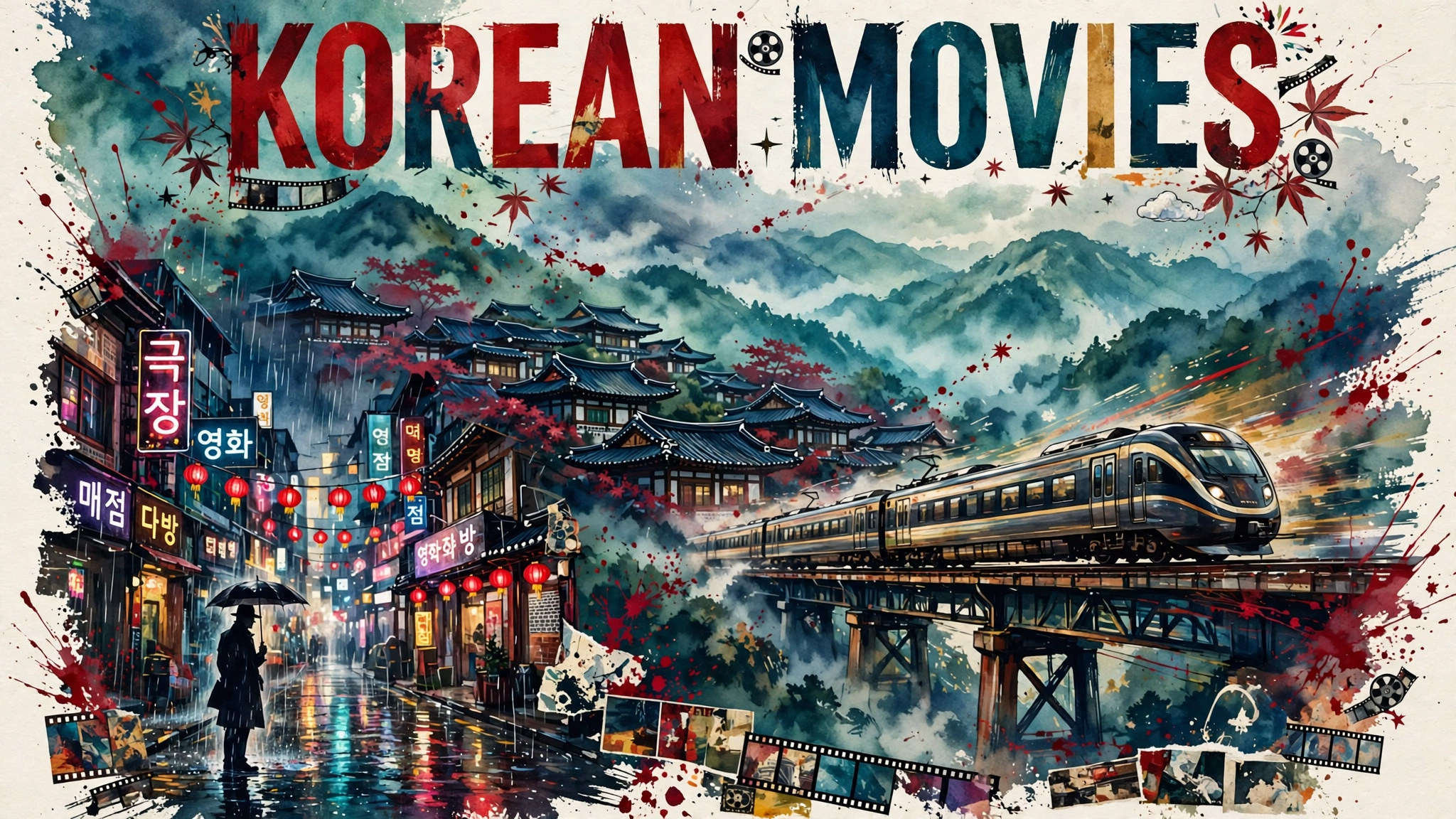
There is a moment every new viewer of Korean cinema remembers: the moment a film refuses to behave. The crime thriller turns into a comedy, then into a tragedy, then into something for which you have no shelf at all — and somehow it is the best thing you have seen all year. That glorious unpredictability is why, over the past quarter-century, Korean movies have gone from festival curiosity to a genuine world-conquering force, crowned when one of them carried off the Academy Award for Best Picture itself. Our Parasite review examines that coronation in detail; this guide is the story of how Korea got there, and the essential films you need to see.
What follows is part history, part map, part argument. We will trace Korean cinema from its suppressed roots through the explosion of the 2000s, meet the directors who rewired world cinema, and sort the masterpieces by what you are in the mood for — revenge, dread, tears, laughter, or all four inside a single film, which in Korea is often the same evening. Every title we recommend is reviewed in full in our Korean Cinema section, so consider this your front door. Walk through it, and an entire national cinema — arguably the most exciting on Earth right now — is yours.
Korean cinema’s modern miracle only makes sense against its history. Film arrived on the peninsula early, but war, division and decades of censorship kept the industry on a leash for most of the twentieth century. Under authoritarian governments, scripts were controlled, themes were policed, and Korean screens were flooded with imports while local production limped along in quota-driven haste. There were giants even then — directors like Kim Ki-young, whose feverish The Housemaid (1960) is now recognised as a classic — but the system was built to contain cinema, not unleash it.
Democratisation in the late 1980s and 1990s changed everything. Censorship loosened, a screen quota protected local films while they found their feet, and a generation of cinephile directors — raised on video stores, film societies and the world’s classics — seized the moment. Crucially, big Korean companies invested seriously in film, new multiplexes multiplied, and audiences rewarded ambition: when the action thriller Shiri (1999) out-drew Hollywood blockbusters at the home box office, the industry understood that Korean stories, told at Korean scale, could win. The stage was set for an explosion that would make “Korean movie” a byword for fearless filmmaking everywhere on the planet.
The detonation came in 2003, a year that still looks impossible. Park Chan-wook released Oldboy, the middle panel of his Vengeance Trilogy: a man imprisoned for fifteen years without explanation, released without warning, and given five days to find his captor. It won the Grand Prix at Cannes, detonated across the world’s arthouses, and remains the single most imitated Korean film ever made — its corridor fight, shot in one unbroken take, is now part of the grammar of action cinema. Our Oldboy review breaks down why, beneath the shocks, it is the film’s sorrow that lasts.
The same year, a young Bong Joon-ho made Memories of Murder, based on Korea’s first widely reported serial murder case. Where Oldboy is operatic, Memories is patient and muddy and quietly furious — about detectives out of their depth, a system failing in slow motion, and a country changing under everyone’s feet. It is frequently named the greatest Korean film ever made, full stop; our Memories of Murder review makes that case in full.
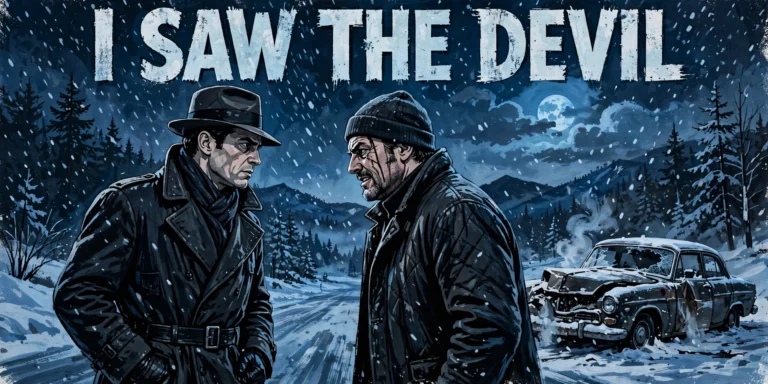
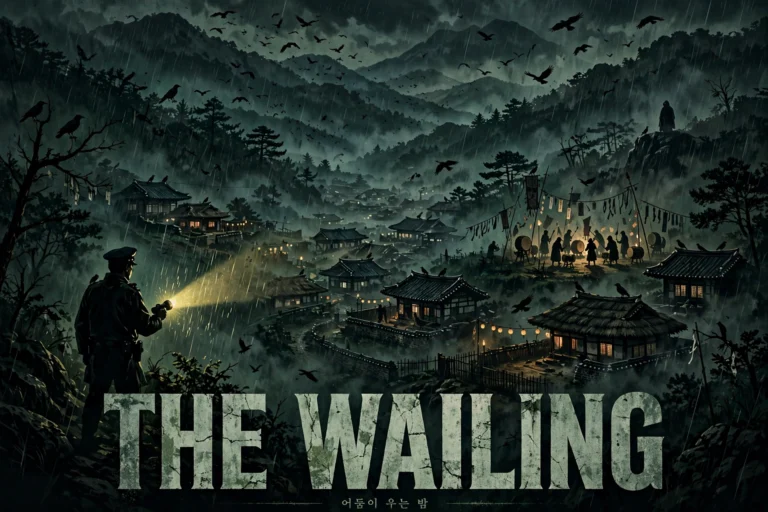
Around them, the new wave kept breaking. Kim Jee-woon bent every genre he touched. Na Hong-jin arrived with The Chaser and later The Wailing, a film that begins as a village police procedural and descends, layer by layer, into spiritual horror of the most unsettling kind — our The Wailing review still carries a warning label. And Kim Ji-woon’s I Saw the Devil pushed the revenge thriller to an extremity that made even hardened viewers look away; our I Saw the Devil review asks what the film is really saying about the men doing the avenging. A pattern was forming: Korean directors were not rejecting genre — they were loading genre with more feeling, more craft and more moral weight than it had ever carried.
Ask world audiences what Korean cinema means and most will say one word: thrillers. Korea turned crime film into high art by refusing to separate tension from emotion. The action is choreographed with unusual care — think of the lean, brutal efficiency of The Man from Nowhere, the “Korean John Wick before John Wick” for many viewers; our The Man from Nowhere review shows how much heart beats under its knife work. Endings, meanwhile, are sacred: Korean thrillers build toward final movements that reframe everything before them, which is why spoiler discipline around them is a genuine act of friendship.
Horror found a second home here too. Korean horror draws on shamanic ritual, folk belief and family dread, and it is rarely only about the scare. Exhuma, a grave-digging occult mystery that became a phenomenon at home, wraps its chills around history itself — our Exhuma review digs into how it works on both levels. And Silenced demonstrated the real-world power this cinema can wield: its dramatisation of abuse at a school for deaf children moved the nation so deeply that it drove legal reform, a reminder that in Korea, films are not background entertainment — they are national events. Our Silenced review tells that extraordinary story.
Even the zombie film got reinvented. Train to Busan took a premise that sounded exhausted — the undead on public transport — and made it a class-conscious, father-daughter tearjerker travelling at full speed. It became a global phenomenon and the gateway Korean film for millions. Our Train to Busan review explains why its simplest trick — caring — is the one nobody else had thought to try.
Above the genres stand the auteurs, and Korean cinema is blessed with a bench of them as strong as any country’s. Park Chan-wook is the stylist: every frame composed like a painting, every act of cruelty shadowed by elegance. His The Handmaiden — a con-artist tale moved from Victorian England to colonial Korea, all hidden panels and double betrayals — may be the most beautiful thriller ever made; our The Handmaiden review is one of the highest-rated in our entire Korean section. Two decades into his career he was still refining the art: Decision to Leave, his detective romance of a married investigator and the widow he should not fall for, is Park at his most restrained and most romantic. Our Decision to Leave review traces how a film of glances and phone screens becomes unbearably tense.
Bong Joon-ho is the entertainer-philosopher: monster movies that are really about families, crime films that are really about inequality, class satire built like a clock. And Lee Chang-dong is the conscience — a former novelist and government minister whose Burning turns a love triangle and a missing girl into one of the most quietly devastating films of its decade. Our Burning review argues that its famous ambiguity is not a trick but the whole point: a generation’s anger with nowhere to go.
What these directors share, beyond virtuosity, is control. Korean auteurs famously oversee every element — script, edit, poster, trailer — and the films feel it: nothing is generic, nothing is filler, and the tonal whiplash that would sink a lesser production becomes, in their hands, the signature of a cinema that trusts its audience completely.
Every conquest has its crowning night, and Korea’s came at the Academy Awards in February 2020, when Parasite — Bong Joon-ho’s razor-edged fable of two families, one rich, one poor, one house with too many secrets — won Best Picture, the first non-English-language film in Oscar history to take the top prize, alongside Best Director and Best Original Screenplay. The image of that evening travelled everywhere: the world’s biggest film industry formally applauding a Korean film, in Korean, with subtitles its director cheerfully defended as a “one-inch barrier” worth crossing.
Parasite did not arrive from nowhere. It was the summit of twenty years of craft, and it worked as a global invitation: millions of viewers who had never tried a Korean film started with it and then went looking for more. They found the door wide open — which is exactly the journey this guide is built for. If you somehow still have not seen it, start there tonight; then come back and let the rest of this list do its work.
Just when it seemed the story was complete, the ground shifted again. Global streaming platforms, hungry for exactly the kind of distinctive, confidently local storytelling Korea specialised in, began financing and distributing Korean films and series at a scale no festival circuit could match. Korean television drama crossed over so completely that a Korean series became the most-watched show on the planet’s biggest platform, and the halo effect poured straight back into cinema: actors, directors and writers now move between film and streaming series without friction, carrying craft in both directions.
The healthiest sign is that the films themselves have not sanded down their edges to travel. The biggest Korean hits of the streaming era are still unmistakably Korean — steeped in local history, ritual, humour and grief. Exhuma, discussed above, is the perfect emblem: a shamanic grave-digging mystery rooted in Korea’s colonial wounds, which became a phenomenon at home and a word-of-mouth success abroad precisely because it refused to explain itself into blandness. Meanwhile the auteurs keep working at full stretch, mid-budget genre films keep finding global audiences overnight, and a new generation of directors — many of them women, many working in horror and independent drama — is rising through a system that now expects international attention as a matter of course. The conquest, in other words, has become self-sustaining: Korean cinema no longer needs the world’s permission, only its screens.
It would be a mistake — a common one — to file Korean cinema under “dark” and leave it there. This is also a cinema of enormous warmth, and its emotional range is part of the conquest. At the popular end stands My Sassy Girl, the romantic comedy whose success across Asia at the turn of the century first proved Korean films could travel on charm alone; our My Sassy Girl review revisits the film that launched a thousand remakes. At the epic end, Along with the Gods: The Two Worlds wraps blockbuster fantasy around judgement, family and forgiveness, and became one of the biggest Korean hits of its era — our Along with the Gods review looks at why its tears are earned, not extracted.
And Korean cinema keeps returning, bravely, to its own history. A Taxi Driver tells the Gwangju Uprising of 1980 through a Seoul cab driver and the German journalist he carries into a city under siege — a film about ordinary decency under extraordinary pressure that became a national touchstone. Our A Taxi Driver review is essential reading alongside it. A cinema that can do Oldboy and A Taxi Driver, The Wailing and My Sassy Girl, is not a genre or a trend. It is a complete film culture, and that is precisely why it conquered the world rather than merely visiting it.
New to Korean cinema? Watch these ten, roughly in this order, and you will understand everything:
Every one of these is reviewed in depth in our Korean Cinema section — ratings, spoiler-free breakdowns and honest verdicts, so you can keep exploring long after the list runs out.
Critics argue between Memories of Murder and Parasite, and honestly, both answers are defensible: the first is the deeper crime masterpiece, the second the more perfect all-round film and the one that won Best Picture at the Oscars. Watch both and join the argument — our reviews of each lay out the case.
Because they combine things other industries keep separate: genre thrills with genuine emotion, technical polish with directorial personality, and stories rooted in Korean life that turn out to speak to everyone. Streaming removed the distribution barrier, and once viewers crossed the subtitle line, the films did the rest.
Not at all. Thrillers built the reputation, but Korea produces beloved romantic comedies, family melodramas, historical epics, fantasy blockbusters and slow art cinema of the highest order. This guide deliberately ranges across all of them — a complete film culture cannot be reduced to one shelf.
With Parasite. It is accessible, entertaining and representative of everything Korean cinema does well. From there, Train to Busan for thrills, Oldboy for the classic shock, and My Sassy Girl for the heart — then follow our ten-film path above.
Yes — and it is worth it. Korean performances live in the voice as much as the face, and dubbed versions flatten both. Subtitles feel effortful for about ten minutes; by the second film you will not notice them at all. Bong Joon-ho’s “one-inch barrier” is the smallest toll in world cinema for the richest reward.
Korean cinema did not conquer the world by accident, and it is not finished. New directors arrive every year, the genres keep mutating, and somewhere in Seoul tonight a film is being finished that will rearrange somebody’s list of favourites — possibly yours. Our Korean Cinema section reviews the classics and the new releases side by side, honestly rated and always spoiler-free. Start with the ten above, argue with our ratings, and then keep going: the one-inch barrier is behind you now, and an entire cinema is open.