★ LATEST REVIEWS

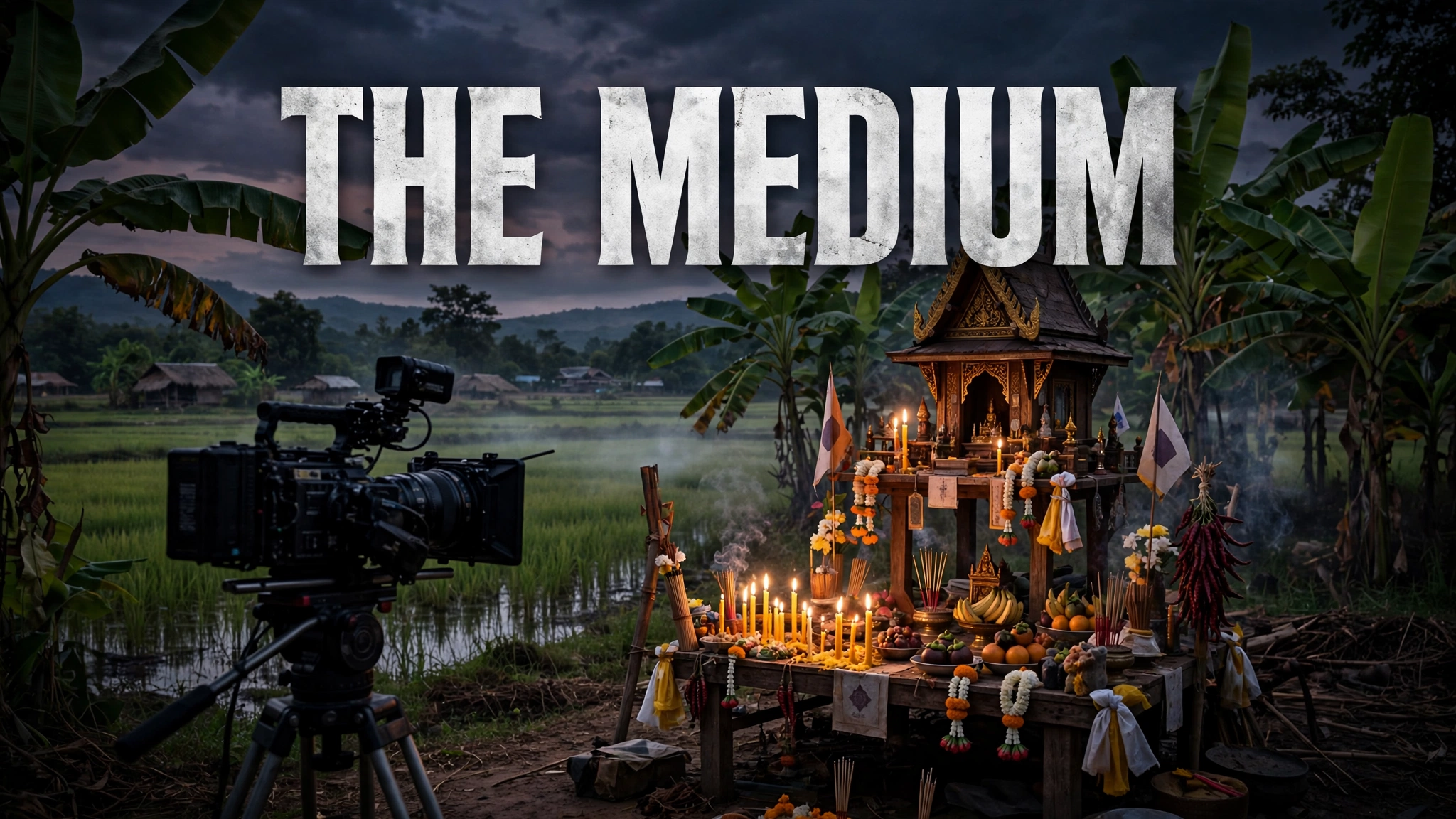
# The Medium (2021) Review – A Documentary Crew Films a Faith Coming Apart**★★★★☆ Our Rating: 7.5/10**Some horror films ask you to believe in ghosts. *The Medium* (*Rang Zong*) asks something more uncomfortable: it asks you to sit inside a belief system, patiently and respectfully, through the eyes of a documentary crew — and then to watch that belief system be stress-tested by something it may not be able to explain, name or survive. The collaboration behind it reads like an Asian horror summit. The director is Banjong Pisanthanakun, who co-directed *Shutter* (2004) and made *Pee Mak*, still Thailand’s biggest film ever. The producer and co-writer is Na Hong-jin, the South Korean director of *The Wailing*, modern folk horror’s defining film. Their joint production, between Thailand’s GDH 559 and Korea’s Showbox, premiered at the Bucheon International Fantastic Film Festival in July 2021, won its top prize, and became Thailand’s submission for the Best International Feature Film Oscar.This The Medium review will honour the film’s secrets. It is presented as a pseudo-documentary — a film crew follows a shaman in Thailand’s Isan region — and its power depends on a slow accumulation of wrongness that this review will describe in shape but never in payoff. No twists are spoiled here. What can be said openly is the shape of the experience: a quiet, ethnographic first act that plays almost like a genuine documentary about shamanic practice; a long middle in which a family watches a young woman change into someone they do not recognise; and a final act that divides audiences absolutely — some find it the most frightening passage of horror in years, others find it a film abandoning its own discipline at the exact moment discipline mattered most.Our position, stated fairly: the first two-thirds are exceptional — patient, beautifully performed, and culturally specific in a way almost no horror film attempts. The final stretch is ferocious but messy, trading the film’s hard-won realism for escalation. The argument is worth having, and this is one of the essential horror films of its decade either way.## Quick Facts: The Medium at a Glance| Detail | Information ||—|—|| Release date | 11 July 2021 (Bucheon premiere); 14 July 2021 (South Korea); 28 October 2021 (Thailand) || Director | Banjong Pisanthanakun || Writers | Chantavit Dhanasevi, Na Hong-jin (screenplay); story by Na Hong-jin, Choi Cha-won || Genre | Folk Horror, Supernatural Horror (pseudo-documentary) || Language | Thai, Isan || Runtime | 131 minutes || Lead cast | Narilya Gulmongkolpech, Sawanee Utoomma, Sirani Yankittikan, Yasaka Chaisorn, Boonsong Nakphoo || Our rating | 7.5/10 |*Budget note: the production budget of The Medium has not been publicly disclosed by GDH 559 or Showbox, so — following our policy of printing only figures we can verify — we omit it rather than repeat an unsourced estimate.*## The Story: The Goddess Chooses, the Family Refuses (Spoiler-Free)A documentary crew travels to Isan, the northeastern region of Thailand, to film the life of Nim (Sawanee Utoomma), a shaman who serves as the host — the medium — of Ba Yan, a local goddess her family’s women have embodied for generations. Nim explains her world to the camera with the calm of a practitioner, not a performer: the shrine, the rituals, the illnesses she is asked to diagnose as spiritual rather than medical. The succession was never supposed to be hers. Her elder sister Noi (Sirani Yankittikan) was chosen first — and refused, converting to Christianity and building a life at a deliberate distance from the shrine. The goddess, the family believes, took Nim instead.The film’s trigger is a family funeral, where the crew meets Noi’s daughter Mink (Narilya Gulmongkolpech) — a bright, ordinary young office worker — and where small wrongnesses begin to collect around her. Mink’s behaviour shifts: moods and mannerisms that seem to belong to other people, episodes she cannot account for, a deterioration that her family reads two ways at once. Nim’s interpretation is the hopeful one available inside their faith — perhaps Ba Yan is preparing Mink as the next medium, and what looks like illness is a calling being resisted. Noi’s refusal, all those years ago, hangs over that reading: a debt the goddess may now be collecting from the next generation. But as Mink’s condition worsens in ways no one can soften — at work, at home, on cameras the family itself begins installing to watch her — a colder possibility assembles itself, piece by piece: that what has arrived in Mink is not the goddess at all, and that the explanations inside the family’s tradition may be describing something else entirely.From there, the documentary format becomes the film’s trap: every ritual, consultation and intervention is filmed, even as the family’s need outgrows anything a camera should be present for, and even as the professionals they turn to begin to disagree about what they are dealing with. How far it goes, and what it costs, this review will not tell you. Prepare only for a last act audiences have argued about ever since — some calling it a collapse into excess, others the only honest ending this material could have.## Performances: A Debut That Carries a Nightmare**Narilya Gulmongkolpech as Mink** gives one of the great horror performances of the decade, full stop — and it was her film debut, after television work, won through five auditions. The role demands an almost impossible range: an ordinary, funny, slightly flirtatious young professional in the early reels, and then a gradual, documented unmaking, in which other presences seem to surface through her in fragments — ages, tempers, appetites that are not hers. Narilya plays the transition without a seam you can point to, and crucially she plays the person underneath as worth saving, which is what makes the family’s desperation — and the film’s dread — real rather than mechanical. Korean and Thai critics singled her out unanimously on release; several wrote, only half-jokingly, that they worried for the actress. You will understand why.**Sawanee Utoomma as Nim** has the opposite assignment — stillness, authority, faith — and is just as essential. Her Nim explains the spirit world to the documentary crew with the unshowy confidence of a woman describing plumbing: this is how it works, this is what we do, this is what it costs. That ordinariness is the film’s foundation; for its first hour, the supernatural is her workplace, not a spectacle. As events exceed her framework, Sawanee lets doubt enter the performance in millimetres — a pause before an answer, a ritual performed a fraction too carefully — and the film’s deepest unease grows in that gap between what Nim believes and what Nim is beginning to fear.**Sirani Yankittikan as Noi** plays the story’s guilt in human form: the sister who said no. Her Noi is not a villain of unbelief — she is a mother watching her daughter deteriorate, armed with a Christianity she chose precisely to escape the world now reclaiming her family, and Sirani makes her every compromise legible and painful. **Yasaka Chaisorn as Manit**, the siblings’ brother, grounds the family in earthy practicality and grief, while **Boonsong Nakphoo as Santi**, a more powerful practitioner brought in as the situation escalates, brings a grave, ritual authority to the film’s later passages. Across the cast, the documentary illusion holds because nobody performs for the camera — they endure in front of it.## Direction and Technical CraftBanjong Pisanthanakun’s direction here is a study in format discipline — for most of the film. The pseudo-documentary grammar is honoured with unusual rigour: interviews to camera, observational footage of rituals and daily life in Loei province, the slight reframing zooms and available-light textures of a real crew’s work, shot by cinematographer Naruphol Chokanapitak. Crucially, the film spends its first act as if it genuinely were the documentary it pretends to be — explaining shamanic succession, filming ceremonies at respectful length, letting Isan’s animist landscape of shrines, fields and spirit houses become familiar. That patience is the craft decision everything else stands on. Horror that must build its world and its nightmare in the same footage usually cheats; this film pays in advance, and collects with interest.The escalation of the format is equally deliberate: home surveillance footage, night-vision cameras installed to monitor Mink, a crew that keeps filming past the point where filming is decent. The found-footage genre’s oldest question — why are they still recording? — is answered structurally: documenting is the film’s whole premise, and the family keeps asking the crew to stay. The honest criticism belongs to the final act, where discipline gives way to volume: event piles on event, the documentary illusion strains, and the 131 minutes — long for this format — are felt. What cannot be taken away is the middle hour: as controlled a descent as modern horror offers.## Music and Background ScoreChatchai Pongprapaphan’s music works under documentary rules: most of the film’s sound world is the world itself — ritual chanting filmed as practice rather than presented as score, village ambience, insects, rain, a house at night. That restraint pays off: when composed score does assert itself, low and funereal, it feels like reality tilting, and the night sequences build dread from documentary materials — surveillance-camera audio, breathing too close to a microphone, noises from rooms the camera cannot see into. Mink, quiet, looking at the lens, frightens more reliably than any sting. The climax raises the volume and loses a little of that purity; the earlier passages are a masterclass in how little a horror film needs, if it has recorded the right world.## What Works and What Doesn’t**What we loved:**- Narilya Gulmongkolpech’s debut — a possession performance for the ages, built in increments- A first act of genuine documentary patience that makes the faith, the family and Isan itself real before anything goes wrong- Sawanee Utoomma’s Nim: belief played as ordinary work, which makes its cracking unbearable- Format discipline — surveillance, night vision and crew footage each earned by the premise- Cultural specificity no generic horror could fake: animist practice, family obligation and refused inheritance as the story’s engine**What could be better:**- The final act trades control for chaos, and the documentary illusion strains under the pile-up- At 131 minutes it is long for a pseudo-documentary, and the middle, for all its quality, tests patience deliberately- Some viewers will find certain later imagery gratuitous rather than necessary — the film takes real risks with taste in its escalation- The crew’s continued presence in the worst moments is justified structurally but still, at times, credibility-testing## Box Office: A Korean Launch, a Pandemic Year, an Oscar Submission*The Medium* was released into the hardest market imaginable — the pandemic summer of 2021. Its theatrical life began in South Korea, Na Hong-jin’s home market, on 14 July 2021, after its Bucheon premiere and Best Feature Film award there. By Korean Film Council (KOFIC) data, it opened at number one, beating the opening day of Marvel’s *Black Widow* with about 129,917 admissions, passed break-even within four days, and reached approximately US$7.32–7.35 million with 831,126 admissions in Korea — a top-tier 2021 result for a Thai-language adult horror film. Worldwide totals vary by tracker: KOFIC-derived listings put the total around US$7.23 million, while some databases list US$8.4–9 million once later territories are included; we report the range rather than a false precision, because staggered pandemic-era releases — Thailand itself did not open until 28 October 2021 — and a major parallel life on Shudder make a single clean figure impossible. The cultural result is not in dispute: Thailand’s entry for Best International Feature Film at the 94th Academy Awards (not nominated), a Bucheon winner, and the definitive Thai horror title of its year.## Verdict: Should You Watch It?Yes — with two honest warnings. First, this is a slow burn by design: the film earns its horror across a patient first hour, and pays it back at punishing intensity. Second, its final act is deliberately extreme, and some imagery will be too much for some viewers; that extremity is its most argued-over quality, not an accident. Accept those terms and *The Medium* is one of the significant horror films of the 2020s: a Thailand–Korea collaboration that treats shamanic belief with documentary respect, builds a family you believe in, and then documents — camera still rolling — what happens when the framework that explained their world stops working.**Our rating: 7.5/10** — an exceptional slow-burn folk horror with a career-making central performance, whose chaotic final act divides the audience it has spent two hours earning.## Frequently Asked Questions**Is The Medium a real documentary or found footage?**It is a scripted fiction film made in a pseudo-documentary (mockumentary/found-footage) style. Nim, Mink and their family are characters played by actors, and the “documentary crew” is part of the fiction — though the film is grounded in real shamanic practice in Thailand’s Isan region, which it depicts with researched respect.**Is The Medium based on a true story?**Not on one specific case. The filmmakers built the story from the real traditions of spirit mediumship in Isan, where mediums serving local deities remain part of community life. Lead actress Narilya Gulmongkolpech has noted that elements drew on things the team encountered while researching those beliefs, but the family and events are invented.**How scary and how graphic is The Medium?**The first half is dread-based and restrained; the final act is intense, violent and contains imagery — including animal harm within the fiction, self-harm and disturbing possession sequences — that many viewers will find distressing. It is an adult horror film, and sensitive viewers should take that seriously rather than treating it as marketing.**Do I need to watch Shutter or The Wailing first?**No. *The Medium* stands entirely alone. Knowing director Banjong Pisanthanakun’s *Shutter* (2004) and producer Na Hong-jin’s *The Wailing* (2016) enriches it — you can feel both filmmakers’ signatures — but nothing in the story depends on them.**Was The Medium really Thailand’s Oscar submission?**Yes. It was selected as the Thai entry for Best International Feature Film at the 94th Academy Awards, following its Best Feature Film win at the Bucheon International Fantastic Film Festival. It did not make the final shortlist or nominations, but the selection itself was a landmark for a horror film in that category.