★ LATEST REVIEWS

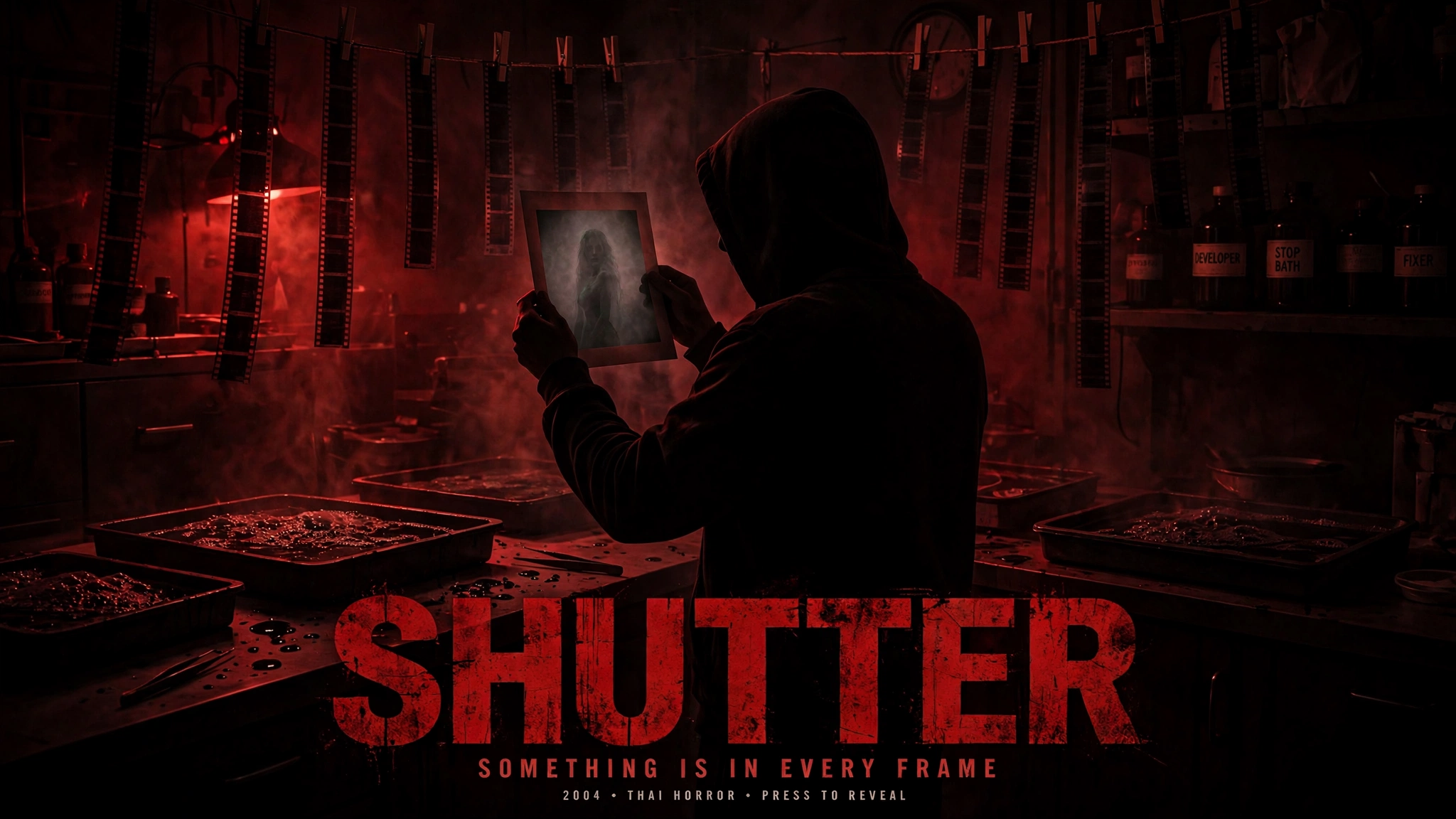
# Shutter (2004) Review – The Thai Original That Made Every Photograph a Threat**★★★★☆ Our Rating: 8.5/10**A note before anything else, because it decides which film you are about to read about: this is a review of *Shutter* (2004), the Thai original directed by Banjong Pisanthanakun and Parkpoom Wongpoom — not the 2008 American remake with Joshua Jackson, and not any of the Indian versions that followed. The distinction is not snobbery. The remake took this film’s premise and replaced its soul, and the original remains what it was on release in September 2004: the movie that put Thai horror on the world map, Thailand’s biggest film of its year, and a ghost story so efficiently engineered that its central idea — something is wrong inside your photographs — colonised the nightmares of everyone who owned a camera.The timing mattered. Asian horror was in its great export era: *Ring* and *Ju-On* had taught the world to fear Japanese ghosts, and every industry in the region was searching for its own. Thailand found its answer in a young directing pair, a professional photographer’s darkroom, and a question with a long folk history behind it — if spirits exist, why would a camera not catch them? Spirit photography, a parlour obsession since the nineteenth century, became in these directors’ hands the engine of a modern urban ghost story about guilt, secrecy and the things men do and then develop, frame and file away.Our verdict in advance: *Shutter* is a classic of its wave, and the rare one that improves on reflection. Its scares are expertly built, but its real distinction is moral architecture — this is a haunting with an argument, constructed so that information you receive late changes the meaning of everything you felt early. This review will protect that construction absolutely. There are no twist spoilers here, in the story section or anywhere else, because this film’s ending is one of the great ones and you deserve to meet it unprepared.## Quick Facts: Shutter at a Glance| Detail | Information ||—|—|| Release date | 9 September 2004 (Thailand) || Director | Banjong Pisanthanakun, Parkpoom Wongpoom || Writers | Banjong Pisanthanakun, Parkpoom Wongpoom, Sophon Sukdapisit || Genre | Supernatural Horror || Language | Thai || Runtime | 97 minutes || Lead cast | Ananda Everingham, Natthaweeranuch Thongmee, Achita Sikamana || Our rating | 8.5/10 |*Budget note: no reliable production budget for Shutter has been published in a source we can stand behind — secondary websites offer conflicting figures — so, following our policy of printing only figures we can verify, we omit it rather than guess.*## The Story: What the Camera Saw (Spoiler-Free)Driving home at night from a gathering with friends, Jane (Natthaweeranuch Thongmee) and her boyfriend Tun (Ananda Everingham), a professional photographer, strike a young woman who steps into the road. She lies motionless on the asphalt. Jane wants to stop — and at Tun’s urging, panicked, they do the thing the whole film will be about: they drive away.Life, obscenely, continues. Tun goes back to work. But his photographs begin to come back wrong — streaked with white blurs, shadowed by shapes that resolve, the longer you look, into something like a face, a figure, a presence standing where nobody stood. His friends laugh it off as damaged film and a craftsman’s paranoia, until the disturbances stop confining themselves to paper. Tun develops a persistent, worsening pain in his neck and shoulders that no doctor can explain. Objects move. The darkroom, with its red light and its trays of slowly surfacing images, stops being a workplace and becomes the most frightening room in Bangkok — because developing a photograph is an act of waiting, and *Shutter* understands that whatever is in the picture will arrive on its own schedule, not yours.Jane, the film’s conscience from its first scene, refuses the easy explanation that this is only the ghost of the woman on the road — not least because no death, no injured patient, no police report matching that night can be found anywhere. Her investigation leads toward Tun’s student past, and toward a shy young woman named Natre (Achita Sikamana) whose connection to Tun he has never mentioned to anyone. Who Natre is, what happened to her, and what Tun and his closest college friends have carried silently since those years are questions this review will not answer. What can be said is that the film’s second half transforms a competent ghost story into something colder and sadder: a story about complicity, about photographs as evidence in more senses than one, and about a haunting that may be less an attack than an attempt to be seen. Where it ends — the final sequence, and one closing image in particular — is among the most imitated and least equalled in Asian horror. Go in blind.## Performances: Three Roles, Perfectly Weighted**Ananda Everingham as Tun** gives the performance this difficult film actually requires, which is not heroism but erosion. Everingham, then one of Thai cinema’s brightest young leading men, plays Tun as charm over a fault line: a man whose ease with people is real and whose capacity for self-deception is greater. As the haunting tightens, he doesn’t perform terror in the usual escalating screams; he performs avoidance — a man negotiating with his own conscience in real time, checking photographs, changing the subject, drinking in the wrong data. It is a portrait of guilt as a physical condition, and the film’s boldest effects only work because his face has already told you something is carrying weight.**Natthaweeranuch Thongmee as Jane** is the film’s moral engine and, quietly, its lead detective. The script gives her the genre’s hardest job — insist, against a dismissive boyfriend and a complacent audience, that something is genuinely wrong — and she plays it without shrillness, as intelligence rather than hysteria. Jane’s decency is established in the opening minutes, in the car, and everything she does afterwards grows from it: she is the one character who keeps choosing to look. Horror films run on such characters and rarely credit them; this review does. When the film turns, it turns around her discoveries, and her reactions carry its emotional verdict.**Achita Sikamana as Natre** has the least dialogue and the largest burden: a presence the film must build from photographs, glimpses, memories and other people’s evasions. Sikamana’s stillness is the film’s cold centre. Even in the flashback register — a shy student, watchful and apart — she plays Natre as a person rather than a device, which is exactly why the ghost never feels like one. The supporting cast of college friends do efficient work sketching a group whose shared past is the film’s locked room, and the directors deploy them with an economy the lean runtime demands.## Direction and Technical CraftThe directing partnership of Banjong Pisanthanakun and Parkpoom Wongpoom was, in retrospect, an absurd concentration of Thai horror’s future: Banjong would go on to *Pee Mak* and *The Medium*, and this debut already shows his signature understanding that a scare is a piece of information delivered at the worst possible moment. The craft here is all about the photograph as a suspense machine. A picture in *Shutter* is never shown to you whole and at once; it is developed, enlarged, peered at, re-examined — the film keeps inventing new ways to make you search an image alongside the characters, and to realise a fraction of a second after they do, or a fraction before, what has been standing inside it. The darkroom sequences, shot in red gloom with faces surfacing in chemical trays, are the era’s Thai horror at its most atmospheric.Around that central device, the filmmaking is lean and confident. At 97 minutes there is no subplot that doesn’t feed the haunting, the Bangkok of apartments, studios and college corridors feels lived-in rather than dressed, and cinematographer Niramon Ross finds dread in fluorescent ordinariness — this ghost does not need a haunted house, only a camera and a conscience. The honest reservations are of period and polish. Some effects work is visibly of its low-budget moment, a few scares borrow the long-haired grammar of the Japanese films then dominating the market, and viewers who have absorbed twenty years of Asian horror since will recognise some machinery as it starts up. What they will not find dated is the construction: this is a film whose rewatch value rises, because its early scenes are quietly loaded.## Music and Background ScoreChartchai Pongprapapan’s score — he is credited across Thai genre cinema of the period, including Banjong’s later work — operates in the classic register of strings, dissonance and withheld release, but its most effective partner is the film’s sound design rather than its melodies. *Shutter* is a film about looking, so it makes you listen harder than you planned to: the click and whir of cameras, the liquids of the darkroom, the particular silence of a room in which a photograph is being examined. The score’s discipline is that it rarely tells you to be frightened before the image has earned it; the stingers, when they come, land because the film has spent its quiet minutes teaching you that quiet is not safety. It is not a soundtrack that lives independently as themes. It is one that lives in your shoulders — which, given this film, is the appropriate place.## What Works and What Doesn’t**What we loved:**- A central idea — the haunted photograph — explored with endless, disciplined inventiveness- Moral architecture rare in ghost stories: guilt, complicity and evidence, not just a vengeful spirit- Natthaweeranuch Thongmee’s Jane, the rare horror heroine whose decency drives the plot- Darkroom sequences that turn developing a photo into unbearable suspense- A lean 97 minutes with nothing wasted — and an ending we refuse to spoil because it deserves you**What could be better:**- Some effects and set pieces show their modest means and their 2004 moment- The long-haired-ghost visual grammar borrows from the Japanese hits of the era- A middle stretch of investigation proceeds by convenient discoveries- The friends’ thread is sketched more thinly than its importance to the themes deserves- First-time viewers raised on extreme modern horror may find its pace patient rather than relentless## Box Office: Thailand’s Biggest Film of 2004The Thai figures for *Shutter* are unusually well documented for their era, because the film’s success was news. It opened at number one in Thailand — Box Office Mojo’s Thai records show an opening of about US$867,800 — held the top spot into its second weekend, and finished its Thai run at about US$2.58 million, making it the fifth-highest-grossing film of 2004 in Thailand overall and the year’s biggest Thai film, ahead of every Hollywood release’s local competition that a domestic production could reasonably challenge. Thai sources separately cite about ฿109.98 million for the Bangkok, metropolitan and Chiang Mai circuit — the standard Thai reporting measure of the period — which is consistent with that tracked total rather than a competing claim. Wider international totals are less consistently documented: later reporting credits the film with more than US$10 million internationally across its releases, a figure we report as reported rather than tracked, since territory-by-territory data from 2004 is incomplete. What is not in dispute is the trajectory the money started: remade in America in 2008, remade unofficially three times in India, officially remade in Indonesia in 2025, and restored in 4K for its twentieth anniversary — the afterlife of a hit that became a classic.## Verdict: Should You Watch It?Yes — the original, in Thai, with subtitles, in the dark. *Shutter* is the gateway film of modern Thai horror and one of the essential Asian horrors of the 2000s: short, smart, frightening and built around a final movement that reclassifies it, in memory, from a ghost story into something more uncomfortable and more interesting. If you have only seen the American remake, you have seen its outline without its argument; correct that. If you have never seen a Thai horror film, this is one of the two or three correct places to begin — and when it ends, you will understand why a generation of viewers never looked at their own photographs quite the same way again.**Our rating: 8.5/10** — a lean, clever, genuinely frightening classic whose photographs keep developing long after the credits.## Frequently Asked Questions**Is this the Thai original or the American remake?**The Thai original, released on 9 September 2004 and directed by Banjong Pisanthanakun and Parkpoom Wongpoom. The American remake of the same name arrived in 2008 with a different cast, a relocated setting and a significantly softened approach. This review covers only the 2004 film, which is the version critics and horror fans consistently recommend.**Is Shutter based on a true story?**No. It is an original screenplay. Its premise draws on the real, long-running cultural fascination with “spirit photography” — photographs that appear to show ghosts — which believers have debated since the nineteenth century, but Tun, Jane and Natre are fictional characters in an invented story.**How scary is Shutter compared with modern horror?**It is frightening in the classic mode: sustained dread, expertly timed reveals and imagery designed to stay with you, rather than gore or constant assault. Many viewers still rank it among the scariest Asian horror films of its decade. Its tension-based approach means it frightens most people more than its modest effects budget would suggest.**Does Shutter have jump scares?**Yes, several — but they are built on the photograph device and on information, so they tend to reward attention rather than simply punish your ears. The film’s strongest moments are slow: waiting for an image to develop, searching a frame for what should not be there.**What should I watch if I liked Shutter?**From the same director, Banjong Pisanthanakun’s *The Medium* (2021) and the horror-comedy phenomenon *Pee Mak* (2013) show his range, while the Thai anthologies *4bia* (2008) and *Phobia 2* (2009), which Banjong and Parkpoom Wongpoom both contributed to, are the natural next step into Thai horror of this era.