★ LATEST REVIEWS

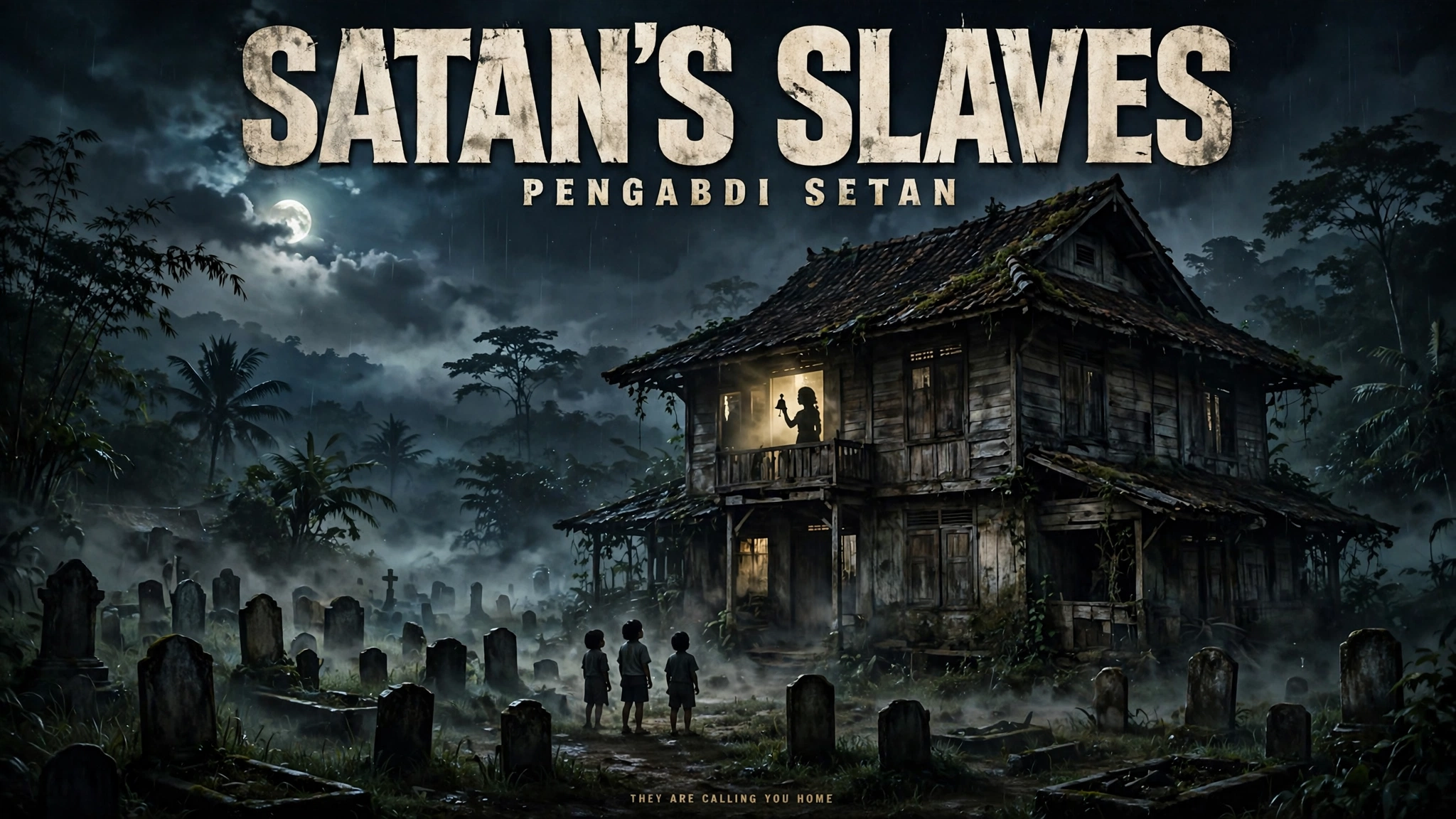
# Satan’s Slaves (2017) Review – Mother Is Calling, and Indonesia Answered in Fear**★★★★☆ Our Rating: 8.5/10**Some remakes exist because a studio owns a title. Joko Anwar’s *Satan’s Slaves* — *Pengabdi Setan* in Indonesian — exists because a director never stopped being frightened by a film he saw as a boy. The 1980 original, directed by Sisworo Gautama Putra, was one of the defining Indonesian horror films of its era: raw, notorious, and burned into the memory of everyone who grew up with it. Anwar, by 2017 one of Indonesia’s most respected filmmakers, did not remake it scene by scene. He built a prequel-remake hybrid around its most potent idea — a dead mother who does not stay dead, and a family that learns too late what she did while she lived — and set it in 1981, close enough to the original’s world to honour it and far enough to make it his own.This Satan’s Slaves review can be direct about the result: it is one of the finest horror films Southeast Asia has produced, a work of genuine craft that became the highest-grossing Indonesian film of 2017, travelled to more than forty countries, and reminded international audiences that Indonesian horror did not begin with streaming algorithms. It is also, in the best sense, an old-fashioned film — patient, practical, built on a house, a family and a bell.A small bell, rung from a sickroom, is the sound this film will leave in your head. A mother who was bedridden for three years rang it whenever she needed her children. After she dies, in the film’s early scenes, the family begins to hear it again.## Quick Facts: Satan’s Slaves at a Glance| Detail | Information ||—|—|| Release date | 28 September 2017 (Indonesia; premiered 20 September 2017) || Director | Joko Anwar || Writers | Joko Anwar (based on the 1980 film *Satan’s Slave*, story by Subagio S.) || Genre | Supernatural Horror || Language | Indonesian || Runtime | 107 minutes || Budget | Approx. Rp 2 billion (reported, approx. US$150,000; the producer noted the final spend exceeded this) || Lead cast | Tara Basro, Bront Palarae, Ayu Laksmi, Endy Arfian, Nasar Anuz, Muhammad Adhiyat, Elly D. Luthan || Our rating | 8.5/10 |## The Story: A House by the Graveyard (Spoiler-Free)In 1981, the Suwono family is quietly falling apart. Mawarni (Ayu Laksmi), once a successful singer, has spent three years bedridden by a wasting illness that no royalties remain to treat — the family has sold almost everything, and her husband (Bront Palarae) cannot keep them afloat. They live in her mother Rahma’s (Elly D. Luthan) old house, isolated beside a cemetery, where eldest daughter Rini (Tara Basro) has given up her studies to nurse her mother, alongside brothers Tony (Endy Arfian), Bondi (Nasar Anuz) and the youngest, Ian (Muhammad Adhiyat), who is deaf and communicates in sign language.Mawarni dies. Her husband leaves for the city to raise money by selling the house, and almost immediately the house begins to misbehave. The bell rings in an empty room. Something that looks like mother is glimpsed where mother cannot be. The grandmother, confined to a wheelchair and increasingly terrified, tries to warn the children in the only ways left to her — and then the film delivers a death so shocking in its staging that the audience’s relationship with the house changes permanently. With the help of Hendra (Dimas Aditya), the son of the local ustad, Rini begins pulling at the one thread the adults never discussed: how a woman who was told she could never have children came to have four. The answer involves a sect, a promise, and a date — Ian’s approaching seventh birthday — that turns the haunting from a mystery into a countdown. We will not describe what the family finds, or what finds them, in the final movement; it is enough to say the film escalates from dread to siege without ever abandoning the family story that powers it.## Performances: A Family You Believe Before You Fear for Them**Tara Basro as Rini** is the film’s anchor and its sceptic-in-residence, and Basro plays her as the exhausted adult every struggling family actually has: practical, short-tempered, loving, and deeply unwilling to believe in ghosts because belief is a luxury she cannot afford. That resistance is the film’s smartest asset. When Rini finally becomes afraid, the audience has nowhere left to hide. Basro, reuniting with Anwar after *A Copy of My Mind*, gives Indonesian horror its most credible modern heroine.**Ayu Laksmi as Mawarni** has the strangest assignment in the film: a handful of living scenes, bedridden and frail, and thereafter a presence built from silhouette, stillness and sound. She is genuinely affecting as the dying mother and genuinely frightening as what returns — the film’s central horror is that the two are the same face, and Laksmi, a singer and performer of real stature in Indonesia, understands the power of simply not moving. **Bront Palarae as the father** brings weary dignity to a man whose absences drive the plot; his guilt, when it surfaces, reframes much of what we have seen.The child performances are exceptional, and horror lives or dies on them. **Endy Arfian as Tony** supplies warmth and the film’s few laughs without breaking its spell. **Nasar Anuz as Bondi** captures a middle child’s bravado collapsing in real time. And **Muhammad Adhiyat as Ian** — the deaf youngest brother around whom the plot’s countdown turns — is remarkable: expressive, natural, and the centre of the film’s most unbearable sequences precisely because the sound design can hide things from him that it cannot hide from us. **Elly D. Luthan as Grandmother Rahma** makes every second of limited screen time count; few performances in modern horror communicate this much terror with this little movement.## Direction and Technical CraftJoko Anwar directs like a man who has studied the classics in order to earn the right to quote them. The influences — *The Exorcist*’s domestic dread, the slow zooms of 1970s horror, a distinctly James Wan talent for mapping a house so the audience knows exactly which door should not open — are worn openly and digested completely. Working with cinematographer Ical Tanjung in a real, weathered house in Pangalengan, West Java, redressed to period, Anwar builds scares the honest way: long takes, practical effects, figures held a beat too long at the edge of the frame, and a camera that keeps drifting toward the thing you are hoping it will not find. The film’s signature sequences — a well, a graveyard at night, a prayer interrupted — are staged with a patience that modern jump-scare horror rarely attempts.The honesty requires the caveats. Anwar loves the jump scare more than his subtlest work needs, and the middle act strings several together at a rhythm some viewers will find mechanical. The final movement, for all its power, explains a great deal very quickly, and one rescue arrives with a convenience the film’s own logic hasn’t quite prepared. These are faults of abundance, not incompetence — a director with more ideas than 107 minutes — and they barely dent the whole. On a reported budget of around Rp 2 billion, the production value on screen is an argument, all by itself, about what craft can do that money cannot.## Music and Background ScoreThe score, by Aghi Narottama, Bemby Gusti and Tony Merle, won major Indonesian awards — including best music and best sound honours at the Indonesian Film Festival — and it is not hard to hear why. Its masterstroke is diegetic: Mawarni was a singer, and her old recording “Kelam Malam” (“Dark Night”), performed in the film’s world by The Spouse, drifts through the house like a message from its previous life. A love song becomes a haunting because of context, and the film returns to it with the discipline of a motif in a symphony. Around that centre, the composers build dread from texture — low strings, breath, silence held a second past comfort — and the sound design turns the little sickroom bell into the most frightening instrument in Indonesian cinema. Play this film quietly and it is a good horror film. Play it at proper volume and it is a great one.## What Works and What Doesn’t**What we loved:**- A haunting built on family, grief and poverty — the scares mean something- Tara Basro’s sceptical, exhausted, utterly believable Rini- Practical, patient, beautifully staged set pieces in a house the film teaches you to fear room by room- The bell, the song “Kelam Malam,” and award-winning sound design that does half the frightening- Muhammad Adhiyat’s Ian — one of the great child performances in horror**What could be better:**- A cluster of jump scares in the middle act is more mechanical than the film around it- The climax explains its mythology quickly and leans on one convenient rescue- A few period details in costume and styling feel slightly modern for 1981- Viewers who need their horror resolved will find the ending deliberately — some will say frustratingly — open## Box Office: Indonesia’s Biggest Film of 2017, Counted in AdmissionsAs with all Indonesian releases, the honest anchor is admissions, not a published gross: Indonesia does not officially report box-office rupiah totals for its films, and the money figures attached to this title vary by tracker. On admissions, the record is clear and remarkable — approximately 4.2 million tickets sold in Indonesia, making *Satan’s Slaves* the highest-grossing Indonesian film of 2017 and, at the time, the fourth best-selling Indonesian film ever at home. In Malaysia it set a record for an Indonesian film, reported at around RM6 million, overtaking the previous benchmark. International trackers commonly list a worldwide total of about US$16.2 million, though other reputable reporting puts the worldwide figure nearer US$10.5 million — a spread we flag rather than hide, and exactly why the 4.2 million admissions figure is the number to quote. Set against the reported production budget of roughly Rp 2 billion (about US$150,000, with the producer noting the final cost ran higher), the return is extraordinary by any arithmetic, and the film’s release across more than forty countries — including a North American run and a long streaming afterlife — made it modern Indonesian horror’s calling card abroad. A sequel, *Satan’s Slaves 2: Communion*, followed in 2022 and went bigger still.## Verdict: Should You Watch It?Watch it, and watch it properly: lights down, volume up, phone elsewhere. *Satan’s Slaves* is the rare remake that justifies itself completely — not by copying a classic but by understanding what the classic understood, that the scariest house is a family home and the scariest ghost is a parent. It is frightening in the moment and sadder in retrospect, which is the combination horror is always chasing and rarely catches. Seasoned genre fans will recognise its influences with pleasure; newcomers will simply be scared. Either way, this is essential modern horror, from any country.**Our rating: 8.5/10** — a masterclass in atmosphere and sound, and the film that carried Indonesian horror to the world.## Frequently Asked Questions**Is Satan’s Slaves a remake of the 1980 film?**It is best described as a loose remake and prequel in one. Joko Anwar takes the 1980 film *Satan’s Slave* (directed by Sisworo Gautama Putra, from a story by Subagio S.) as his foundation — the dead mother, the haunted family, the sect — but rebuilds the story as an earlier chapter of that world, set in 1981, with a new family and a new explanation. You need no knowledge of the original to follow it completely.**Is Satan’s Slaves based on a true story?**No. It is a work of fiction building on the 1980 film. Its settings, family and sect are invented, though Anwar grounds them in recognisable Indonesian religious and folk belief, which is a large part of why Indonesian audiences found it so unsettling.**How scary is Satan’s Slaves, honestly?**Very, by mainstream standards. It combines sustained dread, several expertly built jump scares and imagery that lingers, and it is regularly ranked among the scariest Indonesian films ever made. Viewers who found *The Conjuring* too much should approach with care; viewers who found it too little will be pleasantly surprised.**Do I need to watch Satan’s Slaves before the sequel?**Yes, ideally. *Satan’s Slaves 2: Communion* (2022) continues Rini’s family’s story directly, brings back the surviving characters and answers — and reopens — questions this film deliberately leaves hanging.**Where does the title Pengabdi Setan come from, and what does it mean?***Pengabdi Setan* translates literally as “Servant of Satan” or “Satan’s Worshipper” — published in English as *Satan’s Slaves*. The title is inherited from the 1980 original and refers to the sect at the story’s centre, whose bargain drives everything that happens to the family.