★ LATEST REVIEWS

★★★★☆ Our Rating: 7/10
Some horror films are discovered in cinemas. KKN di Desa Penari was discovered on a phone screen, in the middle of the night, one tweet at a time. Before it was a film it was a viral Twitter thread published in 2019 by an anonymous account called SimpleMan, presented as a true account of six university students whose community-service placement in a remote East Javanese village went catastrophically wrong. The thread was read by millions, turned into a bestselling novel, and built the kind of anticipation no marketing budget can buy. When the film adaptation finally arrived in April 2022 — delayed repeatedly by the COVID-19 pandemic — Indonesian audiences did not just turn up. They turned up in numbers no Indonesian film had ever seen.
That context matters, because this KKN di Desa Penari review has to judge two different things at once: a phenomenon, which is undeniable, and a horror film, which is more uneven. As a piece of folk horror rooted in Javanese belief, local taboo and the very real Indonesian institution of KKN — the student community-service programme almost every graduate remembers — it has an authenticity imported ghost stories cannot copy. As a piece of filmmaking, it is atmospheric and sincere but also overlong, repetitive in its scares and heavily dependent on how much of the original thread you already carry in your head. This review covers the story, the performances, the craft and the record-breaking numbers, without spoiling the ending.
| Release date | 30 April 2022 (Indonesia) |
| Director | Awi Suryadi |
| Writers | Lele Maila, Gerald Mamahit (based on the thread and novel by SimpleMan) |
| Genre | Supernatural Horror |
| Language | Indonesian, Javanese |
| Runtime | 130 minutes (17+ version; a 121-minute 13+ cut also played, and a 175-minute extended cut followed) |
| Budget | Rp 15 billion (producer-stated, approx. US$1 million) |
| Lead cast | Tissa Biani, Adinda Thomas, Achmad Megantara, Aghniny Haque, Calvin Jeremy, Fajar Nugraha, Aulia Sarah |
| Our rating | 7/10 |
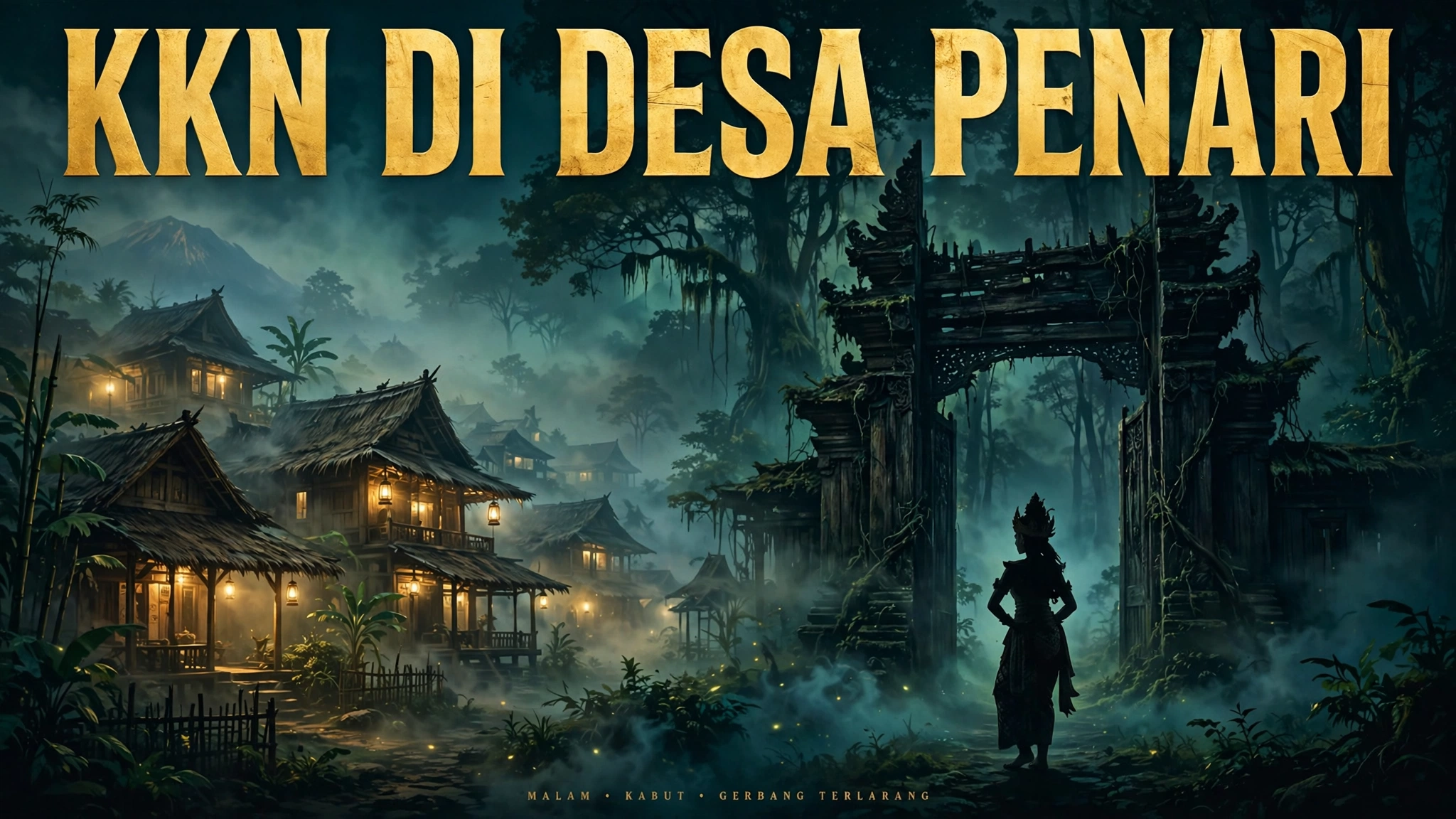
In 2009, six university students — Nur, Widya, Ayu, Bima, Anton and Wahyu — travel to a remote village in East Java to complete their KKN, the community-service placement Indonesian students undertake in rural communities. The village head, Pak Prabu, welcomes them with one clear warning: do not cross the stone gate that separates the village from a forest area known as Tapak Tilas. It is the oldest rule in horror, and the film’s whole tragedy is built from the slow, human ways in which it gets broken.
At first the placement looks ordinary — teaching, helping, adjusting to village rhythms. Then the wrongness creeps in at the edges. Widya encounters a beautiful traditional dancer where no dancer should be. Nur is followed by the presence of an old woman only she seems to sense, and plagued by headaches that will not lift. Bima begins disappearing at night. Offerings appear where nobody admits to leaving them. What the students have stumbled into, and what the village has lived alongside for generations, is the domain of Badarawuhi — a powerful spirit who rules the village and its forest, chooses her dancers, and does not forgive trespass, desire or deceit. Two of the students make a private bargain and break a sacred boundary, and from that point the film stops being about whether the group should leave and becomes about whether leaving is still possible. We will not describe the final movement here; suffice to say the film, like the thread before it, ends not with triumph but with consequences that follow the survivors home.
Tissa Biani as Nur is the film’s moral centre and its most reliable performer. Nur is the devout, watchful member of the group — the one who senses the danger first and is believed last — and Biani plays her without melodrama, letting fear build through small reactions rather than screaming. In a film that sometimes asks its cast to simply look terrified for long stretches, her groundedness is what keeps the audience oriented.
Adinda Thomas as Widya carries the film’s most exposed role: the student who draws Badarawuhi’s attention. Her possession and dance sequences require a physical transformation that could easily tip into the ridiculous, and she commits to them completely. Achmad Megantara as Bima and Aghniny Haque as Ayu play the pair whose secret drives the plot; both are convincing as ordinary, likeable young people making one selfish decision at a time, which is precisely why the story works — nobody here is a villain, just careless. Calvin Jeremy as Anton and Fajar Nugraha as Wahyu have less to do, and the film never quite gives the six students the distinct inner lives the thread’s readers imagined for them.
The performance that walks away with the film belongs to Aulia Sarah as Badarawuhi. Regal, still and quietly terrifying, she plays the spirit not as a jump-scare monster but as a ruler receiving tribute — a dancer-queen whose courtesy is more frightening than any snarl. Kiki Narendra as Pak Prabu and Diding Boneng as Mbah Buyut, the village shaman, lend the older generation real weight, embodying a community that knows exactly what lives in its forest and has made its peace with the price.
Director Awi Suryadi, a veteran of Indonesian horror, understands that this material lives or dies on place. Shot in the greens and browns of rural Java, the film is at its best in daylight — misty paths, dense forest edges, a village that looks entirely real and entirely capable of keeping secrets. Cinematographer Ipung Rachmat Syaiful favours slow pushes and lingering frames, and the traditional dance sequences are staged with a hypnotic, ceremonial quality that separates KKN from the shaky-cam school of Southeast Asian horror.
The weaknesses are structural. At 130 minutes in its fullest theatrical version, the film repeats its scare beats — a figure glimpsed, a gamelan sting, a possession, a warning — more often than the story needs, and the middle hour sags under scenes that restate what the audience already understands. The editing choices across the film’s multiple versions (a shorter 13+ cut, the 17+ version, and a later 175-minute extended cut) suggest a production unsure how much of the thread’s sprawl it could leave out. When the film trusts its atmosphere, it is genuinely unsettling. When it reaches for conventional jump scares, it becomes the thing it should have risen above: another loud Indonesian horror film, in a market full of them.
Ricky Lionardi’s score does its most important work by knowing when to sound Javanese rather than generically orchestral. Traditional instrumentation and dance rhythms are woven into the underscore, so that the music of celebration and the music of dread become disturbingly similar — a fitting choice for a story about a dancer who is both. The sound design around Badarawuhi’s appearances, all rustling fabric, distant singing and sudden silence, is more effective than any single scare cue. Where the score falters is in its louder horror punctuation, which occasionally announces a fright a second before it arrives and deflates it. At its best, though, the music makes the village itself feel like an instrument the spirit is playing.
What we loved:
What could be better:
Indonesian box office is tracked in admissions — tickets sold, called penonton — rather than in publicly reported grosses, and admissions are the reliable anchor here. They need one careful explanation, because the totals differ by when you count them. Film Indonesia’s data for the original 2022 run lists about 9.37 million admissions for the calendar year, and the film passed 9.23 million by early September 2022 on its way to becoming, at that time, the highest-grossing Indonesian film in history, overtaking Warkop DKI Reborn: Jangkrik Boss! Part 1, which had held the record for nearly six years. After the extended cut, Luwih Dowo Luwih Medeni, opened on 29 December 2022, the combined total most commonly cited in Indonesia’s all-time admissions table is 10,061,033 — making KKN di Desa Penari the first Indonesian film to pass ten million admissions. It held the all-time record until the animated film Jumbo overtook it on 1 June 2025. Dollar figures should be treated as estimates: published worldwide totals range from roughly US$21.6 million to US$26 million depending on the tracker, which is why the admissions figure, not the money, is the number to trust. The production budget of Rp 15 billion (around US$1 million) comes from the producer’s own statements reported by CNN Indonesia — modest even by Indonesian standards, and a reminder that this phenomenon was built on a story the audience already believed in, not on spectacle.
If you watch one Indonesian horror film to understand what Indonesian audiences themselves fear, queue for and argue about, it should be this one — with expectations set correctly. KKN di Desa Penari is not the scariest film in this catalogue, nor the most polished. It is, however, a fascinating and often genuinely eerie piece of folk horror whose power comes from cultural specificity: the taboo gate, the dancer spirit, the village that survives by respecting both. Come to it for Badarawuhi, for the atmosphere and for a sense of the event that emptied Indonesian streets in 2022 — and forgive it the sagging middle and the noise where quiet would have frightened you more.
Our rating: 7/10 — an overlong but atmospheric folk-horror phenomenon, carried by a great spirit villain and a story a nation had already told itself in the dark.
The film is based on a viral 2019 Twitter thread by the anonymous writer SimpleMan, who presented it as a true story told to him by one of the students, with names and the village’s location deliberately disguised. The thread was later adapted into a novel. Whether the events really happened has never been independently verified — the “true story” framing is the film’s claimed basis, and part of its legend, rather than a documented fact.
KKN stands for Kuliah Kerja Nyata, the community-service placement Indonesian university students complete in villages. The title translates roughly as “KKN in the Dancer’s Village”; the film has also been marketed internationally as KKN: Curse of the Dancing Village.
The film exists in a 121-minute 13+ cut, a 130-minute 17+ version and a 175-minute extended cut (Luwih Dowo Luwih Medeni). The 17+ theatrical version is the standard complete experience; the extended cut adds background for devoted fans of the thread but makes an already long film longer.
No. It became the highest-grossing Indonesian film of all time on release in 2022 and the first to pass ten million admissions, but the animated film Jumbo overtook it in June 2025. KKN remains Indonesia’s highest-grossing horror film.
There is a prequel, Badarawuhi di Desa Penari (released internationally as Dancing Village: The Curse Begins) from 2024, which tells Badarawuhi’s earlier story in the same village.