★ LATEST REVIEWS

★★★☆☆ Our Rating: 6.5/10
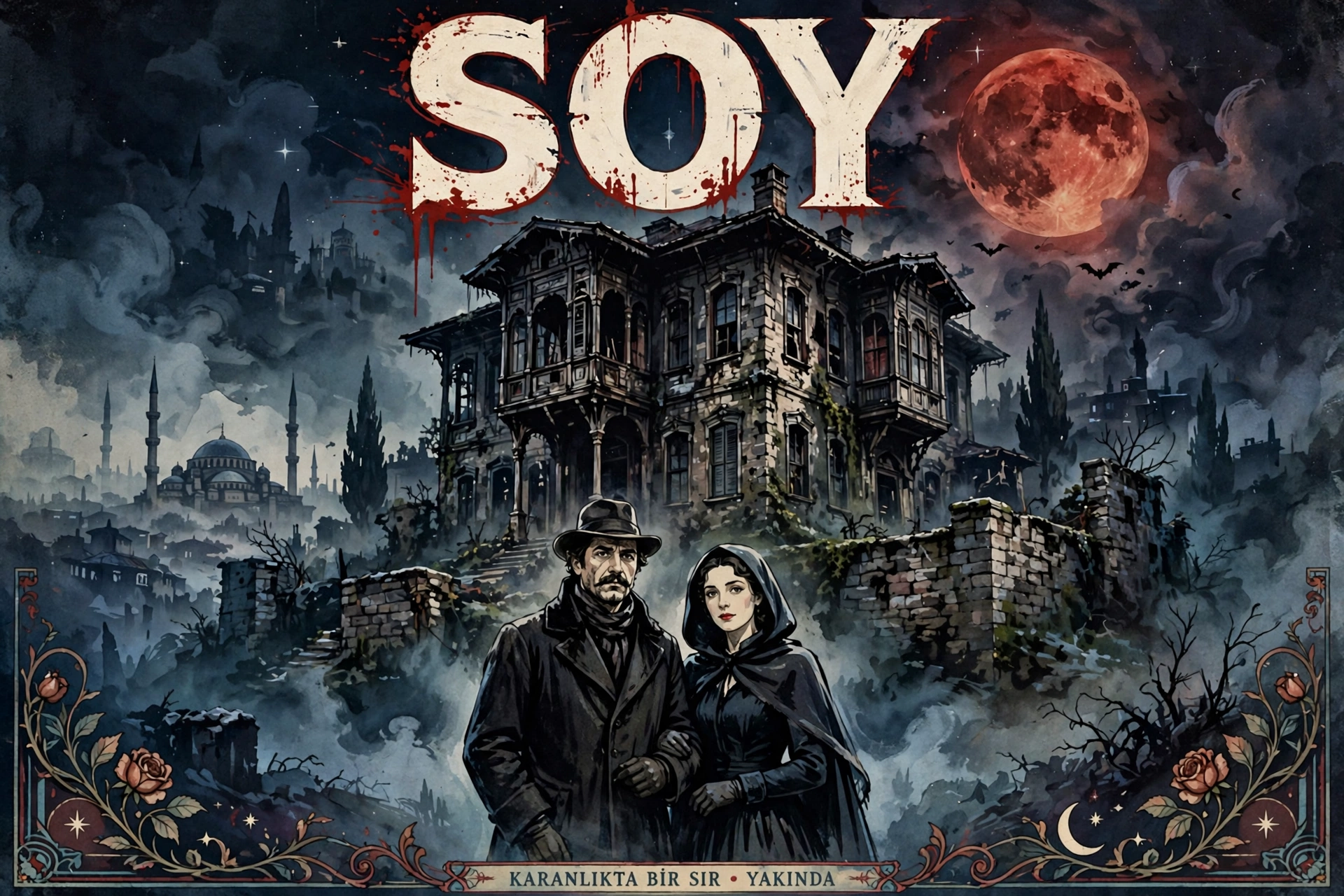
Soy — the Turkish word for lineage, bloodline, descent — announces its theme in its title. Maxime Alexandre’s mystical horror-thriller, built from an original story by Turki Alalshikh, follows an ancient curse passed down through generations, whose effects grow stronger as long-buried secrets surface. It stars Baris Arduc and Farah Zeynep Abdullah, with Tuba Buyukustun as a surprise guest, and it arrives with the polish and star power of a major Turkish production. It is atmospheric, handsome and genuinely creepy in places — and, like many curse films, it is stronger on dread than on explanation.
This review is spoiler-free on the film’s secrets and ending. Published plot detail for this film is thinner than for franchise titles, so this review describes its premise, atmosphere and performances as reported, and says plainly where detail is not publicly available, rather than inventing story beats.
| Detail | Information |
|---|---|
| Release date | 9 October 2026 (Türkiye; Egypt and Saudi Arabia from 21 October 2026) |
| Director | Maxime Alexandre |
| Story | Turki Alalshikh; screenplay by Turki Alalshikh, Sükrü Necati Sahin and Melih Özyilmaz |
| Genre | Mystical horror, thriller |
| Language | Turkish |
| Runtime | 94 minutes |
| Lead cast | Baris Arduc, Farah Zeynep Abdullah, Tuba Buyukustun (guest), Tamer Levent, Mehmet Yilmaz Ak, Özge Özacar |
| Our rating | 6.5/10 |
The premise, as reported, is clear even where finer plot detail is not. An ancient curse, tied to blood and lineage, has passed down through generations of a family, and its power grows as secrets buried long ago begin to surface. The film’s poster carries the line, in Turkish, “Your blood, and the blood of your blood, will be protected” — a promise that reads, in a horror film, as much like a threat as a reassurance. The central setting is an isolated mansion in Istanbul, a house whose doors conceal the family’s history and whose rooms become the stage for the curse’s return.
Within that frame, Arduc plays Can and Abdullah plays Basak, the couple at the centre of the story, with Tamer Levent, Mehmet Yilmaz Ak (as Aziz), Erol Afsin (as Cevdet), Özge Özacar and others filling out the family and its world. The horror is mystical rather than slasher-style: it works through atmosphere, inheritance and the idea that the past is not past when it lives in your blood. The film’s 94-minute running time keeps it tight — there is little room for the slow world-building of a longer horror film, and the curse’s logic must be grasped quickly.
That tightness cuts both ways. On the one hand, Soy never outstays its welcome, and its scares arrive with efficient regularity. On the other, viewers who want the curse’s rules, history and consequences fully explained may find the film elliptical: it shows the effects of the curse more fully than it explains its causes, and some of its family relationships are sketched rather than developed. The film’s mystery-first approach is deliberate — its poster, like its marketing, emphasises uncertainty over explanation — but it means the film works best as an experience of dread rather than as a puzzle to solve.
Baris Arduc as Can — Arduc, beloved across the Arab world for series including Kiralik Ask and Alparslan: Büyük Selçuklu, brings star authority to Can. He plays the role with the seriousness the premise needs: a man discovering that his family history is not a story but a sentence. Arduc’s presence gives the film its centre of gravity, and his scenes carry the weight of a man caught between protecting his family and confronting what his family has hidden.
Farah Zeynep Abdullah as Basak, Tuba Buyukustun as guest star — Abdullah, star of the box-office hit Bergen, plays Basak with intelligence and emotional directness, and her partnership with Arduc gives the film its human stakes: this is a curse story, but it is also a story about a couple facing something neither of them chose. Buyukustun, a household name across the Middle East, appears as a surprise guest, and her presence — much discussed in Turkish coverage of the film’s gala — adds star wattage and a sense of event to the production. Tamer Levent, Mehmet Yilmaz Ak and Özge Özacar round out a strong ensemble.
Alexandre, a cinematographer by background directing his fourth horror feature, brings a strong visual eye to the film. The isolated Istanbul mansion is shot as a character in itself: dark corridors, heavy doors, rooms that seem to hold more history than their occupants know. The film’s horror is built from mood, shadow and sound rather than from constant shocks, and Alexandre’s experience behind the camera shows in compositions that make ordinary rooms feel watched.
The production context is notable. Soy is the first project in Türkiye for production company Rozam, produced by CB Medya with Saner Ayar as executive producer, and distributed in Türkiye by CJ ENM. It was made as a global-scale Turkish production, with post-production planned in Europe and editing by French editor Stéphane Roche. That international ambition shows in the film’s polish — it looks and sounds like a major release, not a modest genre entry — even if its storytelling remains more suggestive than complete.
No reliably published score detail was available in the sources checked, and this review therefore makes no specific claim about the film’s composer beyond the general observation that its sound design serves its mystical horror atmosphere: house sounds, whispers, silences and sudden disturbances that make the mansion feel alive. The film’s dread depends heavily on that soundscape, and it is effective in a cinema.
What we loved:
What could be better:
Soy opened in Türkiye on 9 October 2026, following a gala in Istanbul attended by its cast, director and producer, and opened in Egypt and Saudi Arabia on 21 October 2026. Contemporary reporting described it as a big success in Türkiye, citing Egyptian press coverage, but no reliable, audited box-office total was published in the sources checked for this review. This review therefore gives no box-office number and no budget figure. Readers should treat any single total circulating online with caution until Turkish or regional trade sources settle on a figure.
Yes, especially if you like mystical horror, Turkish star cinema, or curse stories that favour atmosphere over explanation. Soy is not the most fully explained horror film of the year, but it is a handsome, creepy, well-acted one, and its central idea — that what runs in your blood may also hunt you — is strong enough to carry its 94 minutes. Go for the dread, not for a rulebook.
Our rating: 6.5/10 — An atmospheric, star-powered Turkish curse horror that suggests more than it explains, and is creepier for it.
What is Soy about?
An ancient curse passed down through a family’s bloodline grows stronger as long-buried secrets surface, centred on an isolated mansion in Istanbul.
Who stars in Soy?
Baris Arduc as Can and Farah Zeynep Abdullah as Basak, with Tuba Buyukustun as a surprise guest star, plus Tamer Levent, Mehmet Yilmaz Ak and Özge Özacar.
Who directed Soy?
Maxime Alexandre, from an original story by Turki Alalshikh, with a screenplay by Alalshikh, Sükrü Necati Sahin and Melih Özyilmaz.
When was Soy released?
9 October 2026 in Türkiye, and 21 October 2026 in Egypt and Saudi Arabia.
What does “Soy” mean?
In Turkish, “soy” means lineage, bloodline or descent — the film’s central theme, reflected in its poster’s line about blood being protected.