★ LATEST REVIEWS

Our Rating: ★★★★☆ 8.5/10
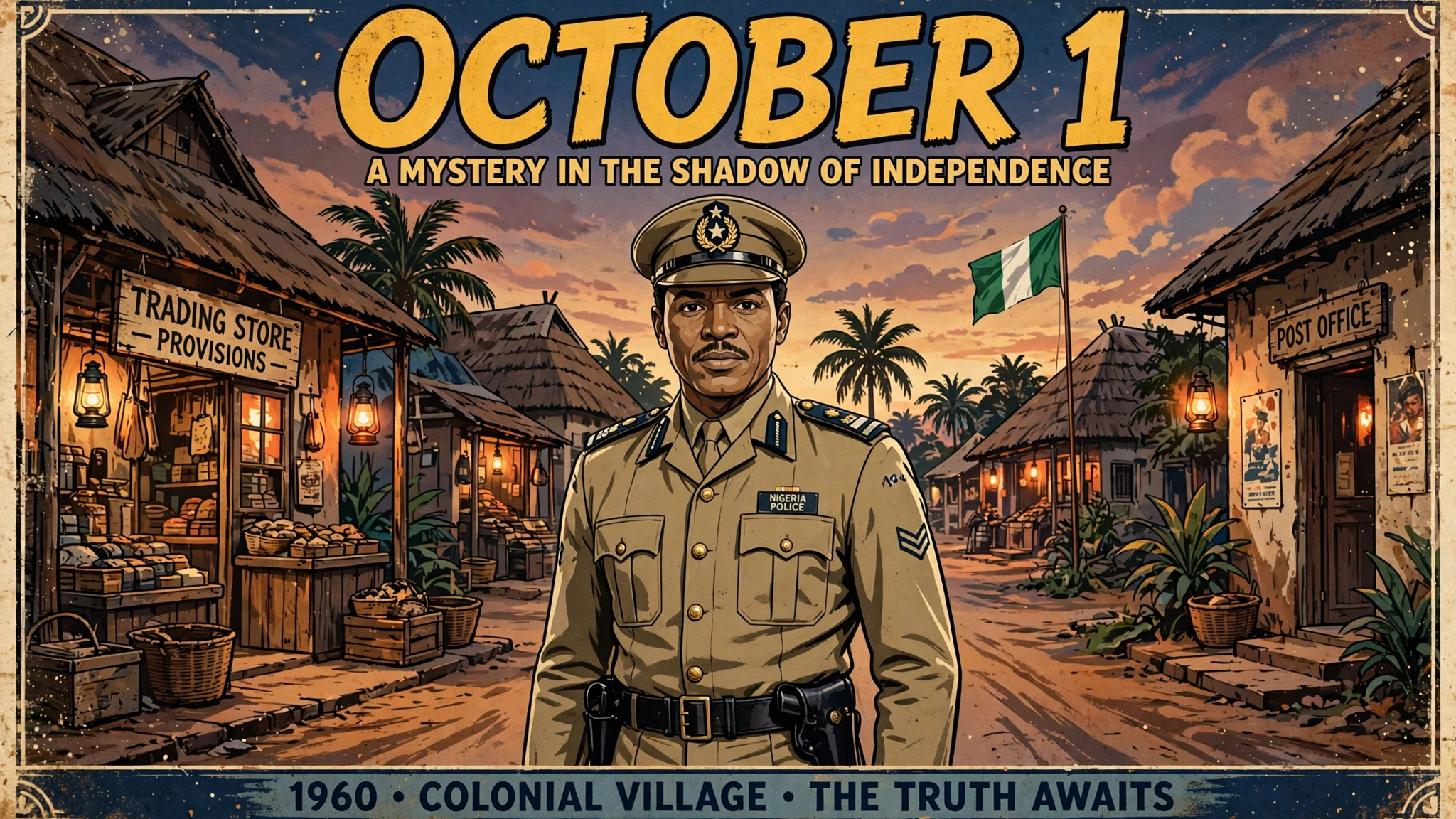
There is a date in every nation’s history that carries more weight than a single day should. For Nigeria, 1 October 1960 is that date: independence from British colonial rule, the lowering of one flag and the raising of another, and the beginning of a new and uncertain national story. Kunle Afolayan’s October 1 sets a murder mystery in the weeks before that day, and the choice is not decorative. The film asks what kind of country Nigeria was about to become, and it asks that question through a detective, a remote village and a series of killings that nobody in power seems willing to confront honestly.
Written by Tunde Babalola and directed by Afolayan, October 1 is a historical thriller of unusual ambition for Nollywood. It was shot with period costumes and props in Lagos, Ilara-Mokin, Akure and surrounding villages, it won Best Feature Film, Best Screenplay and Best Actor at the 2014 Africa International Film Festival, and it went on to collect more than a dozen African movie awards. It is also, in places, a difficult film to watch, because its themes — the abuse of children by figures of religious authority, ethnic and religious conflict, and the violence buried inside colonial politics — are not softened for the audience.
What makes it work is that it never forgets it is a thriller first. The mystery is genuinely gripping, the detective is a superb creation, and the film’s final revelations are earned rather than imposed. It is one of the finest Nigerian films of its decade.
| Detail | Information |
|---|---|
| Release date | 28 September 2014 (premiere; international release 3 October 2014) |
| Director | Kunle Afolayan |
| Writer | Tunde Babalola |
| Genre | Thriller, Historical Drama, Mystery |
| Language | English (with Yoruba and other Nigerian languages) |
| Runtime | 149 minutes |
| Budget | Approximately US$2 million (₦315 million in 2013) |
| Lead cast | Sadiq Daba, Kayode Olaiya, Demola Adedoyin, Kehinde Bankole, Kunle Afolayan |
| Our rating | 8.5/10 |
It is September 1960. Nigeria is weeks away from independence, and in the remote Western Region trading town of Akote, young women are being murdered. The colonial administration, eager for a smooth handover and a clean celebration, wants the problem solved quickly and quietly. Into this pressure steps Inspector Danladi Waziri, a police officer from Northern Nigeria played by Sadiq Daba, dispatched to Akote with an impossible deadline: solve the killings before the flag changes on 1 October.
Waziri is an outsider in every sense. He is northern in a western town, a Muslim officer in a community shaped by Christianity and traditional belief, and a methodical investigator in a place where power protects its own. The film follows his investigation through Akote’s markets, schools, churches and compounds, introducing a vivid cast of suspects, witnesses and people with something to hide: a charismatic local figure, a British colonial officer, village women living under the shadow of the killings, and a young boy whose innocence becomes one of the film’s emotional centres.
As the independence celebrations approach, the tension tightens in both directions. The killer, whoever they are, does not stop, and the political pressure on Waziri only grows. This review will not reveal the killer’s identity or the nature of the final revelations, because the film’s mystery is constructed to be solved alongside Waziri, and its power depends on that experience. It is enough to say that the solution is not a twist for its own sake: it forces the audience to reconsider everything the film has shown about power, faith and the country being born.
Sadiq Daba as Inspector Danladi Waziri — Daba’s performance is the film’s towering achievement, and it won him Best Actor at the Africa International Film Festival. Waziri is calm, observant and quietly stubborn, a man who listens more than he speaks and who refuses to be hurried by either colonial officials or local power brokers. Daba plays him without a trace of showiness, letting intelligence and moral seriousness do the work. It is one of the great detective performances in African cinema, and the film’s emotional core rests entirely on the audience trusting this man’s judgement.
Demola Adedoyin and Kehinde Bankole — Adedoyin gives a layered performance as a young man at the centre of Akote’s social world, charming and unreadable in exactly the proportions a mystery requires. Bankole, as one of the village women living under the killings’ shadow, brings vulnerability and quiet strength, and her scenes give the film its human cost: these are not abstract victims, but women with lives, families and futures. The film is careful to keep that cost visible.
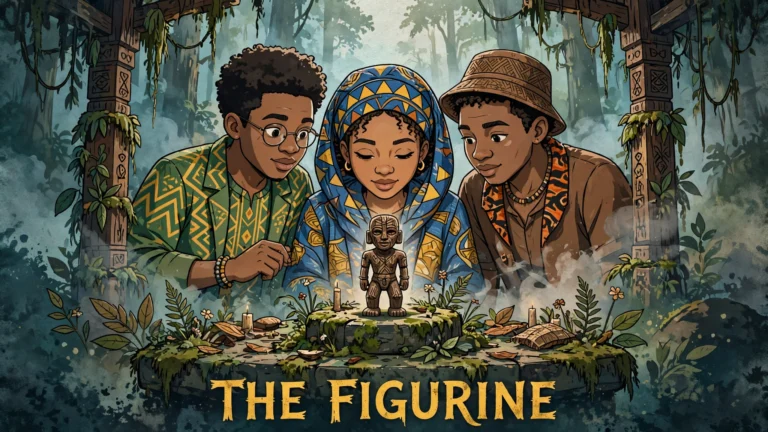
Kayode Olaiya, David Bailie and the ensemble — Olaiya brings authority and ambiguity to a key local figure, while Bailie, as a British colonial officer, embodies the subtle arrogance and emotional distance of an administration preparing to leave a country it never truly understood. Kanayo O. Kanayo, Bimbo Manuel, Femi Adebayo and Ibrahim Chatta round out an ensemble that makes Akote feel like a real community rather than a backdrop for a detective. Afolayan himself appears in a supporting role, and, as in The Figurine, he directs himself with admirable restraint, never stealing focus from Daba.
Afolayan’s direction here is his most controlled work up to that point. The period recreation is meticulous: costumes, vehicles, signage, schoolrooms and colonial offices all feel researched rather than approximated, and the decision to shoot in real towns around Akure rather than on a set gives the film a texture that studio work could not have supplied. The cinematography and production design were widely praised by critics, and they deserve that praise: the film looks like 1960, not like a costume party about 1960.
The structure is equally considered. Afolayan and Babalola parcel out information at a detective’s pace, not a thriller’s: clues accumulate, suspects shift, and the audience is trusted to remember details. That patience is a strength, but it also explains the film’s one real weakness, which is length. At 149 minutes, October 1 occasionally lingers on a subplot or a scene of village life that, however beautiful, slows the investigation. Most viewers will forgive that, because the world is so richly drawn, but a tighter cut might have sharpened the mystery’s middle act.
The film’s handling of its darkest themes deserves particular mention. Its exploration of child abuse by religious authority figures, and of the ethnic and religious tensions of late-colonial Nigeria, is direct without being exploitative. Afolayan does not use these subjects as background colour; he treats them as the moral centre of the mystery, and the film is braver for it. Some viewers will find certain passages distressing, and they should be warned, but the distress is never gratuitous.
The score for October 1 is atmospheric and restrained, favouring tension over melody. It builds dread through low strings, percussion and silence rather than through the kind of sweeping theme that would announce every revelation in advance. That restraint suits a detective story: the music keeps the audience uneasy without telling them what to feel, and it lets Daba’s quiet performance carry scenes that a louder score would have overwhelmed.
Period music and village sounds — market noise, church singing, radio broadcasts about independence — are woven into the soundtrack so that the historical moment feels lived in rather than illustrated. The result is a soundscape that supports the film’s central tension: a country celebrating its future while a village counts its dead.
What we loved:
What could be better:
October 1 was produced for approximately US$2 million, or ₦315 million in 2013 terms, an enormous budget for a Nigerian film of the period, and its commercial story is a cautionary one. Within six months of release it had earned just over ₦100 million, roughly US$610,000 in 2014 terms, well short of its production cost. Afolayan himself blamed piracy for the shortfall, and the film’s subsequent life — including its acquisition by Netflix in 2015, making it one of the first Nollywood films on the platform — suggests he was at least partly right: the audience was there, but too much of it reached the film through unauthorised copies.
That commercial disappointment should not obscure the film’s achievement. It was the second highest-grossing Nigerian film at the time of its release despite its shortfall against budget, it won Best Feature Film, Best Screenplay and Best Actor at the Africa International Film Festival, and it went on to win more than a dozen African movie awards in total. Its reputation has only grown since, and it is now rightly regarded as a landmark of Nigerian historical cinema. The gap between its artistic success and its theatrical earnings remains a lesson about the economics of ambitious African filmmaking.
Yes, absolutely. October 1 is a superb historical thriller and one of the essential Nigerian films of the last decade. It works as a mystery, as a portrait of a country on the verge of independence, and as a showcase for Sadiq Daba’s extraordinary central performance. Its length and its darkest themes demand patience and a strong stomach, but the rewards are considerable. This is a film that trusts its audience, and it repays that trust.
Our rating: 8.5/10 — A landmark Nigerian thriller about the country Nigeria was, on the eve of the country it became.
Is October 1 based on a true story?
No. The village of Akote, the murders and Inspector Waziri are fictional, but the film is set against the real historical moment of Nigeria’s independence on 1 October 1960.
Who directed October 1?
Kunle Afolayan directed and produced it, from a screenplay by Tunde Babalola.
Who plays Inspector Waziri?
Sadiq Daba, in an award-winning performance that anchors the whole film.
How long is October 1?
149 minutes, just under two and a half hours.
Where can I watch October 1?
It has been available on Netflix and other streaming platforms in various regions, though availability changes over time, so check your local platforms.