★ LATEST REVIEWS

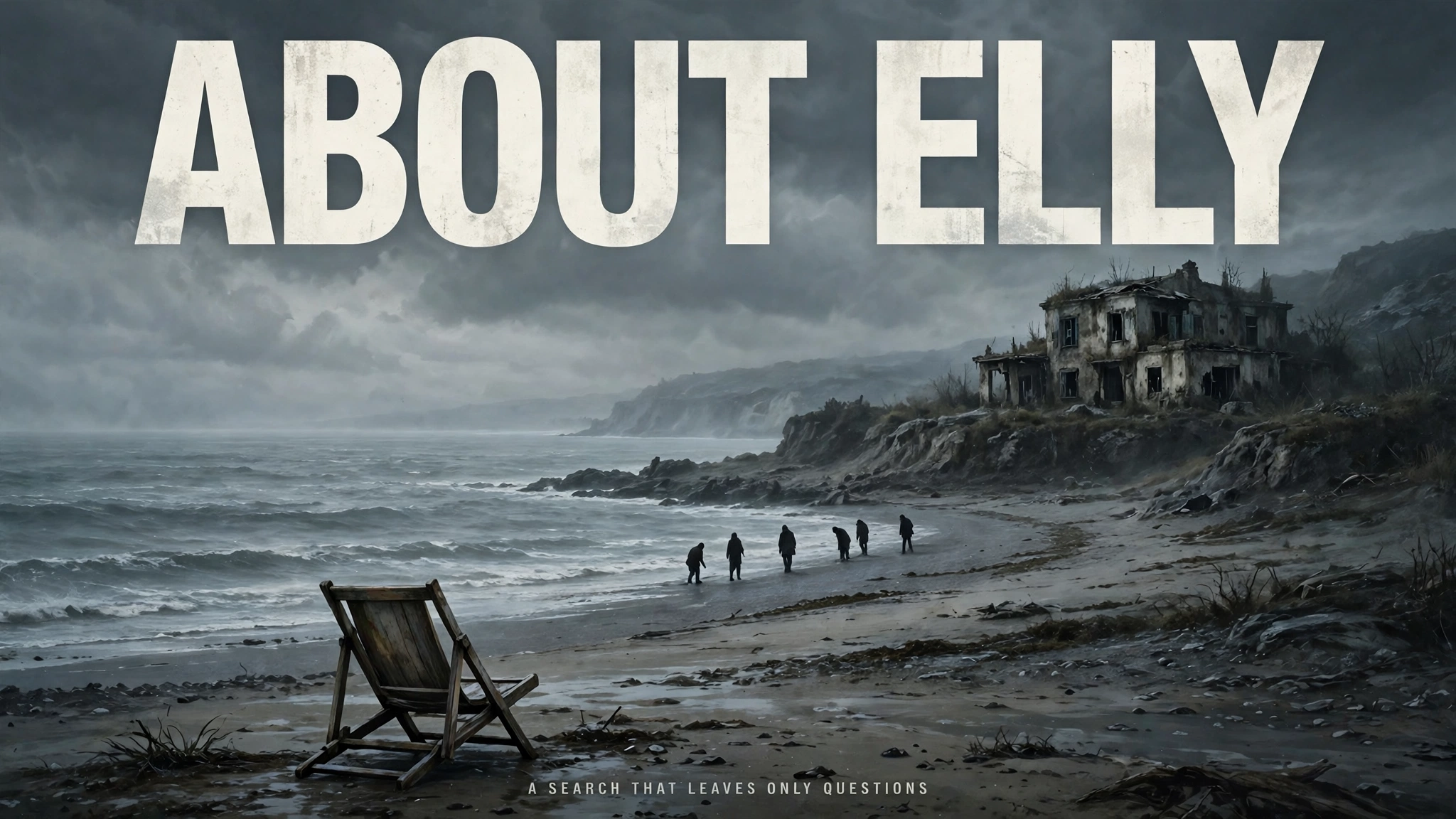
# About Elly (2009) Review – A Holiday, a Vanishing, and the Lies People Tell to Stay Kind**★★★★★ Our Rating: 9/10**Before *A Separation* made Asghar Farhadi one of the most admired filmmakers alive, there was *About Elly* — the film in which his method fully crystallised. Premiered in Iran in February 2009 and shown days later at the Berlin International Film Festival, where Farhadi won the Silver Bear for Best Director, it begins as the sunniest film he has ever made: old university friends, their spouses and children, singing in cars on the road to the Caspian Sea. It then becomes, without a single false move, one of the most quietly devastating mysteries in modern cinema — a film regularly described by critics who discovered it late, on its delayed international releases, as a masterpiece that had been hiding in plain sight.The comparisons write themselves — Antonioni’s *L’Avventura* also begins with a woman vanishing from a leisure trip — but Farhadi’s film is warmer, faster and more moral than its famous ancestor. Where Antonioni’s characters drift away from the search, Farhadi’s cannot escape it: every hour, the missing woman matters more, and every small politeness from the happy first act returns as evidence. This About Elly review is written under a strict rule: **we will not tell you what happens to Elly, what is ultimately learned about her, or how the film ends.** The less you know going in, the better this film works.What can be said openly is the achievement. Iran’s official submission for the Best Foreign Language Film Oscar at the 82nd Academy Awards, winner of Best Narrative Feature at Tribeca, and the film that announced Farhadi’s signature subject — decent people building catastrophes out of courtesy, pride and small, well-intentioned lies — *About Elly* is the essential bridge between his early Iranian successes and his global fame.## Quick Facts: About Elly at a Glance| Detail | Information ||—|—|| Release date | 1 February 2009 (Fajr Film Festival); 7 February 2009 (Berlin International Film Festival) || Director | Asghar Farhadi || Writers | Asghar Farhadi || Genre | Drama, Mystery || Language | Persian (with some German) || Runtime | 119 minutes || Lead cast | Golshifteh Farahani, Taraneh Alidoosti, Shahab Hosseini, Merila Zarei, Mani Haghighi, Peyman Moaadi, Rana Azadivar, Ahmad Mehranfar, Saber Abar || Our rating | 9/10 |There is no budget row in this table, deliberately: no reliably published production budget for *About Elly* exists in credible sources, and rather than repeat an unsourced figure from a low-quality database, we omit it and say so.## The Story: A Matchmaking Plan, a Run-Down Villa, a Missing Guest (Spoiler-Free)Three married couples — old friends from university days — drive north from Tehran with their children for a three-day break on the Caspian coast. The trip has been organised by the group’s irrepressible centre, Sepideh (Golshifteh Farahani), and Sepideh has a secret agenda. Travelling with the group, at her invitation, is Elly (Taraneh Alidoosti), the shy kindergarten teacher of Sepideh’s daughter. Also travelling with them is Ahmad (Shahab Hosseini), an old friend recently returned from Germany after the end of his marriage. Sepideh’s hope — shared, nudged along and half-concealed by almost everyone — is that Elly and Ahmad might like each other. Neither guest has been told the whole truth about this plan. That is the film’s first small dishonesty, and Farhadi’s cinema is a machine for showing what small dishonesties cost.The holiday begins in chaos of the harmless kind. The villa Sepideh booked cannot house them as promised, and the group cheerfully settles instead for a large, derelict beachfront house — no glass in some windows, the sea right outside, everybody cleaning, cooking, teasing and voting democratically on every decision in a running joke that slowly stops being funny. Elly, the outsider, is kind with the children and visibly ill at ease in ways the others are too busy enjoying themselves to read correctly. She has a life in Tehran that the group knows almost nothing about, and reasons of her own for being on this trip reluctantly rather than joyfully. Then, partway through the film, an incident erupts around the children at the water’s edge — and in the confusion that follows, the group realises that Elly cannot be found.Everything after that point belongs to the film, not to this review. What can be described without theft is the shape of it: a search, a rising panic, and then the truly Farhadi movement — the group’s discovery that they know almost nothing about the woman they have lost, that some of what they do “know” was invented for convenience, and that each new person they speak to — caretakers, officials, voices on the telephone — must be told a version of events that the group itself has not agreed on. Blame migrates. Marriages show their seams. The question “where is Elly?” is gradually joined, and then overshadowed, by a harder one: what exactly have we all been saying, and to whom, and why?## Performances: An Ensemble With No Weak Link**Golshifteh Farahani as Sepideh** gives the performance the film turns on. Sepideh is the group’s engine — warm, funny, bossy, generous — and also the author of nearly every consequential concealment in the story. Farahani plays her without a flicker of villainy, which is the point: you watch a good person discover, in real time, that her talent for smoothing things over has become a trap for everyone she loves, and her sunny confidence curdles into guilt and frantic improvisation. It is one of the great performances in Farhadi’s work, which is saying a great deal.**Taraneh Alidoosti as Elly** has the film’s strangest assignment: to be vivid enough that her absence dominates the second half, while playing a woman whose defining quality is how little she lets the group — or us — know her. Alidoosti does it with stillness and evasion so natural that you only later realise how much information she was withholding in plain sight. **Shahab Hosseini as Ahmad**, the intended match, brings a bruised decency to the group’s gentlest conscience: a man whose own failed marriage has taught him the price of the wrong union, and who watches Sepideh’s little project with growing unease.The remaining ensemble is uniformly excellent, and the film needs them to be, because its second half is essentially an ensemble stress test. **Peyman Moaadi** (later the lead of *A Separation*) and **Merila Zarei** play the couple whose domestic tensions surface fastest under pressure; **Mani Haghighi** and **Rana Azadivar** and **Ahmad Mehranfar** complete a group portrait in which every marriage has a different temperature and every character, given one scene of panic, reveals a different moral instinct. Nobody performs “guilt” in the abstract; everybody performs a specific person protecting a specific thing — a spouse, a reputation, a version of the day — and the friction between those protections is the film’s real suspense mechanism.## Direction and Technical CraftFarhadi directs the film in two weathers. The first movement is shot by cinematographer Hossein Jafarian in loose, mobile, sunlit frames — handheld energy, overlapping dialogue, group choreography that feels caught rather than staged, closer to a home movie of real friends than to a composed drama. The light is holiday light. Then, with the disappearance, the same style curdles: the camera still follows and crowds and interrupts, but now the restlessness reads as panic, the sea turns grey and loud, the big empty villa becomes a space people shout across and hide in, and Hayedeh Safiyari’s editing lets scenes run just long enough for a conversation to become an interrogation without anyone raising a voice.The deepest craft here is screenwriting, and it deserves to be named as such. Farhadi plants his information with a fairness that only becomes visible in retrospect: nearly everything the second half detonates was placed, innocently, in the first half — a joked-about arrangement here, a half-truth about a booking there, a casual statement about who Elly is that nobody thought to verify. There are no cheats and no withheld master-keys; the mystery is not a puzzle box but a moral mechanism, and its subject is not really Elly at all. It is the group, and the culture of protective lying — the Iranian social courtesy sometimes discussed under the name *ta’arof* is one lens, but the film travels because every society has its own version — that turns kindness into complicity.An honest reservation: the middle section, as the group cycles through searches, calls and recriminations, is deliberately repetitive, and some viewers feel the repetitions as drag rather than tightening pressure. And some audiences, meeting it after *A Separation* because of its years-late Western release, have judged it a lesser draft of that film. It is not a draft. It is a different instrument — part mystery, part group portrait — played at the same level.## Music and Background ScoreHere honesty requires a short section, because *About Elly* has, for practical purposes, **no musical score at all**. Farhadi made the decision deliberately: no non-diegetic music directs the audience’s feelings at any point in the story. What music exists is inside the world — the friends sing and joke in the cars, celebrate noisily in the villa’s first happy hours — and a single song, often referred to as “Song for Elly,” arrives only over the closing credits, after the film itself has ended. In place of a score, the film’s soundtrack is built from the Caspian itself: wind, waves, gulls, the roar of the sea growing as the weather and the story worsen, plus car engines, telephones and the terrible acoustics of an empty house. The effect is that the film’s rising dread is never announced, only accumulated — you are never told by a string section that things have become frightening, which is exactly why they are. Few filmmakers trust silence this completely; fewer still make it this loud.## What Works and What Doesn’t**What we loved:**- Farhadi’s screenplay: every late revelation was planted fairly in the sunny first act- Golshifteh Farahani’s Sepideh — the best-intentioned character as the engine of the disaster- A disappearance mystery with no cheats, whose real subject is the searchers, not the missing woman- The two-weather direction: holiday looseness curdling into panic without a change of style- Total refusal of a musical score — the sea and the silences do all the work**What could be better:**- The middle movement’s cycles of searching and blaming are deliberately repetitive, and some viewers will feel drag- The large ensemble takes time to sort out — early scenes can blur the couples together before the film individuates them- Anyone expecting a conventional mystery’s clean solution should adjust expectations; Farhadi is interested in something else- Its delayed release in many countries meant it was long undervalued beside *A Separation*## Box Office: Tracked Fragments, Not a TotalIranian domestic box-office reporting from 2009 does not exist in a form Western databases can verify, and *About Elly* is another case where this site refuses to dress a fragment up as a total. The figure most often attached to the film in international databases — around US$879,000 — is a tracked figure assembled from its later, limited international releases, including a successful belated American arthouse run in 2015 that alone accounted for roughly US$470,000 of it. Other listings give totals closer to US$1.35 million. Neither includes any reliable account of the film’s original Iranian theatrical life, and so neither should be quoted as “the box office of *About Elly*.”The documented record is, once again, a festival-and-influence record, and it is superb: Silver Bear for Best Director at Berlin 2009; the Crystal Simorgh for Best Director at Tehran’s Fajr Film Festival, where the film was nominated for ten awards; Best Narrative Feature at Tribeca; Iran’s official Oscar submission; and near-universal acclaim on its eventual Western releases. When *A Separation* conquered the world two years later, it was this film’s machinery — and much of its cast — that made it possible.## Verdict: Should You Watch It?Yes — and go in knowing as little as possible beyond this review’s spoiler-free outline. Watch it if you love mysteries that respect you, ensemble acting at the highest level, or films in which the most frightening force is not a villain but kind people protecting each other with lies. Be ready for a bright first act doing far more work than it appears to be, and a second half that tightens like a knot.**Our rating: 9/10** — a masterfully constructed mystery of manners: funny, sunny, then unbearable, and anchored by one of the great ensembles in modern cinema.## Frequently Asked Questions**What happens to Elly in About Elly?**We will not answer that here, and we recommend avoiding any source that does. Whether Elly can be found, and what the group learns about her, is the film’s central experience; it is deliberately withheld in this review so that first-time viewers can discover it exactly as Farhadi arranged.**Is About Elly based on a true story?**No. It is an original screenplay by Asghar Farhadi. Its realism — the overlapping dialogue, the social courtesies, the moral evasions — is crafted, not documentary, though it draws deeply on the manners and pressures of middle-class Iranian life.**How is About Elly connected to A Separation?**It is the film Farhadi made immediately before it, in 2009, and it shares much of *A Separation*’s creative DNA and cast — including Peyman Moaadi, Shahab Hosseini and Merila Zarei — as well as its editor, Hayedeh Safiyari. Many critics regard the two films as a pair: the mystery that perfected the method, and the drama that won the Oscar with it.**Is About Elly a thriller?**In effect, yes — but a thriller built entirely from behaviour rather than action or violence. It contains no conventional thriller machinery; its suspense comes from searching, waiting, telephoning, and watching decent people decide, scene by scene, how much truth they can afford.**Where can I watch About Elly?**The film is distributed internationally through arthouse labels and appears on curated streaming services in many regions, with wider availability since its acclaimed 2015 American release. Availability varies by country, so check your local services.