★ LATEST REVIEWS

★★★★★ Our Rating: 9/10
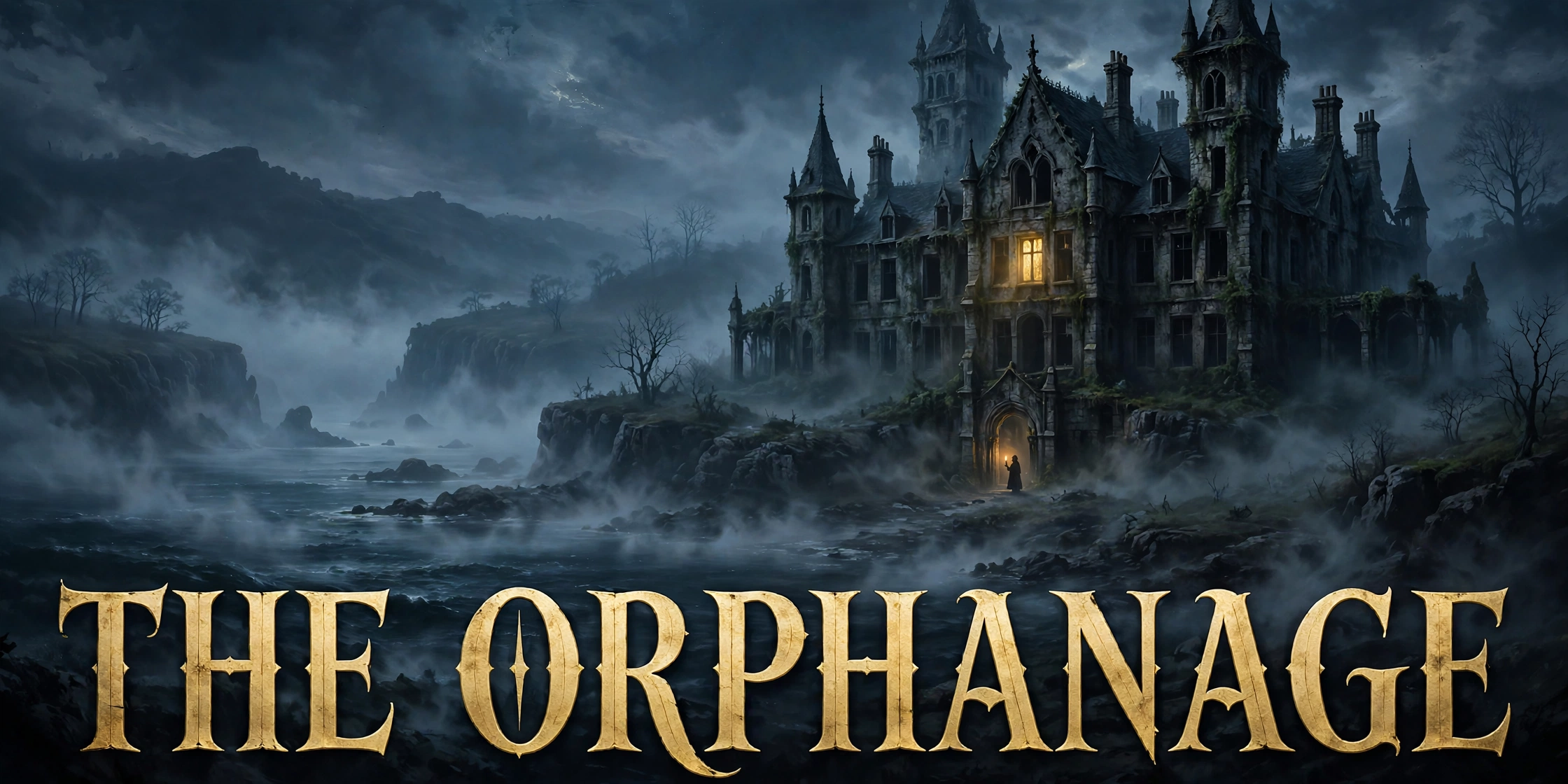
Most horror films want your pulse. The Orphanage wants your pulse first — and then, in its final minutes, it asks for your tears, and takes them. J. A. Bayona’s debut feature, presented by Guillermo del Toro and written by Sergio G. Sánchez, premiered at Cannes in 2007 to a standing ovation reported at more than ten minutes, swept seven Goya Awards from fourteen nominations, became one of the biggest Spanish hits of its year, and quietly redefined what mainstream horror could be: a ghost story built like a grief drama, photographed like a dark fairy tale, and anchored by a lead performance of genuine tragic weight.
Nearly twenty years on, in a genre now dominated by jump-scare machinery, this The Orphanage review makes the case that Bayona’s film has aged better than almost all of them. It is frightening the old way — through atmosphere, patience, sound and story — and its scares mean something, because the film underneath them is about a mother, a missing child, and the rooms in an old house where the past refuses to stay buried. This review covers the performances, the craft, Fernando Velázquez’s beautiful score and the box office, while keeping the film’s devastating final revelations unspoiled.
| Detail | Information |
|---|---|
| Release date | 11 October 2007 (Spain); premiered 20 May 2007 at Cannes |
| Director | J. A. Bayona |
| Writers | Sergio G. Sánchez |
| Genre | Horror, Gothic, Supernatural |
| Language | Spanish |
| Runtime | 105 minutes (some listings vary — see Box Office note) |
| Budget | €4.5 million (approx. $4–6 million in period reporting) |
| Lead cast | Belén Rueda, Fernando Cayo, Roger Príncep, Geraldine Chaplin, Mabel Rivera |
| Our rating | 9/10 |
Laura spent the happiest years of her childhood in a seaside orphanage, before she was adopted and the home was closed. Thirty years later she returns with her husband Carlos and their adopted son Simón, now seven, to restore the grand, empty building and reopen it as a residence for children with disabilities. It should be a homecoming. Instead, Simón — a lonely, imaginative boy who is seriously ill, though he does not know the full truth of his condition — begins talking about a new friend. A friend named Tomás. A friend who wears a sack mask, and who Simón says lives in the house.
At first there are only games, drawings and small disturbances: a treasure-hunt game with clues, of the kind Laura remembers from childhood, that leads Simón to discoveries he should not be able to make. Then, during the orphanage’s opening party — a garden full of children in costume — mother and son quarrel, and Simón vanishes. The police search. Months pass. The house, and whatever waits inside it, begins to offer Laura a different kind of search altogether: the children’s game, played again, clue by clue, in the hope that the house will give her back what it took.
We will not describe what the game leads to, who Tomás really is, or how the film resolves Laura’s search — the ending of The Orphanage is one of modern horror’s most debated and most moving, and it must arrive unspoiled. What can be said is that the screenplay is built like a clock: details planted in the first act return with terrible meaning in the third, and the film can be read two ways at once, as a supernatural haunting and as the portrait of a mind breaking under loss. Bayona has always protected that double reading, and it is a large part of why the film rewards repeat viewings so richly.
Belén Rueda as Laura gives one of the great lead performances in horror cinema, full stop. She was known in Spain largely for television drama when Bayona cast her, and the risk became the film’s greatest asset: Rueda does not act like a horror heroine. She acts like a mother. Her Laura is warm, capable and funny in the early scenes, which is what makes her unravelling so frightening to watch — grief and guilt hollow her out in stages, and Rueda registers every stage in her face and body, until the woman sitting alone in the darkened house, playing a children’s game with something she cannot see, feels less like a character in a ghost story than a person you know, going somewhere you cannot follow. She won widespread honours in Spain for the role, and it remains her defining performance.
Roger Príncep as Simón avoids every trap of the creepy-child role. His Simón is bright, stubborn, funny and sad — a real child, whose talk of invisible friends is all the more unsettling because the boy himself is so lucid. The film’s scares depend on believing him, and you do. Fernando Cayo as Carlos has the thankless role of the rational husband, and plays it with real tenderness: Carlos is not a fool for refusing to believe, he is a man watching the person he loves disappear into a house and a hope he cannot share, and his restraint gives Rueda something solid to break against.
Geraldine Chaplin as Aurora, the medium Laura brings to the house in desperation, appears in essentially one extended sequence — a séance conducted through night-vision cameras that is among the most frightening scenes of the 2000s — and Chaplin, daughter of Charlie Chaplin and a veteran of Spanish cinema, makes every second count: professional, compassionate, and quietly terrified by what she hears. Mabel Rivera as Pilar, a police psychologist who has seen too many missing-child cases, supplies the film’s grounded sorrow in a handful of scenes, including one late conversation that reframes everything Laura believes.
That this was a first feature remains slightly absurd. Bayona directs with the patience of a veteran and the visual imagination del Toro recognised when he came aboard as presenter and producer — a piece of patronage that, by Bayona’s own account, roughly doubled the film’s resources. Cinematographer Óscar Faura builds the orphanage as a character: a handsome, sunlit house in the early reels — shot largely at a real estate on the Asturian coast, with interiors built in Barcelona — that the film gradually re-lights, re-frames and re-sounds until its corridors feel like the inside of a held breath. The famous one-shot game of “one, two, three, knock on the wall” in a darkening corridor — Laura counting, turning, counting again as small figures seem to gather — is pure direction: no effects to speak of, just framing, timing, sound and an actress’s face.
The sound design deserves its own applause. The Orphanage is frightening at volumes most horror films never attempt: creaks, distant water, a child’s voice where no child is, the house settling like something alive. The séance sequence, cross-cutting Aurora’s night-vision wandering with the horrified crew listening in another room, wrings more dread from audio alone than most films manage with their entire effects budget. Editing by Elena Ruiz keeps the dual reading alive to the last reel, never confirming more than Laura herself knows.
Criticisms, honestly: the middle section leans on a few familiar haunted-house devices, and one or two investigation subplots exist mainly to move Laura between revelations. A subplot revelation about Simón’s health is also handled through a device some viewers find contrived. But the film’s control of tone never slips, and its final act pays off every thread it has spun.
Fernando Velázquez’s score is essential to why this film destroys audiences emotionally. Velázquez — who would go on to score Bayona’s The Impossible and A Monster Calls — writes in a lush, melancholic orchestral language built around strings, piano and a recurring, lullaby-like main theme that sounds like a music box remembering a childhood. In the early scenes it is genuinely beautiful, which is the trap: as the story darkens, the same material returns in fractured, shivering forms, so the film’s saddest moments are scored by a corrupted version of its happiest music.
The score’s most important quality is restraint in the scare sequences. Bayona and Velázquez repeatedly choose near-silence — room tone, Laura’s breathing, the house itself — where a lesser production would blast a sting, reserving full orchestral force for the emotional climaxes rather than the shocks. The result is a horror score you can hum, which is precisely why the ending lands the way it does: when the main theme finally returns in full, it carries the entire film with it. The score was widely released and remains one of the most beloved Spanish film soundtracks of its era.
What we loved:
What could be better:
A small film by any measure: The Orphanage was made for about €4.5 million — US databases often list the budget as roughly $4 million, a difference of exchange rates and reporting rather than dispute — and became a phenomenon. It opened at number one in Spain in October 2007, drew over a million admissions in its first four days there according to contemporary reporting, and finished with a worldwide gross of about $78.6 million according to Box Office Mojo — some Spanish sources express the total as roughly €78 million, so figures in the high-$70 millions are the safe way to state it. Either way, it earned back its cost many times over, was among the most successful Spanish debuts in history, and opened successfully in the United States in late December 2007 under Guillermo del Toro’s presenter banner.
Two honest footnotes. First, runtime listings for the film genuinely disagree — between roughly 97 and 106 minutes depending on the database and version — so our Quick Facts table uses the commonly cited 105-minute theatrical figure rather than pretending certainty. Second, the release chronology varies a little by source: the film premiered at Cannes on 20 May 2007 and opened theatrically in Spain in October 2007, with some listings showing an earlier September festival-era date. Its honours are not in dispute: fourteen Goya nominations and seven wins, including Best New Director for Bayona and Best Original Screenplay for Sánchez, and selection as Spain’s official submission for the Academy Award for Best Foreign Language Film, though it was not ultimately nominated.
Absolutely — and go in knowing as little as possible beyond what this review has told you. The Orphanage is the complete package of serious horror: frightening without cruelty, emotional without sentimentality, and crafted with a confidence that still embarrasses bigger productions. If you love The Others, The Devil’s Backbone or Pan’s Labyrinth, this belongs in the same conversation and on the same shelf. Watch it at night, watch it in Spanish with subtitles as it was made, and be ready: the last ten minutes are not really a horror climax at all. They are something sadder and better.
Our rating: 9/10 — a modern horror classic: the rare ghost story that scares you first and breaks your heart second.
Is The Orphanage based on a true story? No. It is an original screenplay by Sergio G. Sánchez, who wrote the first version in the 1990s. Its emotional realism — and the fact that Bayona shot in a real, atmospheric Asturian house — is what makes it feel true.
What is Guillermo del Toro’s connection to The Orphanage? Del Toro presented and helped produce the film. Bayona, his friend, asked him aboard in 2004; del Toro’s involvement raised the budget and the film’s international profile, and his name headlined its release in English-speaking markets.
How many Goya Awards did The Orphanage win? It was nominated for fourteen Goya Awards and won seven, including Best New Director for J. A. Bayona and Best Original Screenplay for Sergio G. Sánchez.
Is The Orphanage too scary for casual horror viewers? It is intense but not gory. The fear comes from atmosphere, sound and dread rather than violence, and its emotional ending affects many viewers more than its scares. It is rated R in the US, mainly for disturbing content and tone.
Is The Orphanage connected to Society of the Snow? Only through their director. Both are J. A. Bayona films — The Orphanage was his 2007 debut and Society of the Snow his 2023 Andes drama — and together they bookend one of the most remarkable careers in modern Spanish cinema.