★ LATEST REVIEWS

Our Rating: ★★★★★ 9/10
No film in 2026 has defied expectations quite like You Can See Everything. A documentary — nearly three hours long, about Elizabeth Holmes, a subject the culture had already chewed through in podcasts, a prestige TV series and a thousand jokes — should not have become a box-office event. Instead it opened to $15 million from just 855 screens, the biggest documentary opening in thirteen years, expanded, and then did something even stranger: it went to number one. In the weekend of 30 October to 1 November 2026 it took about $10.6 million domestically, edging out a DC monster movie, for a domestic total of about $63.9 million. Critics, meanwhile, lost their minds in the good way: a 99 to 100% Rotten Tomatoes score, a Metacritic score around 98 to 99, and talk — serious talk — of a Best Picture campaign, something no documentary has ever achieved. This review will try to explain, without spoiling its wildest turns, how a film about a convicted fraudster became the year’s most talked-about movie.
This review is spoiler-free on the film’s second half. The film changes shape midway through, and that change is its greatest surprise. Nothing here will give it away.
| Release date | 16 October 2026 (limited, United States); expanded 23 October 2026; secret premiere at Telluride, 6 September 2026 |
| Directors | Nathan Fielder and Lance Oppenheim |
| Genre | Documentary, experimental non-fiction |
| Language | English |
| Runtime | About 174 minutes |
| Budget | About $7 million (reported) |
| Lead subjects | Elizabeth Holmes, Billy Evans, Nathan Fielder |
| Distributor | A24 |
| Our rating | 9/10 |
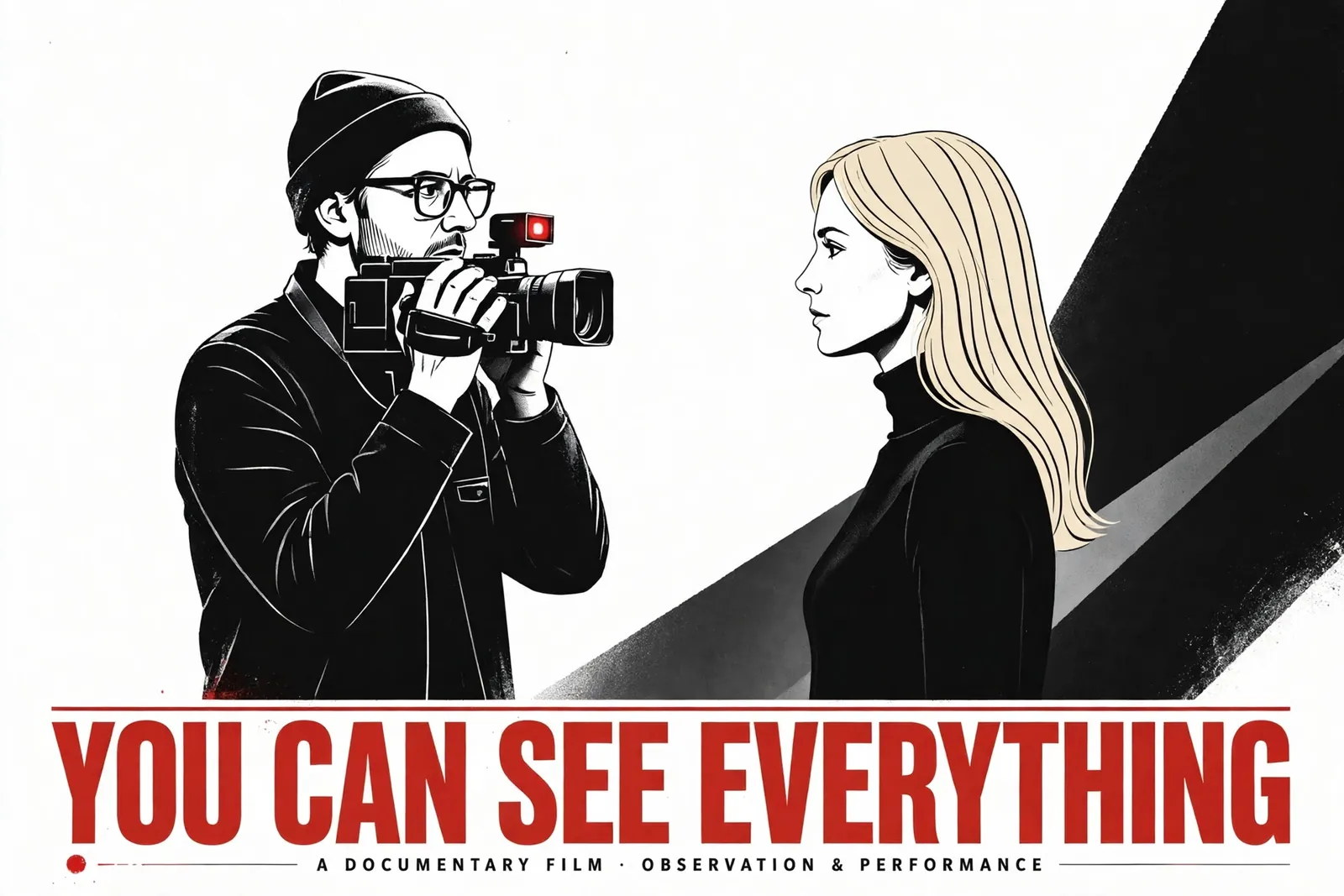
The premise, as A24 announced it, sounds almost simple. Elizabeth Holmes — the Theranos founder convicted of defrauding investors with a blood-testing company whose machines did not work — invited a sceptical film crew to film her in the 34 days before she reported to federal prison. Nathan Fielder, the comedian behind Nathan for You and The Rehearsal, and Lance Oppenheim, the documentarian behind Primetime, spent more than a month with Holmes, her partner Billy Evans and their two young children, in the family’s final days of freedom. The first part of the film is, by most accounts, a relatively straightforward portrait: Holmes performing herself — the voice, the stare, the turtleneck mythology — for the camera, and for herself, while Fielder watches, questions and slowly becomes part of the picture.
Then the film becomes something else entirely. Reviewers agree on this much without agreeing on what to call it: the second ninety minutes depart from conventional documentary into experimental, self-interrogating territory, asking what it means to film a professional liar, what the camera does to the truth, and what Fielder himself is doing in the room. There is, by wide report, a secret actor and a sequence that reframes everything that came before. This review will not describe it, because the film’s power depends on the shock of that turn — but it will say this: the turn is why the film is not just another Holmes retelling. The culture already knew what Holmes did. This film asks what Holmes is, when she is being watched, and whether anyone — filmmaker, audience, Holmes herself — can tell the difference between performance and person.
Elizabeth Holmes as herself — Holmes is the film’s unavoidable centre, and its most unsettling presence. She arrives with the full apparatus of her mythology intact — the deep voice, the unblinking stare, the black turtleneck — and the film’s great achievement is to let that apparatus run long enough for the audience to see the machinery underneath. One trade review called the film an uneasy examination of love, reality television and how filmmakers try, and often fail, to capture real life. Holmes, in this telling, is not a monster or a punchline but a performer whose performance has consumed her, and the film’s most chilling moments are the quiet ones, when the performance slips and something unguarded shows through.
Nathan Fielder as himself — Fielder, who has built a career on blurring the line between documentary and construction, is the perfect and the worst possible person to make this film, and the film knows it. He begins as the sceptical observer and ends somewhere much stranger, and his willingness to put his own confusion on screen — he has said he is still struggling to understand what he experienced — is what elevates the film above a clever stunt. Lance Oppenheim’s direction keeps the whole enterprise steady: the film never loses its nerve, even when its subject seems to be directing it.
Fielder and Oppenheim made the film in secret over three years, with A24 giving them permission to pursue the project with no deadline, and that patience shows in every frame. The film is long — 174 minutes — and it earns its length the way few documentaries do: the first half needs its slow accumulation of detail for the second half’s rupture to land, and the rupture needs the first half’s restraint to feel like a genuine shock rather than a gimmick. The cinematography is clean and unshowy, the editing is patient, and the film’s willingness to sit with uncomfortable silences is its bravest formal choice. At its best, it feels less like a documentary than like a controlled experiment in which the audience is one of the subjects.
If the film has a flaw, it is the one its own admirers concede: it is strange, demanding and very long, and viewers who arrive expecting a conventional true-crime documentary will be wrong-footed. Some will find the second half indulgent rather than revelatory. This review’s judgment is that the gamble pays off — the film’s strangeness is its argument — but readers who prefer their documentaries straight should know what they are walking into.
The score is restrained to the point of austerity, and that restraint is deliberate: the film wants you to hear Holmes’s voice, Fielder’s questions and the silence between them, without musical guidance on how to feel. The sound design does subtle, essential work in the domestic scenes — children in the next room, a house preparing for an absence — and the contrast between those quiet passages and the film’s later, stranger sequences is part of its design. This is not a film with a soundtrack to hum on the way home. It is a film whose quiet stays with you.
What we loved:
What could be better:
The numbers are, by documentary standards, absurd. You Can See Everything opened to about $15 million from 855 screens — a per-screen average of about $17,543, with more than 2,000 sellout showings, and the largest debut for a film on under 1,000 screens since Borat in 2006, and the biggest non-music documentary opening in two decades. It expanded on 23 October, rose to about $19.5 million in its second weekend, and then, in its third weekend (30 October–1 November), rose to number one with about $10.6 million, just ahead of Clayface’s $10.4 million, for a domestic total of about $63.9 million. Against a reported budget of about $7 million and marketing under $10 million, that is not just a hit — it is one of the most profitable films of the year, and A24 is reportedly campaigning it for Best Picture, a prize no documentary has ever won. Younger audiences, by several reports, drove the ticket sales, along with a cultural moment — lookalike contests in Washington Square Park, endless social-media discussion — that turned a documentary into an event.
One note for readers outside the United States: at the time of writing the film had not yet opened in India, where Sony Pictures holds distribution rights but no theatrical date had been announced. Indian readers should watch for that announcement rather than assume a date.
Yes — in a theatre, with an audience, if you possibly can. You Can See Everything is the rare documentary that justifies the big screen, because its power depends on collective attention: a room full of people watching a woman perform, and slowly realising they are part of the performance. It is long, strange and occasionally uncomfortable, and it will not give you the Holmes story you already know. It will give you something rarer: a film about truth that does not trust itself, and is all the more truthful for it.
Our rating: 9/10 — The year’s strangest hit and one of its best films — a documentary that becomes an experiment, and an experiment that becomes essential.
What is You Can See Everything about?
A documentary in which Nathan Fielder and Lance Oppenheim film Theranos founder Elizabeth Holmes and her family during the 34 days before she reports to prison — and then turn the camera on the act of filming itself.
Who directed You Can See Everything?
Nathan Fielder and Lance Oppenheim, for A24.
When was You Can See Everything released?
It premiered as a secret screening at Telluride on 6 September 2026, opened in limited US release on 16 October 2026, and expanded on 23 October 2026.
How long is You Can See Everything?
About 174 minutes.
How much has You Can See Everything earned at the box office?
About $63.9 million domestically after the 30 October–1 November weekend, when it reached number one, against a reported budget of about $7 million.
Has You Can See Everything released in India?
Not yet at the time of writing — Sony Pictures holds Indian distribution rights, but no theatrical date had been announced.
Is You Can See Everything a true documentary?
It begins as one and then deliberately breaks documentary convention in its second half; that break is the film’s central artistic choice, and its most debated one.
Could You Can See Everything win Best Picture?
A24 is reportedly campaigning it, but no documentary has ever won Best Picture, so it would be making history if it did.