★ LATEST REVIEWS

★★★★☆ Our Rating: 7.5/10
Let us start with the disclosure that shapes this entire The Black Book review: there is no box office to report, because there never was one. Editi Effiong’s crime thriller went straight to Netflix on 22 September 2023 — and then did something no Nigerian film had done before. Within 48 hours it had racked up 5.6 million views, according to Netflix figures reported by the Associated Press; it spent three weeks in the platform’s global Top 10 for English-language films, peaked at number three, and charted in more than 69 countries. A revenge thriller made in Lagos, financed by Nigerian tech money, became a worldwide streaming event.
The man at its centre is Richard Mofe-Damijo — RMD — one of Nollywood’s defining stars for three decades, here playing a church deacon with a buried past as a hitman, dragged back into violence when corrupt police kill his only son. Nigerian critics, Premium Times among them, quickly labelled the character a Nigerian John Wick. The comparison is useful and unfair in equal measure, and this review will use it, test it, and explain where Effiong’s directorial debut — ambitious, handsome, overstuffed — genuinely earns its historic success, and where its complicated plot trips over its own ledger.
| Detail | Information |
|---|---|
| Release date | 22 September 2023 (Netflix) |
| Director | Editi Effiong |
| Writers | Bunmi Ajakaiye, Editi Effiong |
| Genre | Crime Thriller, Action, Revenge Drama |
| Language | English, Nigerian Pidgin |
| Runtime | 124 minutes |
| Budget | $1 million (reported — see box-office section) |
| Lead cast | Richard Mofe-Damijo, Ade Laoye, Sam Dede, Alex Usifo, Shaffy Bello, Ireti Doyle, Olumide Oworu |
| Our rating | 7.5/10 |
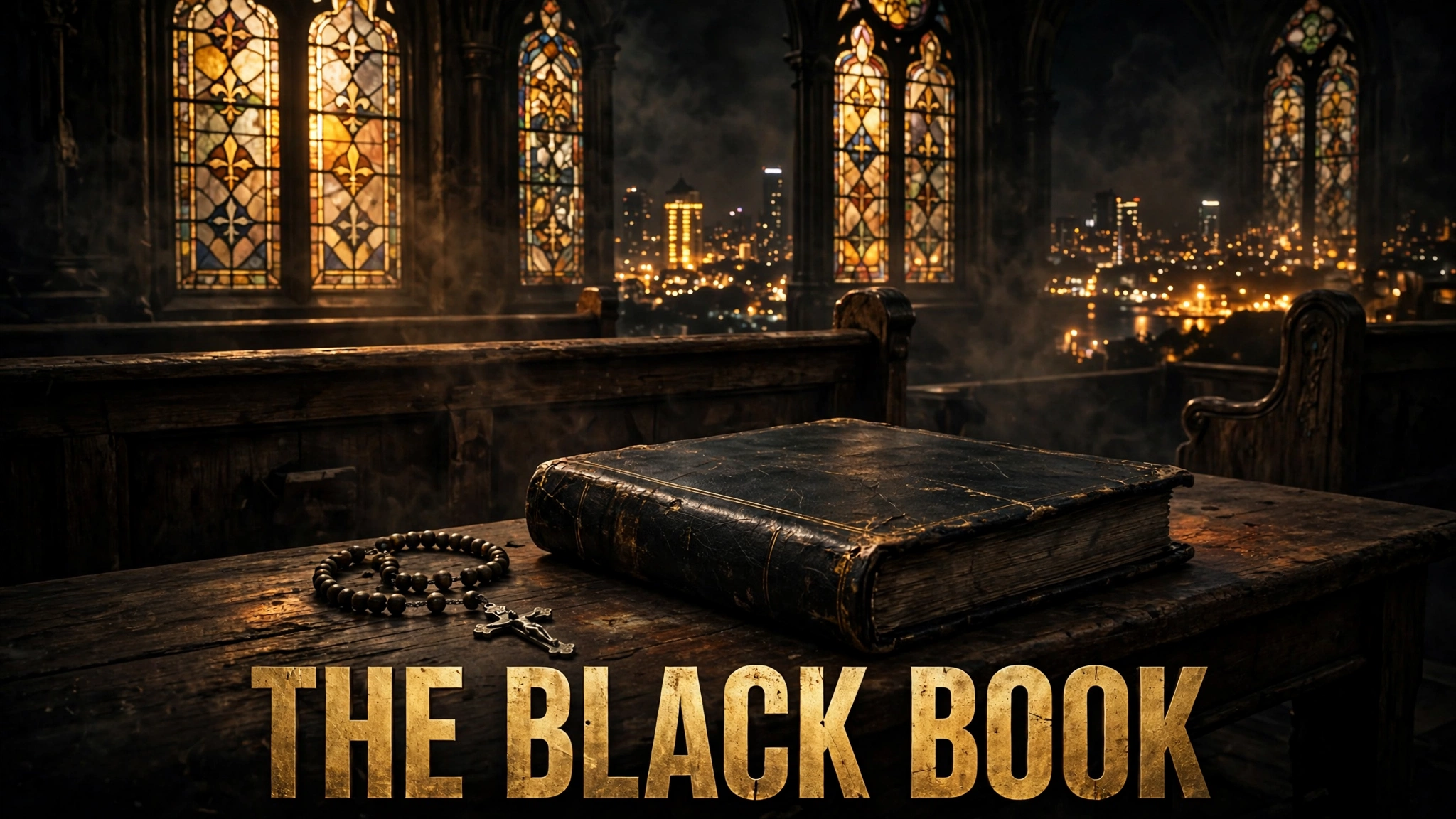
Paul Edima (Richard Mofe-Damijo) has built a quiet second life. Once, decades ago, he was something else entirely — an enforcer inside a network of military strongmen, drug operations and political fixers, a man who kept records of everything. He walked away from that world by trading in his greatest weapon: a black book, a ledger of evidence against Nigeria’s corrupt elite, surrendered in exchange for his life and the life of a child he refused to kill. Now he is a deacon, a widower, a father whose whole world is his son Damilola (Olumide Oworu).
Then a kidnapping shakes Lagos. A prominent anti-corruption campaigner’s family is attacked, and the police machinery needs a culprit more than it needs the truth. Damilola, innocent, is framed, taken — and killed. The system that killed him then closes ranks, and Paul discovers what thousands of ordinary Nigerians in the film’s audience already knew: there is no official road to justice for a man like him. So he takes the other road. With the help of Vic Kalu (Ade Laoye), a young journalist chasing the same killers for reasons that turn out to be painfully personal, Paul begins working his way back up the chain — towards his old commander, General Issa (Alex Usifo), and towards the little black book that powerful men have built their careers on top of.
It is a classic revenge architecture, and Effiong layers onto it a compressed, angry history of modern Nigeria: military rule that never quite ended, merely changed into civilian clothes, as the director has put it in interviews; police brutality of the kind that fuelled the #EndSARS protests; illegal mining, bought editors, and private armies. We will not spoil the ledger’s final destination or who survives the war Paul starts — only note that the film is less interested in whether Paul wins than in what winning costs a country where everyone in power is in the book.
Richard Mofe-Damijo as Paul Edima is the reason the film works as well as it does. At an age when action roles are usually handed to younger men, RMD plays Paul’s violence as something remembered rather than enjoyed — economical, tired, terrifying precisely because it is reluctant. His best scenes are the quiet ones: a father at a grave, a deacon whose faith and fury are in open war, a man confessing an old sin to the one person alive with the right to hate him. It is a star performance in the old sense, built on presence and grief, and the Africa International Film Festival honoured him for it.
Ade Laoye as Vic Kalu has the film’s most difficult emotional assignment and mostly lands it: a journalist whose professional crusade conceals a childhood wound that connects her, devastatingly, to Paul himself. Laoye’s scenes with RMD are the film’s dramatic peak. Alex Usifo as General Issa plays power the Nigerian way — soft-voiced, avuncular, absolutely certain the country belongs to men like him — while Shaffy Bello as Big Daddy, a businesswoman with a private army of female fighters, walks off with every scene she enters and deserved a film of her own. Sam Dede as Angel and Ireti Doyle as the Commissioner add veteran steel in support, and Olumide Oworu makes Damilola’s brief presence warm enough that the loss driving the next two hours genuinely registers.
For a first feature, the scale Effiong attempts is remarkable, and much of it is real. Production designer Pat Nebo — a Nollywood legend, who died before the film’s release — built 38 sets from scratch for the production, an extraordinary undertaking by Nigerian standards, and cinematographer Yinka Edward gives Lagos and Kaduna a hard, handsome, big-canvas look: this is a film that wants Nigeria photographed like a global action location, and largely achieves it. The shoot itself ran for months, with around a year and a half in post-production, and Antonio Rui Ribeiro’s editing later won at the Africa Magic Viewers’ Choice Awards.
Effiong’s weaknesses are a debut director’s classic pair: more plot than the film can carry, and action that is staged with ambition slightly beyond its choreography. The middle hour keeps introducing players, factions and flashbacks until the revenge line — beautifully simple at the start — needs untangling, a criticism Nigerian reviewers made on release and one that still stands. Several confrontations cut away where a John Wick would linger, and a few sequences lean on the score to manufacture urgency the staging has not. But the eye is undeniable. Effiong, who came to directing from building a tech company, directs like a man who raised money by promising scale and then delivered it on screen.
The score is by Kulanen Ikyo, and it works in the modern thriller register: low pulses and percussive pressure under the pursuits, sombre strings for Paul’s church life and grief, silence saved for the confessions. Ikyo understands the film’s central contrast — the sacred quiet Paul chose versus the violent noise pulling him back — and scores that contrast rather than simply scoring the fights. Nigerian musical flavour colours the edges without turning the film into a compilation album, and the music’s restraint in the final act is welcome: by then, the film has earned the right to let a father’s face do the work. It is effective, professional scoring — a notch below the film’s visual ambition, a notch above most of what Nollywood thrillers have historically been given.
What we loved:
What could be better:
To state it plainly, as this site promised: The Black Book has no box office. It was never released in cinemas in any conventional commercial run; Netflix released it globally on 22 September 2023, so there are no ticket sales, no admissions figures and no theatrical gross to quote, and any website offering you one is inventing it.
What exists instead is streaming performance, and here the reported record is strong — with the caveat that all streaming numbers ultimately come from Netflix itself, republished by press coverage. The Associated Press, reporting Netflix’s figures, recorded 5.6 million views in the first 48 hours, a peak of number three on the global English-language film chart in its second week, three weeks in that global Top 10, and Top 10 placement in more than 69 countries. The Hollywood Reporter’s account of the phenomenon added that the film was watched by more than 20 million people in its opening weeks — a broader, looser measure than Netflix’s official “views,” so we flag it as a reported estimate rather than a chart figure. Even sticking only to the hardest numbers, the conclusion is safe: this was, on release, the biggest global streaming performance ever recorded by a Nigerian film.
The budget belongs in this section too. The production is widely and consistently reported — including in the trade and business press that covered its unusual financing by Nigerian tech founders and investors — as a $1 million film, a record-scale sum for Nollywood at the time. We list it as a reported figure rather than an audited one, because Nigerian production budgets are not independently verified. Against that reported million, a worldwide Netflix hit was a landmark return in reach, whatever the licensing fee was — and Netflix does not publish those either.
Yes, if you want to understand where Nollywood is going — and mostly yes even if you just want a solid revenge thriller for the evening. The Black Book is over-plotted and occasionally strains at its own ambitions, but it has a great star performance, real scale, real anger and a story rooted in specifically Nigerian wounds that no Hollywood production could fake. Watch it as a milestone first and a thriller second, and both viewings will reward you. It is not Nigeria’s John Wick, in the end. It is something more interesting: Nigeria’s argument, conducted at gunpoint, about who the country belongs to.
Our rating: 7.5/10 — a historic streaming hit with a towering lead turn; overstuffed in the middle, undeniable in impact.
Is The Black Book based on a true story? No. Paul Edima, General Issa and the ledger are fictional. But the film is built deliberately on real Nigerian conditions — police brutality, godfather politics, the afterlife of military rule — which is why Nigerian audiences responded to it as recognition, not fantasy.
Why is there no box office figure for The Black Book? Because it was a Netflix film, released directly to streaming worldwide on 22 September 2023, with no conventional cinema run. Its success is measured in Netflix views and chart positions, which we report — with their sources and limits — in the box-office section above.
Is The Black Book really a $1 million film? That is the figure consistently reported by Nigerian and international coverage, and it was considered a record budget for a Nollywood production. Like most Nigerian budgets it was not independently audited, so we present it as reported, not confirmed.
Do I need to know Nigerian politics to follow The Black Book? No. The revenge story is clear on its own terms, and the film explains its world as it goes. Viewers who lived through the #EndSARS era will feel extra layers, but the emotional line — a father, a murdered son, a rotten system — travels anywhere.
Where can I watch The Black Book? It is a Netflix title and streams on the platform wherever it is licensed. It is Editi Effiong’s feature directing debut, produced by Anakle Films.