★ LATEST REVIEWS

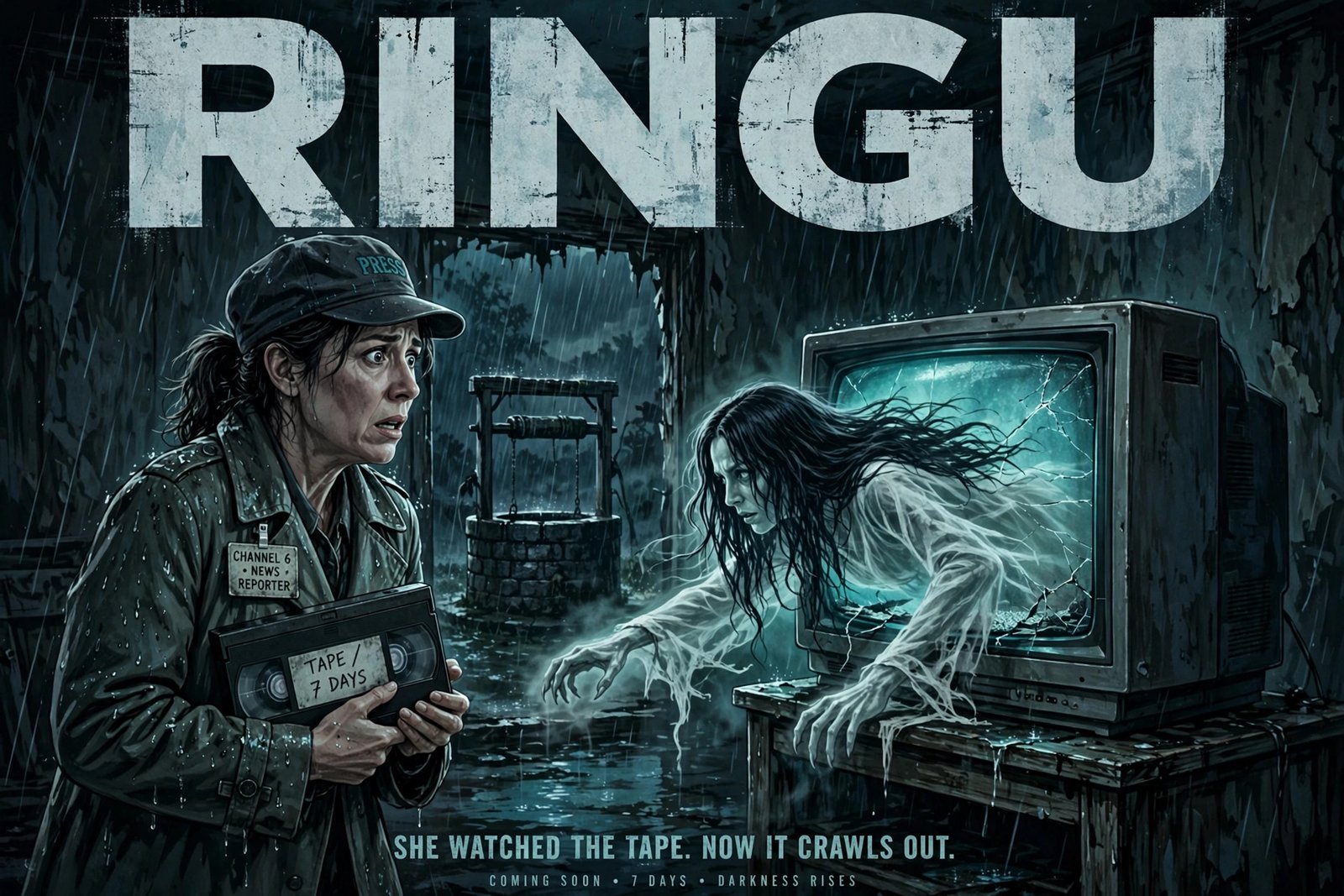
★★★★★ Our Rating: 9/10
Some horror films scare you for a night. Ringu scared an entire industry into a new direction. Hideo Nakata’s 1998 film — released in Japan as Ring and known internationally as Ringu — took a simple, almost childishly eerie premise (watch a videotape, die in seven days) and turned it into one of the most influential horror films ever made. It launched the J-horror wave, gave the world Sadako, and proved that dread could be far more frightening than gore. More than twenty-five years later, it still works, and it still makes you think twice before answering a ringing phone.
This review is spoiler-free on the film’s ending and its final revelation. The mystery is the point, and it deserves to be met fresh.
| Detail | Information |
|---|---|
| Release date | 31 January 1998 (Japan) |
| Director | Hideo Nakata |
| Writer | Hiroshi Takahashi, based on the 1991 novel Ring by Koji Suzuki |
| Genre | Supernatural psychological horror |
| Language | Japanese |
| Runtime | 95 minutes (some listings give 96 minutes) |
| Budget | $1.2–1.5 million (sources differ; see Box Office section) |
| Lead cast | Nanako Matsushima, Hiroyuki Sanada, Miki Nakatani, Rikiya Otaka, Yuko Takeuchi, Hitomi Sato |
| Our rating | 9/10 |
Reiko Asakawa (Nanako Matsushima) is a television reporter investigating a strange rumour: teenagers who watched a mysterious videotape in a holiday cabin have died, all in the same inexplicable way, exactly one week later. At first it sounds like an urban legend, the kind of story a journalist chases for a slow news day. Then Reiko watches the tape herself.
The tape is a sequence of grainy, dreamlike images — a woman brushing her hair in a mirror, a well, a figure crawling — with no explanation attached. Afterwards, the phone rings. Reiko has seven days to understand what she has seen, or she will share the fate of the teenagers she was investigating. She turns to her ex-husband Ryuji (Hiroyuki Sanada), a university professor with a sceptical mind and a useful knowledge of folklore, and together they retrace the tape’s images to their source: a remote island, a volcanic past, and a girl named Sadako whose story explains everything and forgives nothing.
What makes the premise so durable is its elegant cruelty. The curse is not random; it follows rules, and rules can be investigated. Reiko and Ryuji are not running from a monster so much as decoding one, and every clue they find narrows the trap rather than opening an escape. The film’s famous final stretch reframes everything the audience thought it understood, in a way that is both logical and deeply unsettling. Without spoiling it, the ending is the reason the film became a legend: it takes the idea of a chain letter — pass it on or suffer — and makes it literal, moral and terrifying all at once.
Nanako Matsushima as Reiko Asakawa — Matsushima carries the film with a performance built on composure under pressure. Reiko is a professional investigator first and a frightened woman second, and Matsushima never lets the fear tip into hysteria. That restraint is what makes the horror land: when Reiko’s control finally cracks, the audience feels it. She is also, importantly, a mother as well as a reporter, and the film uses that double stake — her own life and her young son’s — to raise the tension without ever becoming sentimental about it.
Hiroyuki Sanada as Ryuji Takayama — Sanada, already one of Japan’s most respected actors, gives Ryuji a dry, intellectual calm that works as the perfect counterweight to Reiko’s urgency. Ryuji approaches the curse like a research problem, and Sanada plays that rationality straight, which makes his own moments of fear hit harder. The Reiko–Ryuji relationship — divorced, prickly, but bound by shared history and a child — gives the investigation an emotional spine that a simpler horror film would not have bothered with.
Miki Nakatani as Mai Takano, and the supporting cast — Nakatani’s Mai, Ryuji’s student, becomes important in the film’s later stages, and she plays the shift from academic curiosity to dread with quiet conviction. Rikiya Otaka, as Reiko’s young son Yoichi, is convincingly natural rather than stagey, which matters in a film where a child’s safety is the emotional core. Yuko Takeuchi and Hitomi Sato open the film as two teenagers trading ghost stories, and their prologue — funny, then suddenly not funny at all — is one of the great cold opens in horror.
Nakata’s direction is a masterclass in restraint. Ringu contains almost no jump scares in the modern sense and very little on-screen violence. Instead, Nakata builds dread from atmosphere: grey skies, rain on windows, the hum of a television in an empty room, the blue-grey colour palette that makes even daylight feel cold. Cinematographer Junichiro Hayashi shoots Japan as a place of damp, overcast stillness, and the cursed tape’s images — shot on grainy, degraded video — feel genuinely alien beside the film’s clean, quiet realism.
The editing deserves special mention. Nobuyuki Takahashi cuts the investigation with a patience that modern horror rarely allows, letting scenes breathe and letting the audience sit with an image a beat longer than comfortable. Kenji Kawai’s score is used sparingly, often dropping away entirely so that silence does the work. When sound returns — a television’s static, a phone’s ring, a well’s echo — it feels like an intrusion.
One honest caveat: the film’s low budget occasionally shows, particularly in a few effects shots that look dated beside today’s standards, and the middle stretch’s investigative detail can feel slow to viewers raised on faster horror. But the slowness is the point. Ringu is a mystery first and a horror film second, and its patience is what makes its climax so devastating.
Kawai’s score is minimal and effective, favouring low drones and uneasy piano figures over melody. The film’s most important sounds, though, are not musical at all: the hiss of a videotape, the ring of a telephone, the scrape of something climbing out of a well. Nakata understands that horror lives in everyday sounds made strange, and Ringu‘s sound design is a large part of why the film lodges in the memory long after viewing.
What we loved:
What could be better:
Ringu was made for a tiny budget — reported figures differ between about $1.2 million and $1.5 million, so a range is the honest figure — and it became a phenomenon. Contemporary listings put its worldwide theatrical gross at roughly $19.5 million, an estimate that understates its true impact, since the film’s real conquest happened through home video, remakes and influence rather than opening weekends alone. It was a box-office hit in Japan and across Asia, and its international success launched the J-horror wave: Ju-on, Dark Water (also directed by Nakata), and eventually Hollywood’s own remake, Gore Verbinski’s The Ring (2002), which cost roughly fifty times as much to make.
The numbers, in other words, tell only part of the story. Ringu‘s real box office was cultural: it changed what horror films around the world looked like for a decade, replacing slashers with long-haired ghosts, cursed objects and quiet dread.
Yes — if you have any serious interest in horror, this is essential viewing, and if you only watch one J-horror film, it should be this one. Ringu is not the loudest or bloodiest horror film you will ever see, and that is precisely why it endures. Its premise is airtight, its atmosphere is suffocating, and its ending reframes the whole film in a way that stays with you for days. Watch it on a rainy night, with the lights low, and try not to answer the phone afterwards.
Our rating: 9/10 — A landmark of horror: patient, intelligent and genuinely frightening, with a final act that rewrote the genre.
What is Ringu about?
A reporter investigates the deaths of teenagers who watched a mysterious videotape, watches the tape herself, and has seven days to uncover its origin before she suffers the same fate.
Who is Sadako?
Sadako Yamamura is the vengeful spirit at the centre of the curse, a girl whose tragic story is tied to the images on the tape. She became one of horror cinema’s most iconic figures.
Is Ringu based on a book?
Yes. It adapts Koji Suzuki’s 1991 novel Ring, with a screenplay by Hiroshi Takahashi.
Is Ringu the same as The Ring (2002)?
No. The Ring is Hollywood’s remake of Ringu, directed by Gore Verbinski and starring Naomi Watts. The original Japanese film is a different, quieter and in many ways more unsettling experience.
How much did Ringu earn at the box office?
Roughly $19.5 million worldwide on a budget reported between $1.2 million and $1.5 million, though its cultural impact through video, remakes and influence far exceeded those theatrical figures.
