★ LATEST REVIEWS

★★★★☆ Our Rating: 7/10
There is a particular pleasure in a horror film that knows exactly what it is and refuses to apologise for it. Victorian Psycho, which arrives in American cinemas on 13 November 2026 through Bleecker Street, is exactly that kind of film: a gothic horror thriller that takes the most familiar setup in the genre — the strange new governess in the remote country house — and fills it with blood, wit and a lead performance so ferocious that it carries the whole picture. Directed by Zachary Wigon and adapted by Virginia Feito from her own 2025 novel of the same name, the film stars Maika Monroe as Winifred Notty, a young woman who arrives at Ensor House in Yorkshire in 1858 to teach the children of a wealthy family, and who turns out to be something far more dangerous than anyone in the house suspects. It premiered at Cannes on 21 May 2026, in the Un Certain Regard section, where it was reportedly greeted with a five-minute standing ovation. That reception was not a fluke.
This review is spoiler-free. It draws on reported facts about the film’s release, cast and critical reception, and the rating reflects the film as it stands on its opening weekend.
| Detail | Information |
|---|---|
| Theatrical release | 13 November 2026 (US wide, Bleecker Street; UK and Ireland, True Brit) |
| World premiere | 21 May 2026, Cannes Film Festival (Un Certain Regard) |
| Director | Zachary Wigon |
| Written by | Virginia Feito, from her own 2025 novel Victorian Psycho |
| Genre | Gothic horror thriller |
| Language | English |
| Starring | Maika Monroe (Winifred Notty), Thomasin McKenzie (Ms. Lamb), Jason Isaacs (Mr. Pounds), Ruth Wilson (Mrs. Pounds), Amy De Bhrun (Mrs. Fancey), Jacobi Jupe (Andrew), Evie Templeton (Drusilla) |
| Produced by | Dan Kagan (also produced Longlegs) |
| Rating | R (strong bloody violence, brief sexual material) |
| Runtime | Listings conflict — about 90 minutes per Screen Daily and JoBlo, against 1 hour 42 minutes on Rotten Tomatoes |
| Rotten Tomatoes | 76% (72 critics, average 6.5/10) |
| Metacritic | 52–54 out of 100 |
| Notable reviews | JoBlo 8/10, ScreenRant 6/10, Original-Cin B+ |
| Original casting | Margaret Qualley was originally cast as Winifred and dropped out |
| Box office | No verified figures yet — the film opens today |
| Our rating | 7/10 |
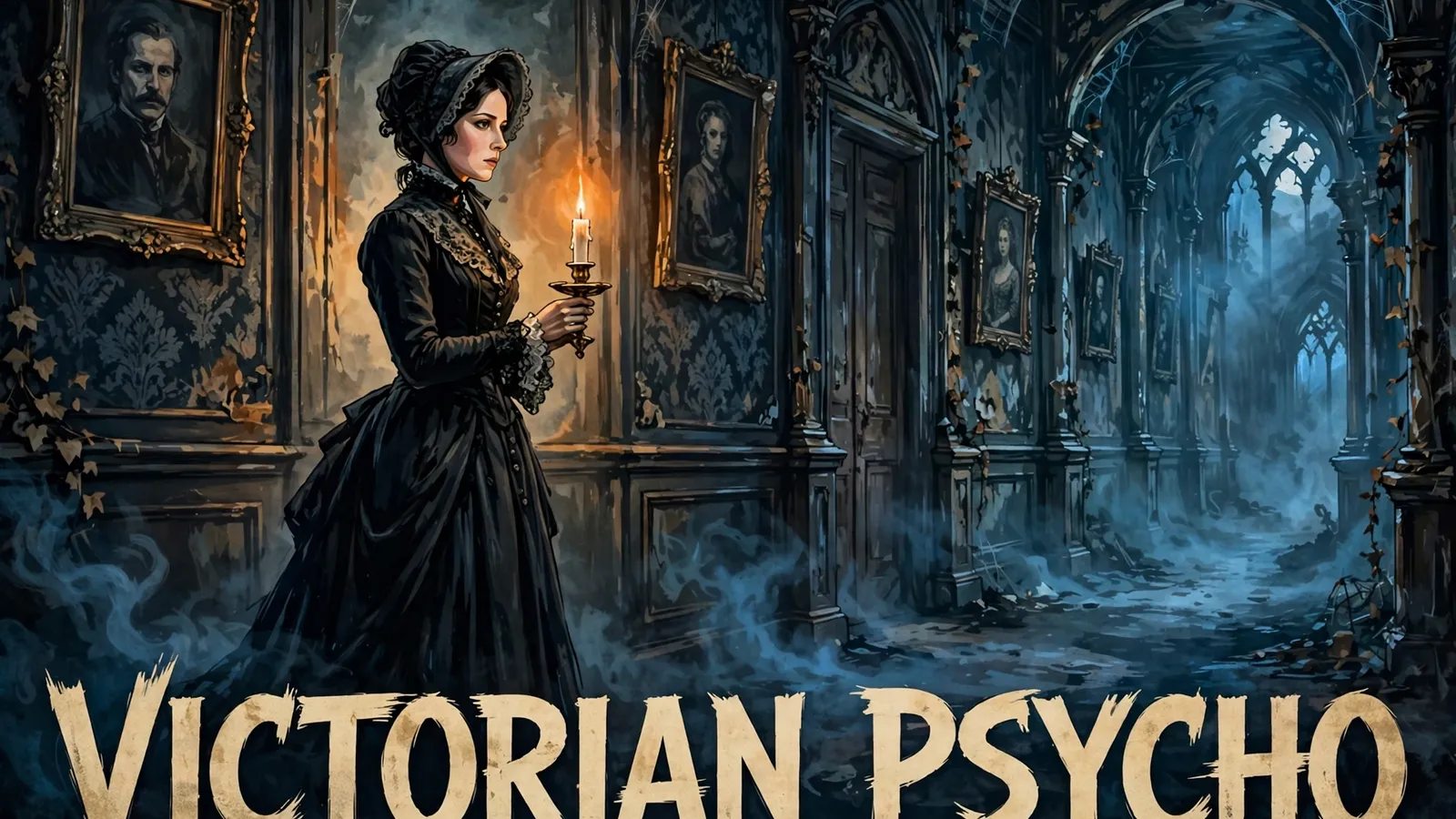
The setup is a classic of gothic fiction, and the film knows it. In 1858, Winifred Notty arrives at Ensor House, a grand and gloomy manor in Yorkshire, to take up a post as governess to the children of Mr. and Mrs. Pounds. She is young, eccentric and apparently harmless — the kind of woman a respectable Victorian household would hire without a second thought. The house itself is the other main character: cold corridors, locked doors, portraits watching from the walls, and a staff that knows more than it says.
What makes the story work is not the setup, which any reader of gothic fiction will recognise instantly, but the way the film treats it. Victorian Psycho is not a slow-burn mystery in which the audience waits patiently for the governess’s secret to be revealed. The film tells you, early and plainly, that Winifred is not what she seems — and then it delights in watching the household discover that fact, one encounter at a time. The pleasure is in the watching, not the waiting: in seeing a woman who has been underestimated by everyone around her turn the manners and expectations of Victorian society into weapons. The film’s title is doing honest work here. This is a story about a psychopath in a crinoline, and the film is at its best when it leans into the collision between the politeness of the period and the violence of its heroine.
The novel’s author, Virginia Feito, wrote the screenplay herself, and that shows in the film’s confidence about its own tone. Feito’s novel was a darkly comic take on the gothic tradition, and the film preserves that sensibility: the violence is graphic, but it is staged with a theatrical flair that keeps it from feeling merely grim. There are moments of genuine black comedy here, and they work because the film never winks at the audience — it plays its absurdities straight, and lets the audience find the humour in the gap between what Victorian society expects and what Winifred actually does.
Everything about this film runs through Maika Monroe, and she delivers one of the most striking performances of the year. As Winifred Notty, Monroe has to play a woman who is performing respectability at all times — the polite governess, the dutiful employee — while letting the audience see the calculation underneath. It is a performance built on small choices: a smile held a beat too long, a pause before answering, a glance that lingers where it should not. Monroe has been building toward a role like this for years, from It Follows to Longlegs, and Victorian Psycho gives her the fullest showcase yet of what she can do. Reviewers who were mixed on the film as a whole were near-unanimous in praising her.
Thomasin McKenzie, as Ms. Lamb, the maid, is Monroe’s most important scene partner, and she is excellent in a role that could easily have been thankless. Ms. Lamb is the person in the house most likely to notice that something is wrong with the new governess, and McKenzie plays her watchfulness with a quiet intelligence that makes the dynamic between the two women the film’s most interesting relationship. McKenzie has a gift for playing characters who see more than they say, and here she uses it to give the film a second centre of gravity.
Jason Isaacs as Mr. Pounds and Ruth Wilson as Mrs. Pounds bring the weight of two of Britain’s most reliable actors to the household’s ruling couple. Isaacs gives Mr. Pounds a blustering entitlement that makes him an ideal target for Winifred’s attentions. Wilson plays Mrs. Pounds as a woman whose control of her household is both her armour and her weakness. Amy De Bhrun as Mrs. Fancey, Jacobi Jupe as Andrew and Evie Templeton as Drusilla fill out the household with performances that keep the film’s world feeling lived-in rather than merely decorative. Margaret Qualley was originally cast as Winifred and dropped out before filming; Monroe does not just fill the role, she owns it.
Zachary Wigon directs with a clear sense of what the film needs to be. The gothic setting is not decoration here; it is the film’s whole visual language. Ensor House is shot as a place that is beautiful and suffocating at the same time — candlelight and shadow, heavy curtains and narrow corridors, a house that seems to close in on its inhabitants a little more with each scene. The period detail is convincing without being fussy: the costumes, the furniture, the manners of the household all feel right, and the film trusts its audience to accept the world without explaining it. That confidence matters, because a gothic horror film lives or dies on whether the audience believes in the house, and Wigon makes Ensor House feel real.
The violence, which earned the film its R rating for strong bloody violence, is handled with a deliberate theatricality. This is not the shaky, chaotic violence of a slasher film; it is staged, almost choreographed, and the film’s willingness to let the audience see what Winifred does — rather than cutting away — is part of its point. The violence is the story: it is how Winifred expresses herself, and the film treats it as a form of communication rather than a shock tactic. That does not make it easy to watch, and viewers who are squeamish about blood should be warned.
The film’s pacing is its weakest technical element, and it is where the mixed reviews have their sharpest point. At around 90 minutes according to Screen Daily and JoBlo — or 1 hour 42 minutes according to Rotten Tomatoes, a conflict the listings have not resolved — the film is either a tight, lean thriller or a slightly baggy one, depending on which number you trust. Either way, there are stretches in the middle where the film’s energy dips, and where the gothic atmosphere begins to feel like a substitute for forward motion.
The score and sound design are among the film’s quieter strengths. A gothic horror film needs a soundscape that can hold dread and elegance at the same time, and Victorian Psycho manages it: the creak of floorboards, the wind against the windows, the hush of a house that is always listening. The music leans into period-appropriate textures — strings, piano, the occasional choral swell — but it is used sparingly, and the film is often at its most unsettling when it is quiet. The sound design deserves particular credit for the way it makes Ensor House feel alive: every corridor has its own acoustic, and the effect is to make the audience feel as trapped as the characters are.
What we loved:
What could be better:
Victorian Psycho premiered at Cannes on 21 May 2026, in the Un Certain Regard section, and was reportedly greeted with a five-minute standing ovation — a strong start for a horror film at a festival that does not always embrace the genre. The critical response since then has been warm but divided. On Rotten Tomatoes the film holds 76% from 72 critics, with an average of 6.5 out of 10. On Metacritic, though, it sits at 52 to 54 out of 100, a much cooler verdict. The individual reviews capture the split: JoBlo gave it 8 out of 10, ScreenRant gave it 6 out of 10, and Original-Cin gave it a B+. The consensus is that the film is an enjoyably blood-soaked lark, carried by Monroe’s ferocious lead performance.
There are no verified box-office figures yet — the film opens in the United States today, 13 November 2026, in a wide release through Bleecker Street, with True Brit handling the United Kingdom and Ireland — so its commercial prospects are still an open question. A wide release for a gothic horror film is a vote of confidence from its distributor, and the Cannes reception suggests the film has an audience. Whether that audience turns up in numbers will depend on whether word of mouth centres on Monroe’s performance, the film’s strongest selling point, or on the mixed reviews, which are its weakest.
Yes — if you like gothic horror with a sense of humour and a lead performance worth the price of admission on its own. Victorian Psycho is not a flawless film: it drags in the middle, its supporting characters are thinner than they should be, and its critical reception is genuinely divided. But Maika Monroe is magnificent, the atmosphere is superb, and the film’s dark comedy is a genuine pleasure. Go in expecting a blood-soaked gothic lark, and you will have a very good time. Our rating: 7 out of 10.
When was Victorian Psycho released?
Victorian Psycho was released in cinemas in the United States on 13 November 2026 in a wide release through Bleecker Street, with True Brit releasing it in the United Kingdom and Ireland. It premiered at Cannes on 21 May 2026.
Who directed Victorian Psycho?
Zachary Wigon directed the film. Virginia Feito wrote the screenplay, adapting her own 2025 novel of the same name.
Who stars in Victorian Psycho?
Maika Monroe stars as Winifred Notty. Thomasin McKenzie plays Ms. Lamb, Jason Isaacs plays Mr. Pounds, Ruth Wilson plays Mrs. Pounds, Amy De Bhrun plays Mrs. Fancey, Jacobi Jupe plays Andrew, and Evie Templeton plays Drusilla.
What is the story of Victorian Psycho?
Set in 1858, the film follows Winifred Notty, a young governess who arrives at Ensor House in Yorkshire to teach the children of the Pounds family — and who turns out to be far more dangerous than anyone in the house suspects.
Who was originally cast as Winifred?
Margaret Qualley was originally cast as Winifred Notty and dropped out of the project before filming. Maika Monroe took over the role.
How long is Victorian Psycho?
Listings conflict. Screen Daily and JoBlo list the film at about 90 minutes, while Rotten Tomatoes lists it at 1 hour 42 minutes.
What are the critic scores for Victorian Psycho?
The film holds 76% on Rotten Tomatoes (72 critics, average 6.5 out of 10) and 52–54 on Metacritic. JoBlo gave it 8 out of 10, ScreenRant gave it 6 out of 10, and Original-Cin gave it a B+.
What is Victorian Psycho rated?
The film is rated R for strong bloody violence and brief sexual material.