★ LATEST REVIEWS

★★★★☆ Our Rating: 7.5/10
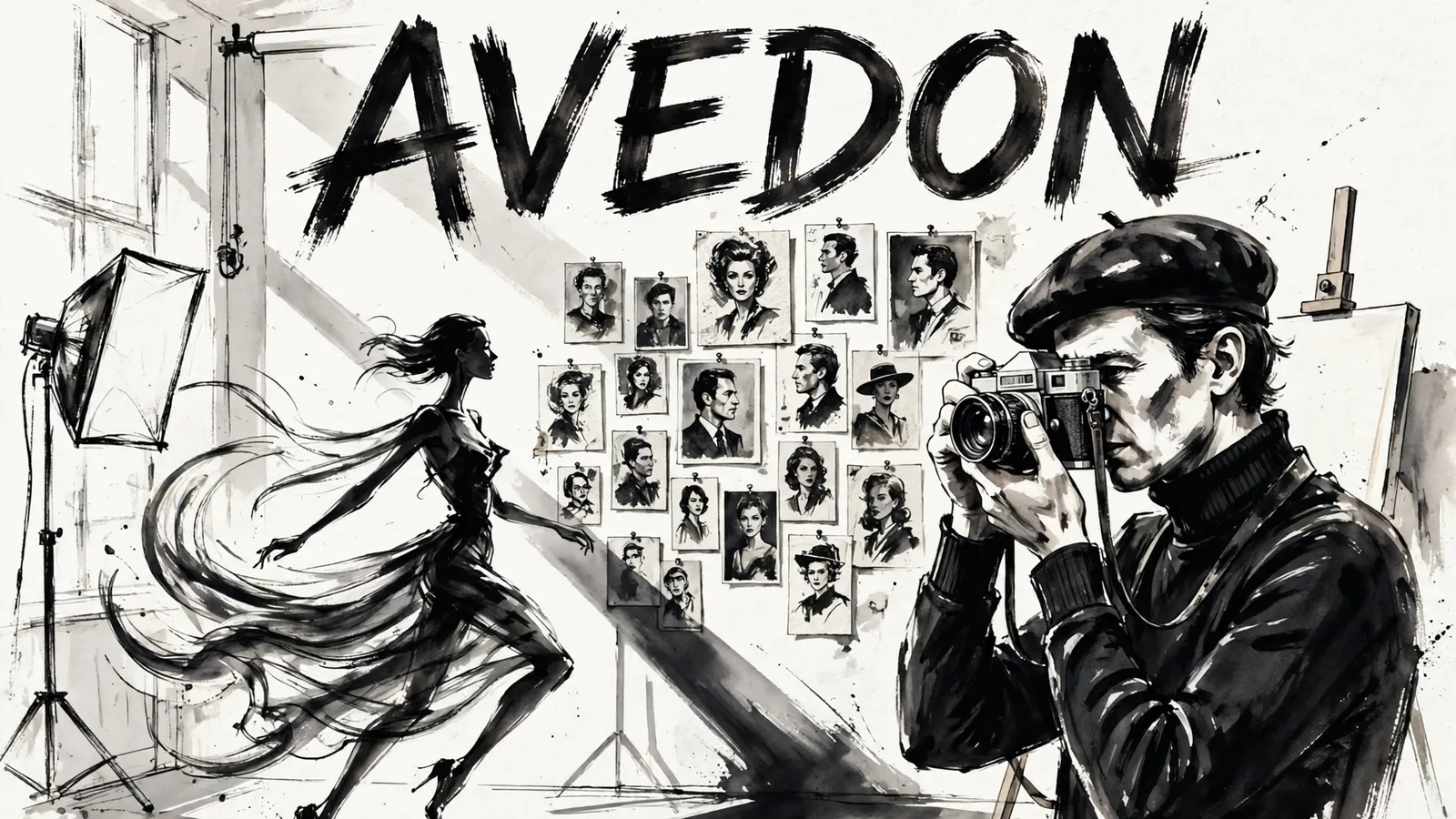
Richard Avedon’s photographs did not just reflect culture. They shaped it, and they continue to do so. That is the claim at the heart of Avedon, Ron Howard’s feature documentary about the legendary American photographer, and over the course of 104 minutes the film makes the case with the best evidence available: Avedon’s own images, his personal archives, behind-the-lens footage, and the testimony of the people who knew him and worked with him. The film premiered at the Cannes Film Festival in May 2026, screened at Telluride and other festivals, opened in limited cinemas on 6 November 2026, and arrives on Netflix worldwide on 11 November 2026. It is not a film that shouts. It is a film that looks — carefully, at a man who spent six decades teaching the world how to look — and it is one of the most absorbing documentaries of the year.
This review is spoiler-free in the sense that a documentary about a public life has no plot twists to protect, but it describes the film’s shape and its key material.
| Detail | Information |
|---|---|
| Limited theatrical release | 6 November 2026 (runs through 11 November) |
| Netflix release date | 11 November 2026 |
| Festival premiere | 17 May 2026 (Cannes Film Festival, Special Screenings) |
| Director | Ron Howard |
| Genre | Documentary |
| Language | English |
| Featuring | Richard Avedon; interviews with John Avedon, Calvin Klein, Larry Gagosian, Isabella Rossellini, Twiggy, Lauren Hutton |
| Production | Imagine Documentaries and Fifth Season, in association with the Richard Avedon Foundation |
| Runtime | 104 minutes |
| Critical standing | Metacritic 72 |
| Our rating | 7.5/10 |
Avedon traces the life and legacy of an artist who used fashion, portraiture and commercial photography to explore identity, power, fear and beauty. The film ranges over six decades of work, from the fashion photographs that reinvented the magazine image in the 1940s and 1950s — models in motion, laughing, leaping, alive, where before them fashion photography had been stiff and posed — through the stark white-background portraits that became his signature, to the journalistic work that took him far from the studio: documenting the Civil Rights Movement, the anti-Vietnam War protests, and the faces of a changing America.
The film’s structure follows the work, and the work follows the man. We see the fashion photographer who changed visual culture and transcended traditional magazine work — “He changed everything”, as one collaborator puts it in the trailer — and we also see the complicated personality behind the groundbreaking images: a man driven, restless, and not always easy to be around. The documentary draws on Avedon’s personal archives and behind-the-lens footage, and it is at its best when it simply shows us the photographs and lets us look at them: the portraits of Martin Luther King Jr. and Malcolm X, the fashion images that made models into characters rather than clothes-hangers, the late portraits that stare straight through the camera and into the viewer.
The interviews give the film its human texture. Avedon’s son, John Avedon, speaks with the particular intimacy of a child who grew up inside a legend. Designer Calvin Klein, art dealer Larry Gagosian, and former muses Isabella Rossellini, Twiggy and Lauren Hutton each describe a different Avedon — the demanding professional, the charming collaborator, the man who could see something in a face that the face’s owner had never seen. The film does not smooth these accounts into a single verdict. It lets them sit side by side, which is honest: a man who photographed the world for sixty years contained more than one person.
Richard Avedon himself — The film’s central figure is present through his work, his archives, and his own recorded words, and the portrait that emerges is of an artist who never stopped reinventing himself. What the documentary captures best is the seriousness underneath the glamour: Avedon treated a fashion photograph as a portrait and a portrait as an investigation, and his famous white background was not a style choice but a method — strip away everything, and what is left is the person. The film is generous with the images, and it trusts the audience to see what made them revolutionary: the movement, the emotion, the sense that the person in the frame is alive rather than arranged.
John Avedon — The photographer’s son is the film’s emotional anchor. His interviews carry the weight of someone who knew the man behind the myth, and the film uses him sparingly and well, letting his reflections land without over-explaining them.
The collaborators and muses — Calvin Klein, Larry Gagosian, Isabella Rossellini, Twiggy and Lauren Hutton each bring a different decade and a different Avedon into focus. Twiggy and Hutton, in particular, remind us how radical Avedon’s fashion work was: he photographed women as people with energy and humour, not as mannequins, and the film shows us exactly what that looked like at the time. Rossellini’s presence is a reminder of how long Avedon’s influence ran — from the post-war fashion world to the era of the supermodel and beyond.
Ron Howard is not a director known for flash, and that is exactly what this material needs. Avedon was years in the making, and Howard’s approach is patient and classical: let the photographs do the talking, let the interviewees speak at length, and build the argument image by image rather than thesis by thesis. The film premiered in the Special Screenings section at Cannes on 17 May 2026, where it competed for the L’Œil d’or, the festival’s documentary prize, and went on to screen at Telluride, Mill Valley, Hot Springs and Woodstock — a festival run that signals a film taken seriously by the documentary world, not just by Netflix’s marketing department.
The craft is in the editing: six decades of work, organised so that the viewer can follow both the chronology and the themes. The fashion years, the portrait years, the political years — each gets its space, and the film is careful to show the connections between them rather than treating them as separate careers. The archival footage is used with restraint, and the behind-the-lens material is a genuine pleasure: watching Avedon work a studio session is watching a master at the height of his powers, and the film knows it.
If the film has a limitation, it is the one that comes with its subject’s stature. Howard is respectful — perhaps, at moments, too respectful. The film acknowledges Avedon’s complexity, but it does not press hard on the harder questions about the man: the cost of his ambition, the relationships it strained, the darkness behind the charm. The Metacritic score of 72 reflects that balance: a well-made, absorbing film that is more celebration than interrogation. For most viewers, that will be enough. For those who wanted a tougher portrait, the film may feel a little too fond of its subject.
The film’s score is unobtrusive, as a documentary about a visual artist should be: it supports the images rather than competing with them. The sound design does its best work in the archival passages, where the hum of a studio and the click of a shutter carry the film back to the moment the photographs were made. The interviews are recorded cleanly and given room to breathe, which matters in a film built on testimony.
What we loved:
What could be better:
Avedon premiered at Cannes on 17 May 2026 in the Special Screenings section, where it competed for the L’Œil d’or, and its North American premiere followed at the Telluride Film Festival. The festival response was warm: the film was described as premiering to rave reviews at Cannes, and it carries awards-season buzz as a documentary contender. Its Metacritic rating of 72 indicates generally favourable reviews. The limited theatrical release runs from 6 to 11 November 2026, and the film opens on Netflix worldwide on 11 November. As a Netflix documentary there is no box-office figure to report, and no production budget has been publicly verified, so neither is claimed here. The trailer, released in October 2026, has been widely shared, and the film’s arrival on Netflix is the moment most viewers will meet it — which is fitting for a film about a man whose work was made to be seen by as many people as possible.
Yes — whether you know Avedon’s work or have never heard his name. Avedon is a clear, generous, beautifully assembled portrait of an artist who changed the way the world sees itself, and it is built from the best possible material: the photographs. Ron Howard’s film is not a hard-hitting exposé, and it does not pretend to be one. It is an invitation to look, carefully, at six decades of images that shaped fashion, portraiture and political photography — and to meet the complicated man behind them. Watch it in one sitting, on the biggest screen you have. Our rating: 7.5 out of 10 — an absorbing, beautifully made documentary about a photographer who changed everything.
When is Avedon released?
The documentary opened in limited cinemas on 6 November 2026 and arrives on Netflix worldwide on 11 November 2026.
Who directed Avedon?
Ron Howard, the Academy Award-winning filmmaker, for Imagine Documentaries and Fifth Season, in association with the Richard Avedon Foundation.
Who is Richard Avedon?
A legendary American photographer whose fashion and portrait work over six decades changed visual culture — from reinventing fashion photography to stark white-background portraits and documentary work on the Civil Rights Movement and the Vietnam era.
Who appears in Avedon?
Avedon’s son John Avedon, designer Calvin Klein, art dealer Larry Gagosian, and former muses Isabella Rossellini, Twiggy and Lauren Hutton, among others.
Where did Avedon premiere?
At the Cannes Film Festival on 17 May 2026, in the Special Screenings section, where it competed for the L’Œil d’or documentary prize.
What is the runtime of Avedon?
104 minutes. Its Metacritic rating is 72.