★ LATEST REVIEWS

★★★★☆ Our Rating: 8/10
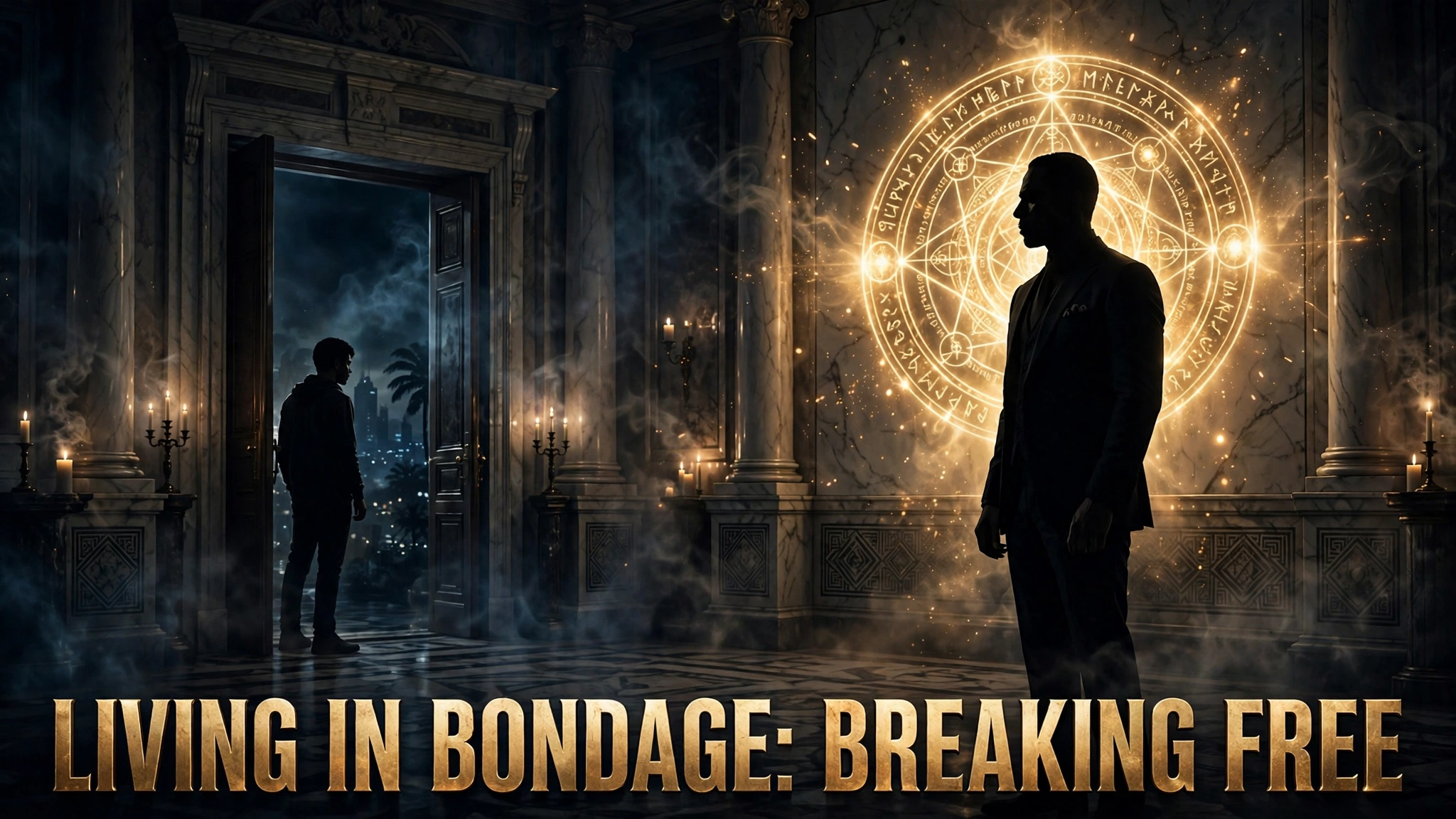
Every film industry has a creation myth, and Nollywood’s is a videotape. In 1992, Living in Bondage — a straight-to-VHS Igbo-language thriller about a man who sacrifices his wife in a money ritual — sold in the hundreds of thousands, launched the careers of Kenneth Okonkwo and Kanayo O. Kanayo, and effectively started the Nigerian home-video industry. Twenty-seven years later, executive producer Charles Okpaleke, who had acquired the rights from original writer Kenneth Nnebue, brought the curse back to the big screen with Living in Bondage: Breaking Free — a sequel, not a remake, directed by Ramsey Nouah in his feature directing debut, with Nouah himself playing the new devil in a very good suit.
The result was one of the defining Nigerian releases of 2019: the biggest opening weekend of the year for a Nollywood film, a final gross reported at ₦168.7 million, a clean sweep at the 2020 Africa Magic Viewers’ Choice Awards including Best Overall Movie, and a second life on Netflix from May 2020 that carried the story worldwide. More importantly, it proved something the industry needed proved — that a Nigerian supernatural thriller, handled with money and care, could compete with comedies at the box office and with anything at the awards table.
This review comes with the honesty notes our Nollywood coverage always carries. The budget figures reported for this film conflict wildly, and we deal with that openly below rather than picking the number we like. And the box-office totals are Nigerian press- and trade-reported figures — the Cinema Exhibitors Association of Nigeria’s data as carried by the press — not independently audited accounts. The achievement, however, is documented well enough that no asterisk can erase it.
| Detail | Information |
|---|---|
| Release date | 8 November 2019 (Nigeria) |
| Director | Ramsey Nouah |
| Writers | Nicole Asinugo (story and screenplay), C.J. Obasi (screenplay) |
| Genre | Supernatural Thriller, Drama |
| Language | English, Igbo, Nigerian Pidgin |
| Runtime | 149 minutes |
| Budget | ₦200 million (producer-reported, not audited — see box-office section for the conflicting figures) |
| Lead cast | Jide Kene Achufusi (Swanky JKA), Ramsey Nouah, Kenneth Okonkwo, Kanayo O. Kanayo, Enyinna Nwigwe, Munachi Abii, Nancy Isime |
| Our rating | 8/10 |
A generation has passed. Andy Okeke (Kenneth Okonkwo), the man who sold his soul in 1992 and spent the original films being haunted for it, has renounced the cult — now known as the Brotherhood of the Six — and become a man of God. The Brotherhood, meanwhile, has done what Nigerian institutions do: it has survived, modernised and gone corporate, its surviving members embedded in business and politics, its rituals now conducted behind the tinted glass of serious money.
The film’s true protagonist is Nnamdi Okeke (Jide Kene Achufusi, credited as Swanky JKA), Andy’s son — raised by relatives, unaware of the full truth of his bloodline, and burning with the very ambition that destroyed his father. Nnamdi is a talented advertising executive whose career will not move; he watches lesser men rise while he hustles for rent. Then the doors begin to open. Family connections lead him toward Chief Omego (Kanayo O. Kanayo), now a governorship aspirant with an old darkness, and toward billionaire tycoon Richard Williams (Ramsey Nouah), who takes a personal, mentoring interest in the young man’s rise. Wealth, status, recognition — everything arrives, and arrives fast, and every gift has paperwork.
Parallel threads keep the dread fed: a prologue ritual crime whose victim will not rest, and an investigative journalist, Uzoma, whose personal loss pushes him toward the same truth from the outside. We will not spoil the price the Brotherhood eventually names, the woman — Kelly (Munachi Abii) — who makes that price unbearable, or whether the Okeke line can finally break a bondage that has already consumed one generation. It is enough to say the film treats its inheritance theme seriously: this is a story about what fathers hand down, and whether a son is doomed to sign the same contract in a better suit.
Ramsey Nouah as Richard Williams is the performance the film is remembered for, and it is a genuine reinvention. Nouah spent two decades as Nollywood’s romantic leading man; here, directing himself, he plays evil as hospitality — soft-voiced, amused, impeccably dressed, a billionaire who never raises his voice because he has never needed to. It is the quietest performance in the film and the loudest presence, and the AMVCA voters agreed, honouring the film across the board. As a director’s performance it is also a statement: the new Nollywood devil does not wear a costume. He wears a watch you cannot afford.
Jide Kene Achufusi (Swanky JKA) as Nnamdi carries the harder job — the audience surrogate who must be ambitious without becoming unlikeable, and tempted without becoming stupid. In his breakout role, Achufusi finds the hunger first and the charm second, which is the right order; you understand every step Nnamdi takes even as you dread the destination, and his award recognition, including the AMVCA trailblazer honours of that season, was earned. Kenneth Okonkwo as Andy returns with the one thing no new actor could supply: history. His scenes carry 1992 inside them, and the film is wise enough to let his weathered, prayerful Andy be frightened rather than heroic — he knows exactly what is hunting his son, because it hunted him.
Kanayo O. Kanayo as Chief Omego closes the circle with grim elegance; the actor Nigerian audiences half-jokingly call the godfather of screen ritualism gives Omego the ease of a man for whom the unspeakable became routine long ago. Enyinna Nwigwe brings coiled instability to Omego’s son Obinna, Munachi Abii, in her acting debut as Kelly, gives the film warmth it badly needs, and Nancy Isime, Bob-Manuel Udokwu — another returning original — and Shawn Faqua as Nnamdi’s cousin Toby complete an ensemble that mixes eras of Nollywood exactly as the story requires. The one widely noted weak link, in contemporary reviews and in ours, is the journalist Uzoma, written and played a notch broader than the film around him.
Ramsey Nouah’s directing debut is, before anything else, a craft announcement. Working with cinematographer John Demps, he shoots Lagos, Owerri and Durban as a trilogy of temptation — glass, marble, private jets, hotel light — and the occult material in the same polished register, which is precisely the film’s point: in modern Nigeria, the cult does not hide in a forest shrine; it sponsors the gala. Production design, costuming and sound were all recognised at the AMVCAs, where the film won, among others, Best Overall Movie, Best Movie West Africa, Best Director, Best Writer, Best Cinematographer, Best Soundtrack and Best Sound Editor — a sweep that reflected how far its finish stood above the Nollywood norm of its year. Anthony Ribeiro’s editing keeps a long film — 149 minutes — moving through its parallel threads with unusual patience for the genre.
Nouah the director is not yet Nouah the actor’s equal in economy. The film explains its mythology more than once, a few confrontations are staged for coverage rather than tension, and the plotting around the investigation sags in the second hour before the final movement recovers the momentum. The supernatural set pieces, too, are more handsome than frightening — atmosphere over shock, which suits the theme but leaves horror fans wanting one sequence that truly lets go. These are the flaws of an ambitious debut, and they sit inside a production whose confidence is itself the headline: this film looks like the industry it was trying to summon into existence.
The score is by Greek composer George Kallis, whose hiring was itself a statement of intent — an international, orchestral voice for a story rooted in Igbo cosmology and Lagos boardrooms. Kallis works in low strings, choral colour and percussive unease, giving the Brotherhood scenes a liturgical weight and Nnamdi’s rise a seductive, ascending gloss; the contrast between the music of the penthouse and the music of the ritual is the film’s argument in miniature. Layered over and around the score, the film’s use of contemporary Nigerian songs — recognised with the AMVCA for Best Soundtrack — roots the fantasy in a recognisable, aspirational Lagos: this is the music Nnamdi’s world actually plays at its parties, which is why its seduction works. Sound design, also award-winning, does quiet, essential work in the haunting thread, where the film is at its most genuinely unsettling.
What we loved:
What could be better:
The box-office record, as reported by the Cinema Exhibitors Association of Nigeria and carried by Pulse Nigeria and other trade press, is consistent and impressive. Released across 52 locations on 8 November 2019, the film opened with ₦25.8 million — the highest opening weekend for a Nigerian film in 2019 and the year’s highest single-day collection for a Nollywood title — passed ₦48.6 million in its first week, crossed ₦100 million inside three weeks, and finished its initial run at about ₦163.4 million after eleven weeks. A short re-run in March 2020 brought the reported total to ₦168.7 million, ranking it eleventh among the highest-grossing Nigerian films of all time at that point. For a supernatural thriller in a market long told that only comedies sell, that was a genre landmark. These are press- and trade-reported figures, not audited accounts, and we present them as such.
The budget requires — and receives — a fuller disclosure. Executive producer Charles Okpaleke repeatedly put the cost at around ₦200 million during the film’s release period, describing it in interviews as a deliberate, no-corners-cut spend, and a later account citing the production put the combined production-and-marketing cost at about the same ₦200 million figure. Against that, some reference listings carry a budget of ₦10 million — a figure irreconcilable with the film on screen, with its multi-country shoot and with the producer’s own contemporaneous statements, and one we regard as an error that has been copied from listing to listing. We therefore show ₦200 million in the Quick Facts, clearly labelled producer-reported and not audited, and we flag the conflict rather than hide it. Either way, the honest commercial summary is the one Okpaleke himself gave: at ₦168.7 million in reported gross — of which producers receive only a share — the film’s path to profit ran through streaming and licensing, and its Netflix arrival in May 2020 was a central part of the plan, not an afterthought.
Yes — this is one of the essential Nollywood releases of its decade. Breaking Free honours the 1992 original without embalming it, gives Ramsey Nouah a career-redefining role on both sides of the camera, launches a genuine new star, and dresses an old moral tale — wealth demanded, price concealed — in the glass and gold of modern Lagos. It is too long, occasionally too explanatory, and more elegant than scary. It is also exactly the kind of confident, crafted, big-canvas filmmaking Nollywood spent 27 years growing towards.
Our rating: 8/10 — the founding curse, handsomely reborn: a sequel that respects the tape it came from and upgrades everything else.
Do I need to watch the original Living in Bondage (1992) first?
No — the sequel explains Andy’s history as it goes, and Nnamdi’s story stands alone. But watching the original, the film that effectively launched Nollywood, adds real weight to Kenneth Okonkwo’s and Kanayo O. Kanayo’s returns, and the two films together make a remarkable double bill about how an industry grew up.
Is Living in Bondage: Breaking Free a remake or a sequel?
A sequel. The project began life as a planned remake after Charles Okpaleke acquired the rights in 2015, but Ramsey Nouah refashioned it into a continuation set roughly 25 years later, centred on Andy Okeke’s son, with original cast members returning in their original roles.
Why do websites list such different budgets for this film?
Because Nigerian production budgets are not independently audited and listings copy each other. The producer publicly and repeatedly stated about ₦200 million during the release period; the ₦10 million figure in some listings contradicts both his statements and the film’s visible scale, and we treat it as an error. See our box-office section for the full explanation.
Is Living in Bondage: Breaking Free scary?
It is a supernatural thriller with occult themes, a ritual-crime prologue and a haunting, but its register is dread and atmosphere rather than gore or jump-scares. Viewers sensitive to ritual and occult subject matter — a serious consideration for many Nigerian audiences — should know the film treats the Brotherhood as real and dangerous throughout.
Where can I watch Living in Bondage: Breaking Free?
It premiered on Netflix in May 2020 following its cinema run and has remained part of the Nollywood catalogue on streaming, with availability varying by country. Check your local Netflix and African-content platforms.