★ LATEST REVIEWS

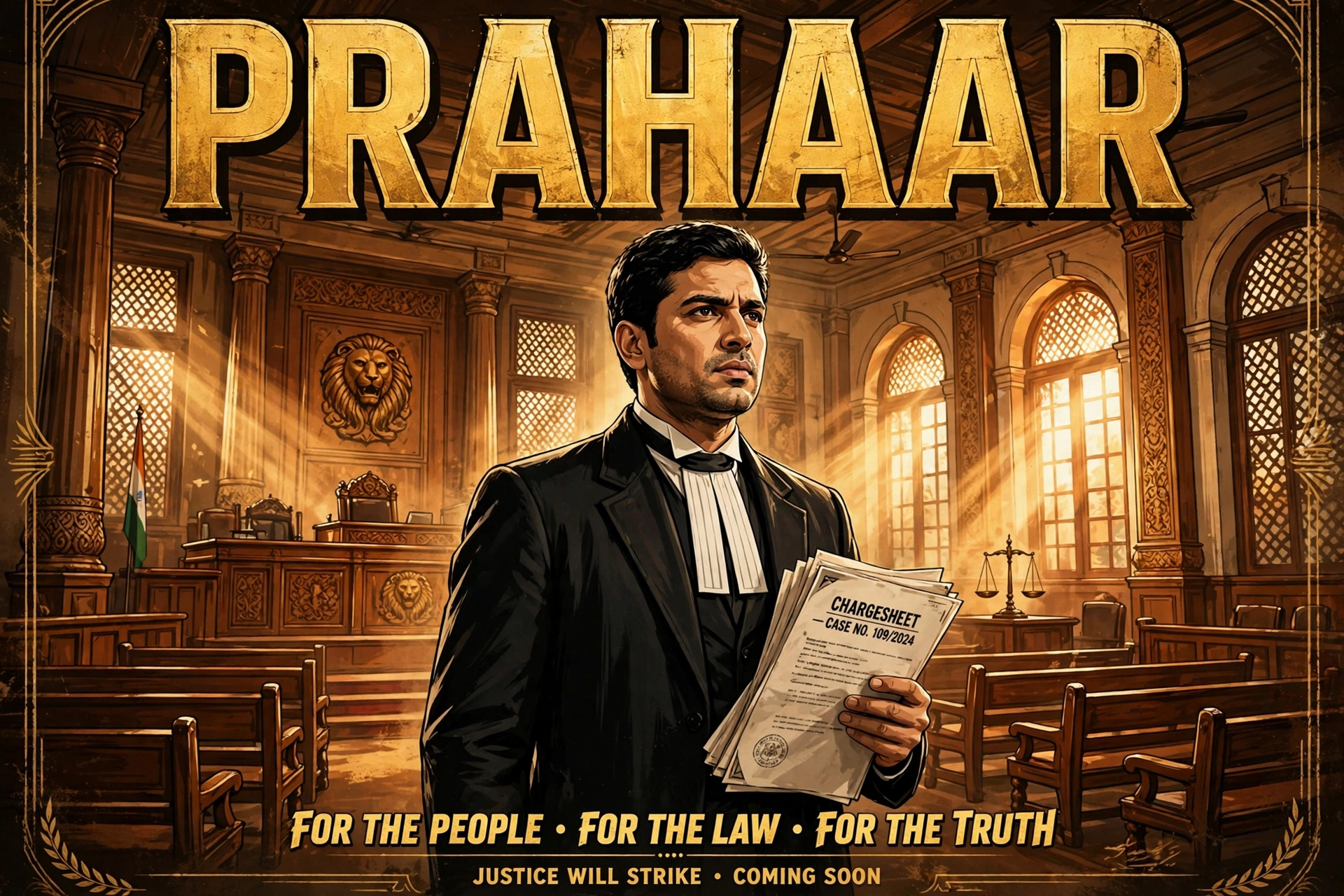
Our Rating: ★★★★☆ 8/10
The 26/11 Mumbai attacks have been filmed from many angles, but Prahaar finds a different one: not the streets during the siege, but the courtroom afterwards. Avinash Arun’s film follows special public prosecutor Ujjwal Nikam through the long, grinding legal battle that followed one of India’s most traumatic weeks, and it stars Rajkummar Rao in a performance that anchors the whole enterprise. It is a courtroom drama first and a biopic second, and that choice — staying with procedure, evidence and argument rather than spectacle — is why it works.
This review is spoiler-free on the film’s courtroom outcomes beyond what history itself records.
| Detail | Information |
|---|---|
| Release date | 16 October 2026 (India) |
| Director | Avinash Arun |
| Writers | Sumit Roy, with additional screenplay by Vishal Tiwari |
| Genre | Courtroom drama, biopic |
| Language | Hindi |
| Runtime | 140 minutes |
| Lead cast | Rajkummar Rao, Wamiqa Gabbi, Jaideep Ahlawat, Sikandar Kher, Lalit Prabhakar, Ashish Vidyarthi |
| Our rating | 8/10 |
Ujjwal Nikam is the special public prosecutor who led the prosecution in the trial of Ajmal Kasab, the gunman captured alive after the 26/11 Mumbai attacks. Prahaar — billed in some material as Prahaar: The Untold Story of Ujjwal Nikam — follows Nikam’s professional and personal journey through that case and the legal battles that defined his career. Rajkummar Rao plays Nikam; Lalit Prabhakar plays Kasab; Wamiqa Gabbi, Jaideep Ahlawat, Sikandar Kher and Ashish Vidyarthi fill out the world of lawyers, investigators, family and officials around them.
The film’s smartest decision is its setting. Rather than restaging the attacks as action cinema, it lives in the courtroom that came after, and stays there for most of its running time. That means long scenes of argument, cross-examination, evidence and procedure — the unglamorous machinery of justice — and the film trusts its audience to find that machinery dramatic. The tension comes not from chases but from questions: can the prosecution build a case that survives scrutiny? Can a trial conducted under enormous public emotion remain a trial at all? What does it cost the man carrying that case to carry it?
Around the courtroom, the film makes room for Nikam’s personal life, including his relationship with his wife, played by Gabbi. These scenes are quieter than the legal drama, and they matter: they show a man whose public duty and private life pull against each other, and they keep the film from becoming a mere procession of speeches. The film’s title, Prahaar — meaning a strike or blow — refers not to violence on the street but to the force of argument, evidence and conviction in court.
Rajkummar Rao as Ujjwal Nikam — Rao is superb, and this is one of his most disciplined performances. He plays Nikam without showboating: no grandstanding speeches delivered to the camera, no hero poses, just a lawyer’s patience, precision and moral weight. The performance works because Rao understands that a prosecutor’s power is not in volume but in preparation — in knowing the file better than anyone else in the room. Contemporary reviews singled him out, and rightly so; he carries the film’s long courtroom passages and makes procedure feel like character.
Wamiqa Gabbi, Jaideep Ahlawat and Lalit Prabhakar — Gabbi, reuniting with Rao after Bhool Chuk Maaf, gives the film its emotional counterweight, playing a wife who understands her husband’s duty without romanticising its cost. Ahlawat, Rao’s former FTII classmate, brings his customary authority to his role, and the ease between the two actors is visible on screen. Prabhakar, as Kasab, has the film’s most difficult assignment: to play a real, notorious figure without either demonising him into caricature or softening what he did. He plays it with restraint, which serves the film’s courtroom seriousness well.
Sikandar Kher, Ashish Vidyarthi and the wider cast — Kher and Vidyarthi, both veterans of this kind of ensemble drama, add weight to the legal and institutional world around Nikam, while younger performers including Ritvik Sahore and Tarun Sharma fill out the film’s offices, homes and courtrooms believably.
Avinash Arun, directing and sharing cinematography duties, keeps the film visually sober and purposeful. Courtrooms are shot to emphasise space, attention and pressure: the judge’s bench, the witness box, the rows of onlookers, the long silences between questions. The editing by Charu Shree Roy keeps the 140 minutes moving without rushing the legal argument, and the film’s decision to trust its audience — to let a cross-examination play out rather than cutting away to a flashback every few minutes — is its greatest strength.
The film is not without flaws. At times the personal-life scenes feel thinner than the courtroom material, as if the film is more confident in law than in domestic drama. A few passages lean towards the reverent, and viewers who prefer their biopics to interrogate their subjects as well as honour them may wish the film had pressed harder on the controversies around high-profile prosecutions. But these are reservations about emphasis, not about craft: the film is well made, well acted and seriously intended throughout.
Pritam provides the songs, with a background score by Alokananda Dasgupta, and the music is used sparingly and well. The romantic track “Tujh Mein Basi Meri Jaan”, sung by Sonu Nigam and Shreya Ghoshal with lyrics by Amitabh Bhattacharya, gives the film’s personal passages warmth without pulling focus from the courtroom. The song “Mere Rehte”, sung by Vishal Mishra, carries the film’s themes of courage and duty. Elsewhere, the film wisely lets silence do the work: in a courtroom, a pause can be more dramatic than any score.
What we loved:
What could be better:
Prahaar released in Indian cinemas on 16 October 2026 after being pushed back three times, and at the time of writing no reliable, audited box-office total was available in the sources checked for this review. For that reason this review gives no box-office number and no budget figure: both rows are omitted rather than filled with tracker estimates that could mislead. What can be said is that the film opened as a serious, star-led courtroom drama in a crowded October, and its reception among critics was broadly respectful, with Rao’s performance consistently praised. Readers should treat any single box-office number circulating online for this film with caution until trade sources settle on a figure.
Yes, especially if you value courtroom drama, strong acting and stories about how justice actually works. Prahaar is not a flag-waving sermon and not an action film wearing a biopic’s clothes; it is a serious, well-acted drama about the long, unglamorous work of prosecution after a national trauma. Rajkummar Rao is excellent, the courtroom scenes grip, and the film earns its emotion honestly.
Our rating: 8/10 — A powerful, sober courtroom drama anchored by Rajkummar Rao’s finest recent performance.
Who is Ujjwal Nikam?
Ujjwal Nikam is the special public prosecutor who led the prosecution in the trial of Ajmal Kasab following the 26/11 Mumbai terror attacks, and in other major criminal cases.
Who plays Ujjwal Nikam in Prahaar?
Rajkummar Rao plays Nikam, with Wamiqa Gabbi, Jaideep Ahlawat, Sikandar Kher and Lalit Prabhakar (as Kasab) in key roles.
Who directed Prahaar?
Avinash Arun directed the film, produced by Dinesh Vijan under Maddock Films, with a screenplay by Sumit Roy.
When was Prahaar released?
16 October 2026 in Indian cinemas, after three postponements. Some posters bill it as Prahaar: The Untold Story of Ujjwal Nikam and others as Prahaar – The Ujjwal Nikam Story.
Is Prahaar based on a true story?
Yes. It is a biographical courtroom drama about the real prosecutor Ujjwal Nikam and the legal proceedings following the 26/11 attacks, dramatised for the screen.