★ LATEST REVIEWS

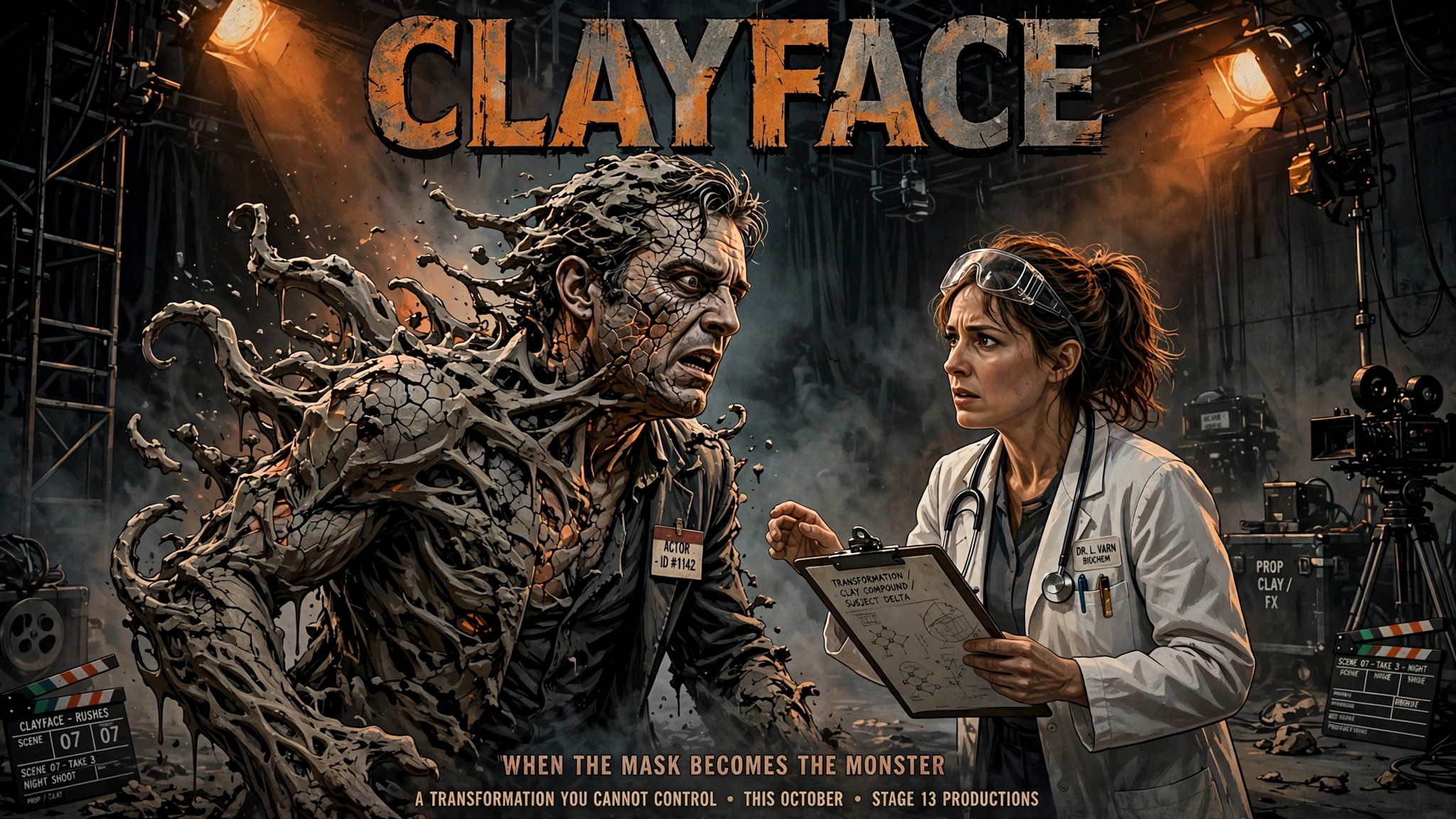
Our Rating: ★★★★☆ 7.5/10
Of all the characters DC could have built a film around, Clayface is one of the strangest — and that is exactly why this film works. James Watkins’ Clayface is not a superhero film in any familiar sense. It is a body-horror tragedy about an actor who loses his face, and then loses himself, told with the grime and dread of a horror film and the sadness of a story about fame. Tom Rhys Harries gives a committed, physical performance at its centre, and the film’s willingness to be nasty, strange and small-scale makes it the most interesting DC film in years, even when its revenge plot turns familiar.
This review is spoiler-free on the film’s later transformations and ending.
| Detail | Information |
|---|---|
| Release date | 23 October 2026 (United States; international release from 21 October 2026) |
| Director | James Watkins |
| Writers | Mike Flanagan and Hossein Amini, from a story by Mike Flanagan, based on DC characters |
| Genre | Body horror, thriller |
| Language | English |
| Runtime | 108 minutes |
| Budget | $40 million (as reported) |
| Lead cast | Tom Rhys Harries, Naomi Ackie, David Dencik, Max Minghella, Eddie Marsan |
| Our rating | 7.5/10 |
Matt Hagen (Tom Rhys Harries) is a rising actor from Gotham’s streets who has fought his way to the edge of real Hollywood success. Then a violent encounter with a local crime boss leaves him horribly disfigured, and everything he has built — his career, his looks, his sense of who he is — collapses at once. Abandoned by the people who used to need him, Matt turns to an experimental treatment offered by a scientist, Dr Caitlyn Corr (Naomi Ackie). The treatment works. It restores his face. And then it keeps working, in ways nobody planned.
What follows is a descent rather than an origin story. Matt’s body begins to shift, stretch and reshape itself, and the revenge he wants against the people who discarded him becomes the only story he has left. The film treats this as horror first and comic-book lore second: you do not need to know Clayface’s decades of comics history to follow it, because the film tells you everything you need in its first act. Gotham hangs in the background as a threat rather than a tourist map, and the film’s real setting is the entertainment industry itself — an industry that worships surfaces, meeting a man who can no longer keep one.
The premise also gives the film its theme, and it is a good one. Fame in this film is not a prize but a contract: you are loved for a face, and when the face goes, so does the love. Matt’s tragedy is that the treatment gives him back a face he can wear, but not a self he can trust. The horror grows out of that confusion, not out of jump scares, and the film is at its best when it stays close to Matt’s panic and ego rather than widening into a bigger conspiracy.
Tom Rhys Harries as Matt Hagen / Clayface — Casting a face most multiplex audiences will not recognise is a smart move, and Harries repays it. He has the leading-man polish for Matt’s early scenes and, more importantly, the wounded hunger once that polish is taken away. You believe he would risk untested science to get his career back, and you believe the ego and panic underneath the prosthetics and effects when the transformation takes hold. It is a physical performance as much as a verbal one, and that matters in a film where the makeup and effects could easily swallow the actor. Harries keeps Matt human even as Matt stops looking human.
Naomi Ackie as Dr Caitlyn Corr — Ackie gives the film its moral centre. Corr is a scientist, not a villain in a lab coat: ambitious, curious, and genuinely convinced her work can help, which makes her complicity in what follows more interesting than a simple mad-scientist turn would be. Ackie plays her with intelligence and restraint, and her scenes with Harries carry the film’s ethical questions without turning them into speeches.
David Dencik, Max Minghella and Eddie Marsan — Dencik, as the mobster whose actions disfigure Matt, is cold and believable without becoming a cartoon. Minghella and Marsan fill out the world of agents, handlers and fixers who surround a rising star — the people who are warmest when Matt is useful and coldest when he is not. The ensemble works because nobody overplays the comic-book element; everyone behaves as if this were a crime thriller that happens to contain a monster.
Watkins, known for horror films including Eden Lake and the Speak No Evil remake, directs with confidence and restraint. The film is rated R for strong bloody violence, gore, language, some nudity and brief drug use, and it earns that rating honestly: the body horror is wet, tactile and deliberately unpleasant, closer to a nasty 1990s body-horror film than to a glossy superhero spectacle. Rob Hardy’s cinematography keeps the horror grounded in real rooms — hospitals, studios, apartments — so that when Matt’s body starts to change, the change feels like an intrusion into a real world rather than a video-game effect.
The effects work deserves praise for its restraint as much as its invention. The film holds back its fullest reveal, trusting atmosphere and implication over constant spectacle, and the modest reported budget of around $40 million shows in the film’s discipline rather than its limitations: this is a horror film that knows a single well-staged transformation is worth more than ten noisy ones. Volker Bertelmann’s score adds dread without overwhelming the quieter scenes.
The weakness is structural. Once the revenge plot takes over in the second half, the film becomes more predictable: a list of people to punish, a series of confrontations, a momentum that owes more to the thriller template than to the tragedy the first act promised. The final act is effective but not surprising, and viewers who loved the film’s strange first hour may wish it had stayed stranger for longer.
Bertelmann’s music is low, uneasy and effective, favouring drones and dissonant strings over melody. The sound design does much of the horror work: wet, stretching, cracking sounds that make Matt’s changing body feel physically real. It is a score and soundscape built for headphones in a dark cinema, and it rewards the film’s decision to keep its horror tactile rather than digital.
What we loved:
What could be better:
Clayface was released in the United States on 23 October 2026, with international release beginning 21 October, and contemporary reporting put its early worldwide total at around $47.4 million. That is an early figure, captured only days into release, and it should not be treated as a final total. What it already shows, however, is that a modestly budgeted, R-rated horror film built around a second-tier DC villain can find a real audience in the Halloween season. Against a reported budget of around $40 million, the film did not need superhero-sized numbers to justify itself, and its disciplined scale is part of its appeal: this is DC learning that smaller and stranger can be a strategy, not just a risk.
Yes, especially if you like horror, or if you are tired of superhero films that all feel the same. Clayface is not perfect — its revenge plot is familiar — but its first hour is genuinely unsettling, its lead performance is excellent, and its central idea, about a man who can wear any face except his own, lingers after the film ends. It is the boldest swing DC has taken in years, and it mostly connects.
Our rating: 7.5/10 — A nasty, sad, inventive body-horror tragedy that proves DC’s strangest corners may be its most interesting.
Is Clayface part of the DC Universe?
Yes. It is the third film in the new DC Universe, part of Chapter One: Gods and Monsters, but it works as a standalone story and needs no prior DC knowledge.
Who plays Clayface?
Tom Rhys Harries plays Matt Hagen, the actor who becomes Clayface, alongside Naomi Ackie as Dr Caitlyn Corr and David Dencik as the mobster who disfigures him.
Who directed Clayface?
James Watkins, from a screenplay by Mike Flanagan and Hossein Amini, based on a story by Flanagan.
How much did Clayface earn at the box office?
Around $47.4 million worldwide in early reporting, only days after release; this is an early figure, not a final total.
Is Clayface suitable for children?
No. It is rated R for strong bloody violence, gore, language, some nudity and brief drug use, and its body horror is genuinely intense.