★ LATEST REVIEWS

Our Rating: ★★★★☆ 7.5/10
This Anikulapo review comes with a disclosure that shapes everything about the film: there is no box-office story here, because there was no box office. Kunle Afolayan’s Yoruba-language epic went straight to Netflix on 30 September 2022 — and within about a week it was being reported as the most-watched non-English film on the platform worldwide. A slow, dialogue-driven fable set in the old Oyo Empire, spoken almost entirely in Yoruba, outdrew the world’s streaming catalogue. That fact alone makes Anikulapo one of the most significant Nollywood releases of its era.
Afolayan, director of The Figurine, October 1 and Citation, described the film as a Nigerian answer to Game of Thrones — with, he argued, better representation of Yoruba culture. The comparison is about ambition rather than content: this is a intimate moral fable dressed in epic clothing, a story about a nobody who steals power over death itself and is destroyed not by heroes or armies, but by his own appetite. It is beautiful, culturally rich, slower than it should be, and carried by two outstanding lead performances.
| Detail | Information |
|---|---|
| Release date | 30 September 2022 (Netflix) |
| Director | Kunle Afolayan |
| Writers | Kunle Afolayan (story developed from Ifá verse traditions associated with Ifayemi Elebuibon) |
| Genre | Epic Fantasy, Drama, Folklore |
| Language | Yoruba (with English subtitles) |
| Runtime | 142 minutes |
| Lead cast | Kunle Remi, Bimbo Ademoye, Sola Sobowale, Hakeem Kae-Kazim, Taiwo Hassan, Faithia Williams, Adebayo Salami |
| Our rating | 7.5/10 |
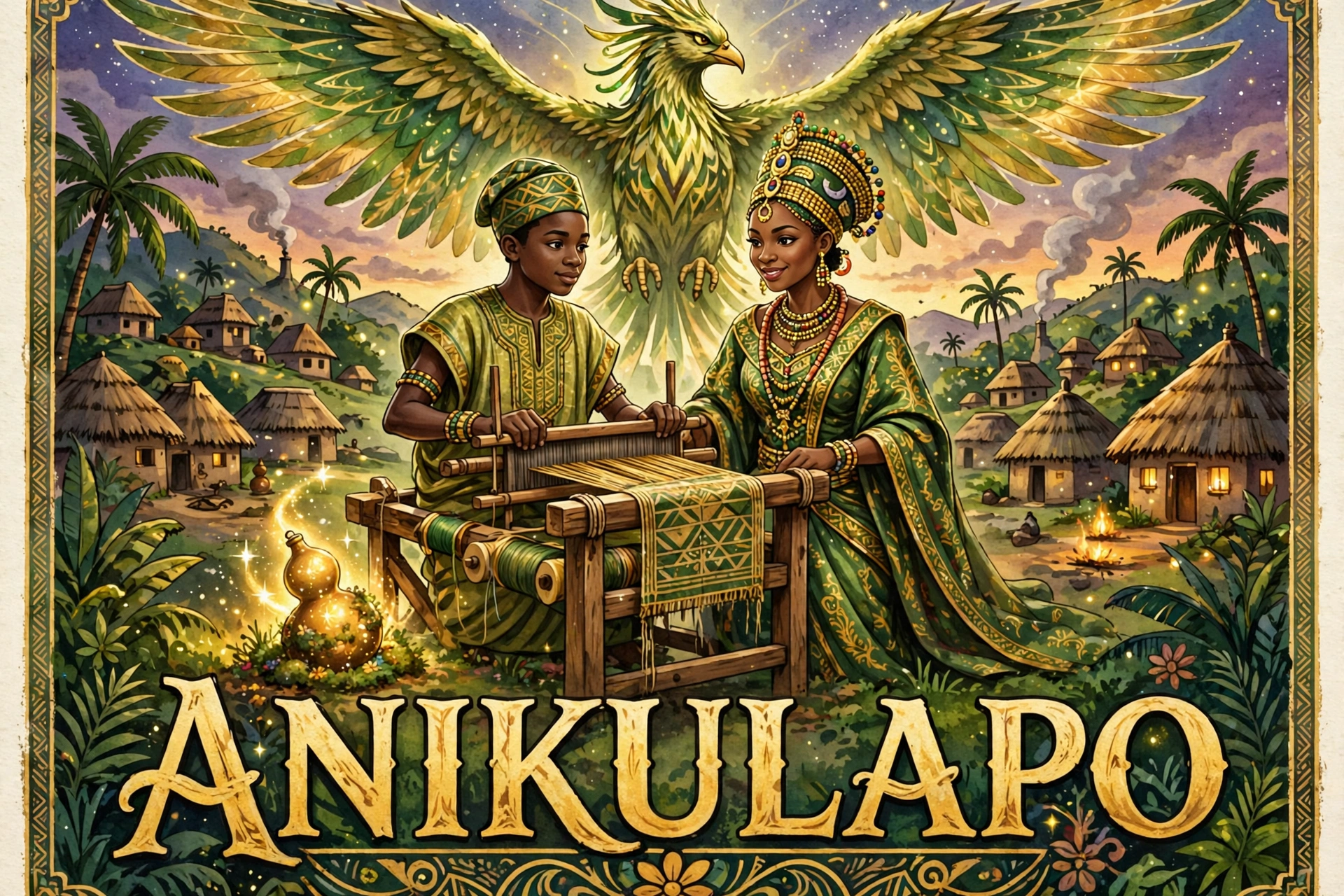
Saro is a travelling cloth weaver who arrives in the great city of Oyo with his aso-ofi loom, his good looks, and nothing else. Taken in by Awarun, a formidable businesswoman who runs a ceramics enterprise and collects young lovers as openly as she collects wealth, Saro enjoys a kept man’s comforts while his eyes wander higher — to Arolake, the youngest and most unhappy of the Alaafin’s queens.
Arolake’s position is gilded misery. Favoured by an ageing king whose attention she does not want, and resented and tormented by the older queens for that favouritism, she is a girl traded into royalty and desperate for a life of her own choosing. Her affair with Saro is the first thing she has ever chosen, and when the lovers’ plan to run away is discovered, the king’s justice is swift and absolute: Saro is beaten to death.
That should be the end of the story, and in a lesser fable it would be. Instead, Arolake — the film’s true strategist — finds the means of Saro’s return through the Akala, the mythical bird that carries the power of life and death, and through a stolen gourd that holds that power. Resurrected, Saro takes a new name drawn from what he now carries: Anikulapo, the one who holds death in his purse. Settling with Arolake in the town of Ojumo, he becomes a miracle worker, raising the dead for grateful families, famous across the region. What power does to a man who never earned it — how gratitude curdles into arrogance, how desire outgrows every satisfaction, and how the woman who gave him everything watches him spend it — is the film’s real subject. How far Saro falls, and who pulls the thread that unravels him, we will leave for the film to tell.
Bimbo Ademoye as Arolake gives the performance of the film, and one of the finest in recent Nollywood. Known largely for comedy before this role, Ademoye plays Arolake with a stillness that makes her rare outbursts devastating: a young queen whose intelligence has had exactly one outlet — survival — and who finally risks everything on love, then must watch, in silence, what her gift made of the man she saved. The film’s final movement belongs to her, and she earns every second of it.
Kunle Remi as Saro has the harder arc and mostly pulls it off. His early Saro is charm as a survival strategy, a handsome drifter who smiles his way into other people’s houses and beds, and Remi is good enough that you like him against your judgement. The transformation into Anikulapo, swollen with fame, is played as coarsening rather than villainy, which is right — though the script gives Remi more scenes of Saro’s arrogance than the performance strictly needs, and a few beats repeat. Sola Sobowale as Awarun brings comic steel and genuine menace to Saro’s first protector; she is the film’s reminder that in this world, women who survive do so by owning things, including people.
The royal world is richly cast: Hakeem Kae-Kazim lends gravity to the Oba of Ojumo, Taiwo Hassan brings veteran authority, and the ensemble of Yoruba screen royalty — including Faithia Williams and Adebayo Salami — gives the palaces and marketplaces a lived-in hierarchy. The film trusts Yoruba performance traditions, proverbs and all, rather than sanding them down for export, and the cast rewards that trust.
Anikulapo is, before anything else, a feat of world-building. Afolayan shot the film in Oyo State, building his story world at the KAP Film Village in Igbojaye — a purpose-built period settlement of palaces, compounds and marketplaces that lets the camera roam a 17th-century Yoruba kingdom without a modern intrusion in frame. The production design, costuming and textiles are exceptional: Saro’s weaving is not set dressing but theme, the queens’ garments map rank and favour at a glance, and the film’s earth-and-indigo palette gives the old Oyo world a coherent, painterly identity quite unlike the digital gloss of Afolayan’s earlier urban films.
His direction is patient to a fault. Afolayan favours long, stately scenes of dialogue and ritual, and at 142 minutes the patience sometimes becomes a tax: the first half’s backstory is thorough beyond the story’s needs, and several scenes in Ojumo make a point the audience has already absorbed. The mystical elements — the Akala bird above all — are rendered simply, and their effects work is modest by global fantasy standards; the film wisely keeps them brief and symbolic rather than spectacular. What Afolayan does superbly is cultural confidence: rituals, greetings, proverbs, drumming and palace protocol are presented as the fabric of a complete civilisation, never as exotic colour for outsiders. That confidence, more than any plot twist, is why the film travelled.
Music is woven into Anikulapo‘s world rather than pasted onto it. The soundscape draws on Yoruba traditional instrumentation — talking drum patterns that comment on scenes the way the drum language itself comments at real ceremonies, chant, and folk melody — alongside a composed dramatic underscore that rises for the film’s ritual and resurrection passages. The effect is to make the supernatural feel culturally grounded: when the Akala’s power moves, it moves to sounds this world would recognise.
At the film level the approach largely succeeds, and the film’s music was recognised at the Africa Magic Viewers’ Choice Awards, where Anikulapo was a major winner, including Best Overall Movie. If there is a criticism, it is one of scale: at the story’s most mythic moments the underscore can feel restrained where a bolder musical imagination might have lifted the film into the truly transcendent. But restraint suits Afolayan’s telling, and the traditional elements give the film an audio identity no imported score could have supplied.
What we loved:
What could be better:
Anikulapo has no box-office figure, reliable or otherwise, because it was never released in cinemas: it is a Netflix original film, released worldwide on the platform on 30 September 2022, and any website quoting a theatrical gross for it is inventing one. Its commercial story is a streaming story, and even that must be reported carefully, because Netflix viewing figures of this period were published as hours viewed, not tickets or viewers.
What can be said from contemporary reporting is this: within roughly a week of release, Anikulapo reached number one on Netflix’s global chart for non-English films, with about 8.7 million hours viewed reported in its first week — Nigerian business press covered the milestone extensively, describing it as the most-watched non-English film on Netflix at that moment. Some later retellings convert that figure into “8.73 million views”, which mixes units; hours viewed is the figure Netflix reported, and the two are not the same thing. The film went on to dominate the 2023 Africa Magic Viewers’ Choice Awards, winning Best Overall Movie among multiple honours, and its success led Netflix to expand the story as the series Anikulapo: Rise of the Spectre in 2024. By the only measures available to a streaming release — global chart position, reported hours, awards and franchise value — it was a major hit.
Yes, especially if you have never watched a Yoruba-language epic. Anikulapo offers something genuinely rare on global streaming: a complete pre-colonial African kingdom rendered with care, a moral fable with the courage of its folklore, and two lead performances that hold the screen for over two hours. Accept the deliberate pace, watch it subtitled and undistracted, and forgive the occasional sag — the world-building and Ademoye’s performance repay the patience. Fantasy fans expecting battles and spectacle should recalibrate: this is a story about character, and its magic is a mirror, not a weapon.
Our rating: 7.5/10 — a lush, culturally rich fable whose beauty and performances outshine its pacing problems.
What does Anikulapo mean?
Aníkúlápó translates roughly as “the one who holds death in his purse” or “he who carries death in his pouch” — the name Saro earns after gaining the power to raise the dead, and a perfect summary of the film’s theme: death carried casually becomes death abused.
Is Anikulapo based on a true story?
No. It is a work of folklore-inspired fiction, developed by Kunle Afolayan from a verse of Ifá tradition associated with the Ifá priest and poet Ifayemi Elebuibon, and set in a fictionalised version of the historical Oyo Empire.
Is Anikulapo in English?
The film is performed in Yoruba and streams on Netflix with English subtitles. Its Yoruba dialogue, complete with proverbs and praise poetry, is central to its acclaim.
Does Anikulapo have a sequel?
The story continues in Anikulapo: Rise of the Spectre, a six-part Netflix series released in 2024, with Kunle Remi, Bimbo Ademoye and Sola Sobowale returning.
Where can I watch Anikulapo?
It is a Netflix original and streams exclusively on Netflix worldwide, subject to the platform’s catalogue in your region.