★ LATEST REVIEWS

★★★☆☆ Our Rating: 6.5/10
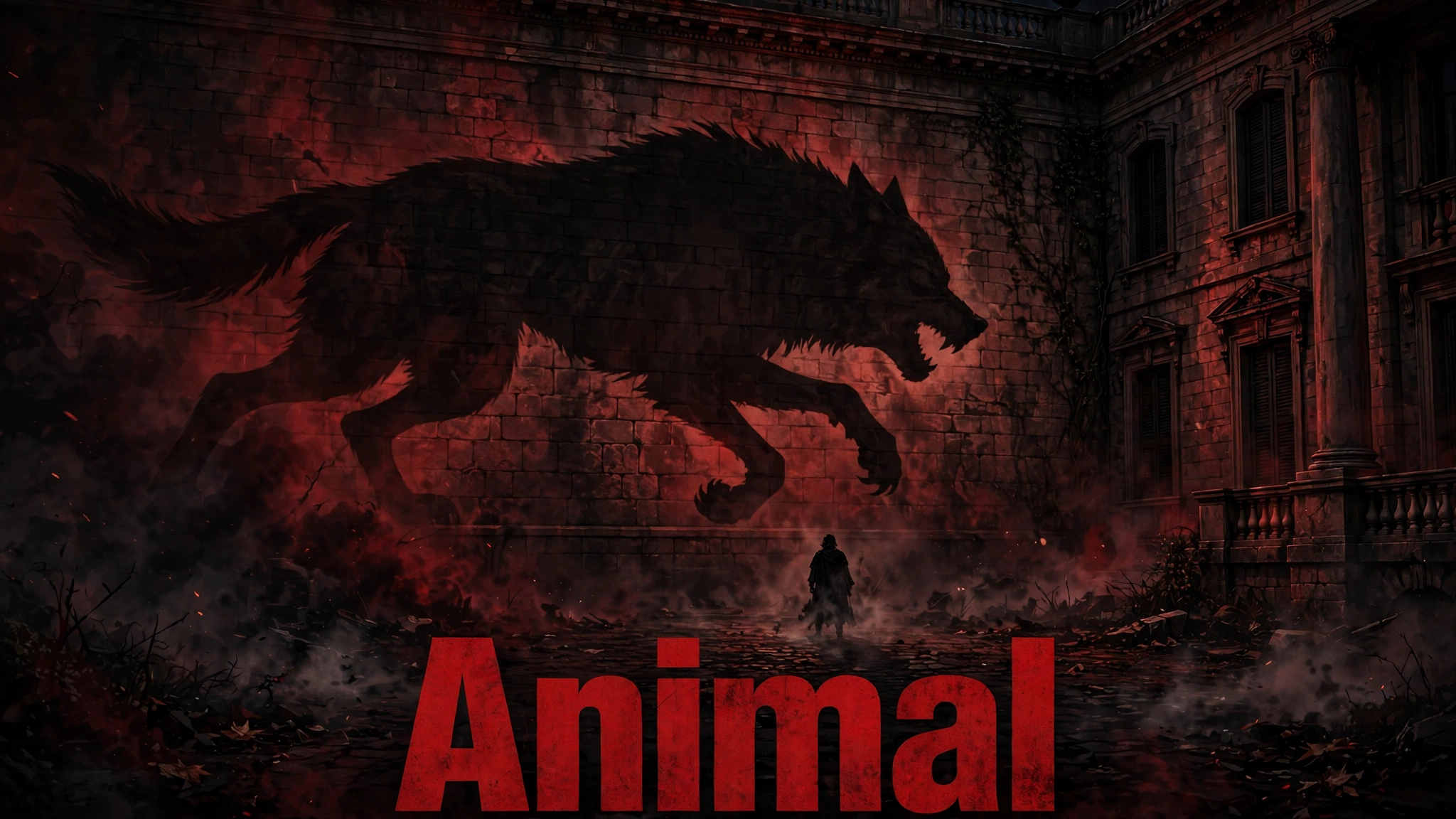
No Hindi film in 2023 started more arguments than Animal. People walked out of cinemas calling it a masterpiece of raw emotion. Others walked out calling it excessive, troubling and far too long. What nobody did was shrug. Director Sandeep Reddy Vanga, who had already polarised audiences with Arjun Reddy and Kabir Singh, made his biggest, loudest and most uncompromising film yet, and placed at its centre a career-best performance from Ranbir Kapoor that even many of the film’s critics praised without reservation.
The premise is almost classical: a son who craves his distant father’s love, and who responds to any threat against that father with frightening devotion. Around that premise, Vanga builds a saga of family, marriage, masculinity, violence and inherited damage that sprawls across more than three hours. There are scenes of genuine power here, the kind that silence a hall. There are also scenes that test your patience and, frankly, your comfort, and the film’s treatment of its women and its glorification of its hero’s worst behaviour cannot be waved away as style.
Our job in this review is to hold both truths at once. Animal contains some of the finest acting and several of the most electrifying sequences of its year. It is also bloated, repetitive in its provocations and deeply flawed in what it chooses to celebrate. If that combination sounds contradictory, you have understood the film.
Here is our honest breakdown of what works, what does not, and who should, and should not, watch it.
| Detail | Information |
|---|---|
| Release date | 1 December 2023 |
| Director | Sandeep Reddy Vanga |
| Writers | Sandeep Reddy Vanga, Pranay Reddy Vanga, Suresh Bandaru (screenplay); Saurabh Gupta (dialogues) |
| Genre | Action, Drama |
| Language | Hindi |
| Runtime | 204 minutes |
| Budget | ₹100 crore |
| Lead cast | Ranbir Kapoor, Anil Kapoor, Bobby Deol, Rashmika Mandanna, Tripti Dimri |
| Our rating | 6.5/10 |
Balbir Singh is a steel magnate of immense wealth and almost no availability. As a child, his son Ranvijay learns early that his father’s attention must be begged for and is rarely given. One childhood incident, a birthday forgotten while business came first, tells you everything about the wound at the centre of this family. Ranvijay grows up idolising the man who barely sees him, and that idolisation curdles into something fierce: he will do anything, absolutely anything, to protect his father and earn his place beside him.
After a violent clash in his younger years, Ranvijay is sent away and spends years abroad. He returns as an adult, marries Geetanjali, the woman he has loved since school, against the grain of family expectations, and settles overseas to build a quieter life. That quiet ends when news arrives that Balbir has been shot in an assassination attempt and has survived. Ranvijay returns to India with his family, moves back into the orbit he escaped, and begins a single-minded hunt for whoever ordered the attack.
His search pulls him into a blood feud with a rival family and its most dangerous son, Abrar Haque, a man whose own upbringing has made him something terrifying in a completely different way. Alongside the hunt, the film keeps returning to the real battlefield: the marriage straining under Ranvijay’s obsessions, the father who still cannot say what his son needs to hear, and a cycle of damage passing from one generation to the next.
We will not describe the confrontations or the ending. What you should know going in is that this is less a conventional action plot than a character study that periodically explodes into action, and its true subject is not revenge. It is approval, and what a lifetime of not receiving it can turn a person into.
Ranbir Kapoor as Ranvijay Singh gives the performance of his career so far, and it is not close. He plays Ranvijay across different ages and emotional registers: the vulnerable boy in a man’s body who lights up at a scrap of paternal praise, the charming husband, the terrifying avenger whose calm is scarier than shouting, and the broken figure the violence leaves behind. Kapoor modulates his voice, posture and gaze so completely that you can read the character’s age and state of mind before he speaks. Crucially, he never asks you to forgive Ranvijay. He simply makes you understand him, which is far harder and far more uncomfortable.
Anil Kapoor as Balbir Singh provides the perfect counterweight. He plays the father with restraint, avoiding the easy route of the monstrous patriarch. His Balbir is not cruel for pleasure; he is absent, proud and emotionally illiterate, a man who built an empire and never learned the language his son speaks. The scenes between the two Kapoors, real-life uncle and nephew, are the film’s best, charged with decades of things neither man can say. One late conversation between them justifies much of what came before.
Bobby Deol as Abrar Haque became the film’s most talked-about supporting turn despite limited screen time and barely any dialogue. Deol brings a feral, unpredictable physicality to Abrar, and his entry sequence, danced as much as walked, is an instant classic of villain introductions. The frustration is that the film builds him up magnificently and then gives him less to do than his presence promises. You leave wanting more of him, which is praise and criticism in the same breath.
Rashmika Mandanna as Geetanjali carries the difficult role of the wife who loves Ranvijay and increasingly fears what he is becoming. She has strong moments, particularly in confrontations where Geetanjali finally pushes back, but the writing does not serve her as well as her performance deserves; her character is too often positioned to absorb behaviour rather than shape the story. Tripti Dimri, in a smaller but pivotal role, makes a lasting impression with quiet, intelligent work that shifted her career trajectory noticeably after this film.
Sandeep Reddy Vanga directs and, notably, edits the film himself, and his control over rhythm and mood is evident. Cinematographer Amit Roy shoots the family mansion, the factories and the battlefields with a mix of intimacy and scale, lingering on faces in the domestic scenes and opening up for the action. Vanga’s signature long takes and held silences give the father-son scenes room to hurt, and he stages emotional confrontations with as much care as gunfights.
The action, when it arrives, is ferocious. A hotel corridor fight, a set piece involving dozens of masked attackers and a specially built weapon that has to be seen to be believed, and the climactic confrontation are all choreographed for maximum impact and powered by the score. These sequences are the reason many viewers forgave the film its excesses: few Hindi films have delivered action with this sense of weight and consequence.
The problems are structural. At 204 minutes, Animal is one of the longest mainstream Hindi films of its era, and it does not earn every minute. The second half introduces subplots and provocations that repeat points the film has already made, and several scenes seem designed mainly to shock or to dare the audience to object. Vanga’s editing loyalty to his own footage is the film’s greatest technical weakness: a tighter cut of two and a half hours would have hit harder and lost nothing essential. The A certificate is fully earned, with graphic violence and language throughout, and viewers should take that seriously.
If one element of Animal achieved near-unanimous praise, it is the music. The film credits an unusually large team of composers for its songs, including Pritam, Vishal Mishra, Manan Bhardwaj, Jaani, Shreyas Puranik and others working under the JAM8 banner and beyond, while Harshavardhan Rameshwar composed the background score that gives the action its animalistic growl.
The album plays like a map of Ranvijay’s inner life. The devotional-tinged love ballad that accompanies his romance became one of the year’s biggest songs in multiple languages. A soaring anthem about a father’s place in a son’s world, performed with a children’s chorus, lands at the film’s emotional peak and will move even viewers who resist the rest of the film. An old Punjabi folk lament, revived for a key sequence, bridges the feud’s generations with haunting effect, while an energetic wedding dance number and a brooding romantic track round out an album that lived on charts for months.
Rameshwar’s score deserves separate praise. It mixes traditional instruments with aggressive electronic textures, so the sound itself feels like tradition and modern rage colliding, which is the film in miniature. Bobby Deol’s entry, powered by an Iranian folk melody, became so iconic that audiences associated the tune with the character instantly. Music in this film is not support; it is co-authorship, and it frequently says what the dialogue cannot.
What we loved:
What could be better:
Controversy did not slow this film down commercially; if anything, it fuelled it. Made on a reported budget of ₹100 crore, Animal grossed ₹917.82 crore worldwide, becoming the third highest-grossing Indian film of 2023 and, remarkably, the highest-grossing A-rated Indian film of all time. It opened enormously, held well on the strength of its music and Kapoor’s performance, and performed strongly in both Hindi and dubbed Telugu versions.
Those numbers carry an industry lesson with two sides. Positively, they showed a star-driven, director-led original film could outgross franchise entries without family audiences. More debatably, they showed that provocation itself is a marketing strategy, and the film’s success has already encouraged imitators chasing its surface intensity without its acting or musical strengths. The promised follow-up, teased under the title Animal Park, will test whether this world has more to say or simply more to shout.
Watch Animal if you value great acting and powerful music and can engage critically with a film whose values you may not share. Do not watch it expecting a comfortable evening: it is long, graphic and deliberately provocative, and it is strictly for adults. Our score reflects that tension honestly. The craft in the performances, score and best sequences pushes towards excellence, while the bloated runtime, thin writing for its women and troubling framing of its hero pull it back to the middle. It is a film we admire in parts and argue with as a whole, and films like that still deserve to be seen and discussed rather than ignored.
Go in for Ranbir Kapoor. His work will be remembered after the debates fade.
Our rating: 6.5/10 — Ferocious acting and music in an overlong, problematic saga.
Is Animal based on a true story?
No. It is fictional, about a steel magnate’s family and a violent feud.
Is Animal suitable for families or children?
No. It is certified A, adults only, in India, with graphic violence, strong language and adult themes throughout its 204-minute runtime.
Will there be a sequel to Animal?
A follow-up titled Animal Park was teased in the film’s post-credits material and has been discussed by the makers, but no release date has been officially confirmed.
What languages is Animal available in?
The original language is Hindi. It was released theatrically with dubbed versions in Telugu, Tamil, Malayalam and Kannada, and subtitled versions are widely available.
Where can I watch Animal?
Streaming and rental availability varies by country and changes over time. Check the major streaming and rental services in your region for current options.