★ LATEST REVIEWS

★★★★★ Our Rating: 9/10
Some sequels arrive quietly. Godzilla Minus Zero arrived like its title monster: loudly, and with records breaking behind it. Takashi Yamazaki’s direct sequel to the Oscar-winning Godzilla Minus One (2023) opened in Japan on 3 November 2026 — Godzilla Day — after a gala at the Tokyo International Film Festival on 1 November and a premiere at the New York Film Festival on 26 September, and its first day set a new benchmark: about ¥910 million (roughly US$5.7 million) from some 590,000 admissions, reported as the biggest opening day ever for a live-action film in Japan and certainly the biggest in Godzilla franchise history, ahead of Minus One‘s roughly US$3 million opening day. Early IMAX audiences in North America, the UK and Australia on 3 November called it the best film of the year in some reactions, and one viewer joked that it was so loud it set off his smartwatch’s noise warning. The monster is back, and the audience is clearly ready.
This review is spoiler-free on the film’s new threat and its major set pieces. The identity of the new calamity is widely reported, and it is named only in general terms below; the film’s surprises are left intact.
| Detail | Information |
|---|---|
| Release date | 3 November 2026 (Japan; IMAX early access internationally the same day); 6 November 2026 (North America wide); India 20 November 2026 per trade listings |
| Director | Takashi Yamazaki |
| Genre | Monster epic, post-war drama |
| Language | Japanese |
| Lead cast | Ryunosuke Kamiki (Koichi Shikishima), Minami Hamabe (Noriko) |
| Setting | Japan, 1949 — two years after Minus One |
| Certification | R (United States — the first R-rated Godzilla film, for violent content and bloody images) |
| Our rating | 9/10 |
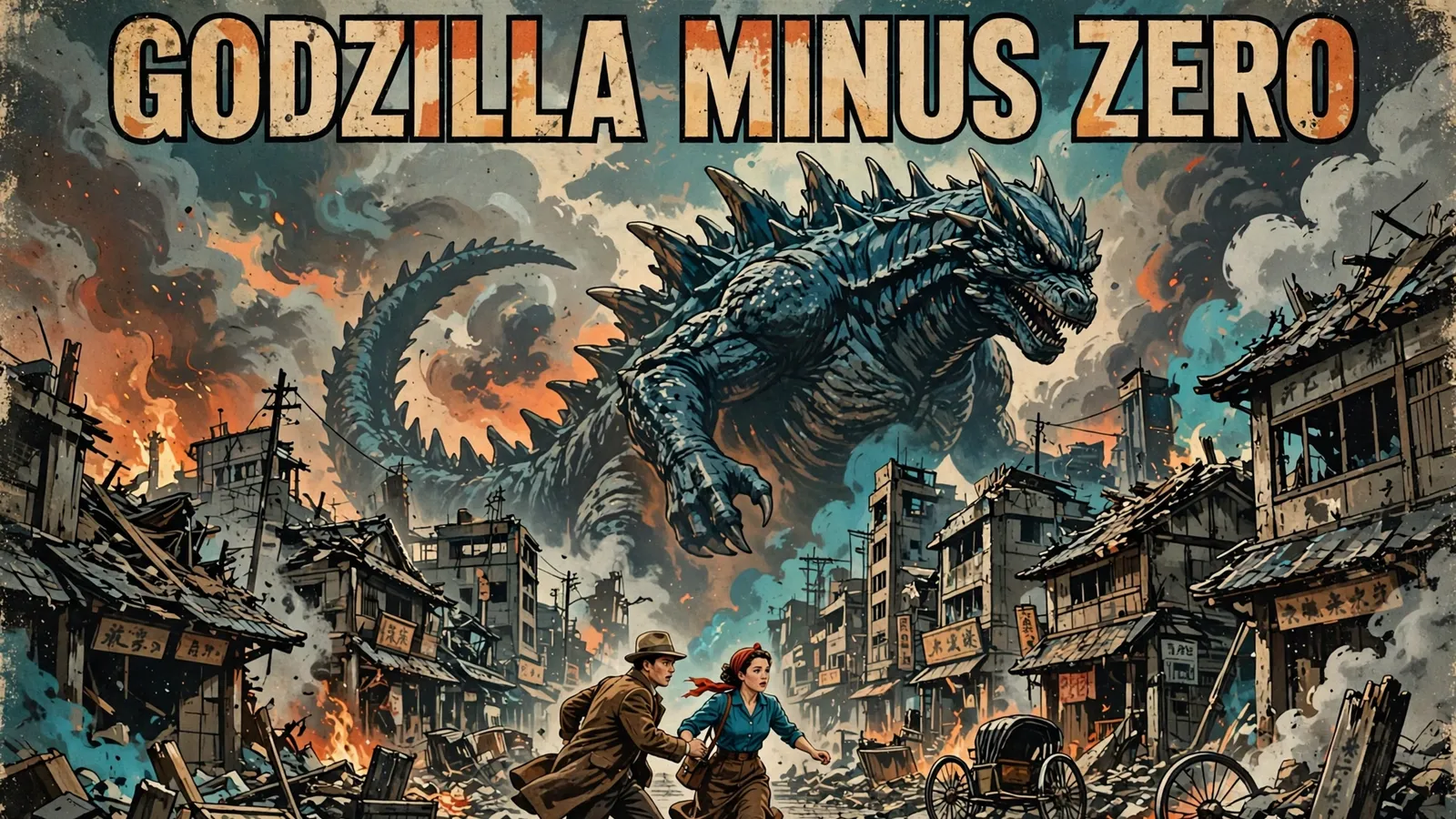
Minus Zero picks up in 1949, two years after the events of Minus One, with Japan still struggling to rebuild from war and from Godzilla’s attacks. Koichi Shikishima (Kamiki) and Noriko (Hamabe) return at the centre of the story, their relationship — tested, fractured and tentatively repaired in the first film — now facing a new test as a fresh calamity gathers. Yamazaki’s great strength as a Godzilla director has always been that the monster is the pressure, not the whole story: the human drama is what makes the destruction matter, and here the film returns to the Shikishima family’s separation, guilt and stubborn hope as its emotional engine.
The film is the first Japanese production filmed for IMAX, shot entirely in Japan with IMAX-certified digital cameras, and that scale is not a gimmick. The mass-destruction sequences are, by the consensus of early reviews, larger, more complex and more inventive than the first film’s, and the film’s sound — the roar, the footsteps, the collapsing city — has become a talking point in its own right. Yet the moments viewers keep mentioning are the quiet ones: a family separated by silence, a child’s cry, a decision made in a ruined street. That balance is why the film works.
Ryunosuke Kamiki as Koichi Shikishima — Kamiki returns to a character defined by survivor’s guilt, and his performance deepens it. Koichi is no longer simply running from his past; he is trying to live with it, to be a partner and a protector in a country that is itself trying to stand again. Kamiki plays that struggle without showiness, and the film’s emotional highs depend on his restraint.
Minami Hamabe as Noriko — Hamabe gives Noriko a fierce, grounded presence. She is not a symbol of hope but a person making hard choices, and her scenes with Kamiki — tender, tense, sometimes wordless — are the film’s heart. Early reactions that described viewers crying in the cinema were, more often than not, talking about this relationship rather than the monster.
The wider cast and the monster — Around the leads, the film rebuilds its ensemble of neighbours, officials and soldiers, ordinary people facing an extraordinary threat. And Godzilla himself — larger, louder, more destructive — remains a force of nature rather than a villain with a plan, which is exactly why he endures: he is the disaster against which human courage is measured.
Yamazaki, who again writes and directs, with visual effects from Shirogumi, has made a sequel that is visibly more expensive than its predecessor — the first film cost about US$15 million and grossed US$115 million on its way to the Academy Award for Best Visual Effects — and the extra resources show in every frame. The IMAX photography gives the destruction a physical weight, the effects work is seamless, and the film’s pacing moves confidently between intimate drama and city-levelling spectacle.
What stands out is how the film handles scale: it makes the kaiju action feel earned by keeping the human stakes visible at all times. The monster is never just a special effect; he is the pressure that forces every character to choose who they are. The sound design — the roar, the weight of the footsteps, the silence after the destruction — is as important as the visuals, and it is used with real confidence.
Naoki Sato returns as composer, and his score does much of the film’s emotional work — swelling under the set pieces, receding for the quiet scenes, and knowing when to let silence do the talking. The sound design is a highlight in its own right: the roar, the footsteps, the collapsing buildings are mixed with a physical weight that IMAX audiences in particular will feel. The film also nods to Akira Ifukube’s classic Godzilla themes, using them sparingly and to real effect.
What we loved:
What could be better:
The numbers are the story here as much as the film. Godzilla Minus Zero opened in Japan on 3 November 2026 to about ¥910 million (roughly US$5.7 million) from some 590,000 admissions — the biggest opening day ever for a live-action film in Japan, and the biggest in the franchise’s history. That is a remarkable result for a film that cost, by most reports, more than the first film’s roughly US$15 million — and it suggests the sequel will comfortably outgross its predecessor’s US$115 million worldwide total.
The film’s early IMAX screenings in North America, the UK and Australia on 3 November were sell-outs in several cities, and the wide North American release on 6 November is expected to be strong. Whether it can match the first film’s remarkable US performance — it was the highest-grossing live-action Japanese film ever in North America — remains to be seen, but the opening-day numbers in Japan suggest the audience is there.
Yes — and see it on the biggest screen you can find. Godzilla Minus Zero is that rare sequel that is bigger in every way and still keeps the human story at its centre. It is a monster film, a war drama and a family story at once, and it succeeds at all three. The roar is louder, the stakes are higher, and the heart is still there.
Our rating: 9 out of 10 — the King of the Monsters, at the top of his game.
When was Godzilla Minus Zero released? It opened in Japan on 3 November 2026, with a wide North American release on 6 November 2026.
Who directed Godzilla Minus Zero? Takashi Yamazaki, who also directed Godzilla Minus One (2023).
Who stars in Godzilla Minus Zero? Ryunosuke Kamiki and Minami Hamabe return as Koichi Shikishima and Noriko.
Is Godzilla Minus Zero a direct sequel to Godzilla Minus One? Yes — it picks up in 1949, two years after the first film, with the same central characters.
Is Godzilla Minus Zero suitable for children? It is rated R in the United States for violent content and bloody images, so it is best suited to older viewers.
How much did Godzilla Minus Zero make on its opening day? About ¥910 million (roughly US$5.7 million) in Japan, from some 590,000 admissions — the biggest opening day ever for a live-action film in Japan.