★ LATEST REVIEWS

Our Trailer Rating: ★★★★☆ 8.5/10
This is a trailer review only. The Hunchback, Soul of Paris has not been released yet, so this article rates the trailer — not the film — and the full review will follow after its Netflix premiere on 27 November 2026. Nothing here judges a film nobody has seen; everything below describes what the official trailer actually shows.
Forget the Disney musical. Netflix’s first official trailer for The Hunchback, Soul of Paris, released at the end of October and widely covered on 1–2 November 2026, presents a Quasimodo nobody has seen on screen before: not a bell-ringer hidden in a cathedral, but a hunted stonemason in a Paris collapsing under cholera, revolution and fear. Vincent Cassel transforms into the title figure, director Jean-François Richet strips away every gothic musical convention, and the trailer’s fog, torchlight and dread suggest the darkest version of this story ever filmed. If the film delivers on its trailer, late November has a major event on its hands.
| Release date | 27 November 2026 (Netflix, global premiere). |
| Director | Jean-François Richet |
| Writers | Éric Besnard, Edgar Marie |
| Genre | French-language historical thriller / period drama |
| Language | French (original title: Quasimodo, l’âme de Paris) |
| Runtime | About 103 minutes (1 hour 43 minutes, per early listings) |
| Lead cast | Vincent Cassel, Karim Leklou, Daphné Patakia, Benjamin Voisin, Noémie Lvovsky, Sébastien Pouderoux |
| Trailer rating | 8.5/10 |
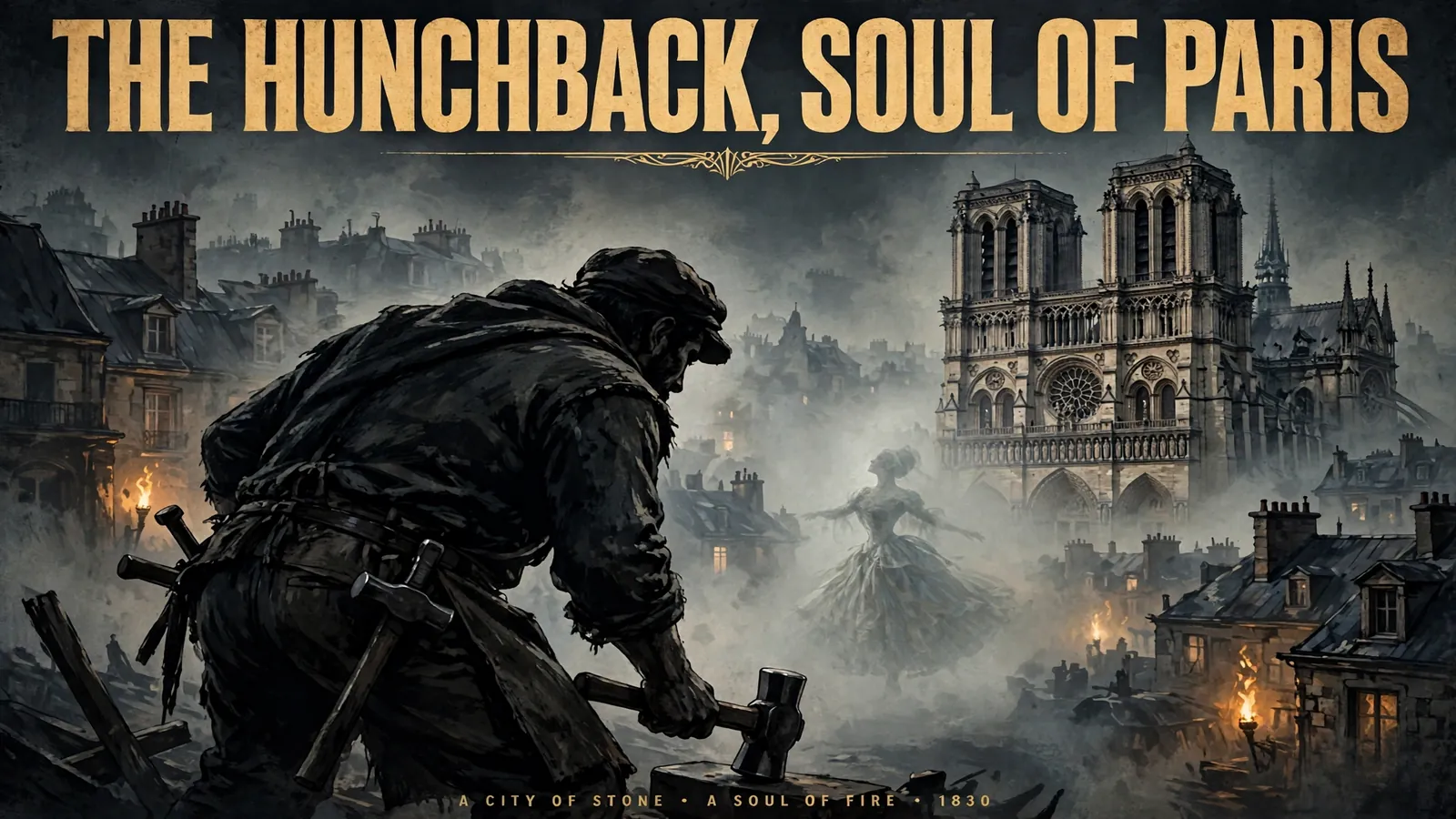
The trailer opens in darkness, with Quasimodo concealed and imprisoned, before pulling back to reveal a Paris on the edge of collapse. The year is 1830, on the eve of the July Revolution, and the city is gripped by two plagues at once: a cholera epidemic sweeping the capital, and political unrest spreading through its streets. Cassel’s Quasimodo is a hunchbacked stonemason living on the margins of society — a man who, the trailer suggests, has shown himself remarkably immune to the cholera around him, and who is therefore pursued by the authorities as both a curiosity and a threat.
The trailer’s second movement is the love story: Quasimodo, hunted and hidden, risks everything for a dancer he has fallen for, and the film frames that devotion as the story’s engine rather than its decoration. The action is kinetic and grounded — chases through foggy streets, confrontations with police, stonework and scaffolding as both workplace and battleground — and the trailer’s palette is grey stone, torchlight amber and mist, a long way from the Technicolor Paris of earlier adaptations. Richet, known for the Mesrine crime saga and the thriller Plane, directs with the same muscular realism he brought to those films, and the trailer’s period detail — costumes, streets, the sheer dirt of the city — feels researched rather than dressed.
The trailer also carries an intriguing piece of literary history: Richet has said the story is inspired by the theory that Victor Hugo’s famous character may have been based on a real stonemason. That framing matters, because it tells the audience what kind of film this is — not a faithful adaptation of Hugo’s 1831 novel (itself set in 1482), but a reimagining that uses the legend’s origins as a starting point for a historical thriller. The trailer is honest about that distance, and the honesty is a strength.
The tone is dark, urgent and adult: this is a thriller first and a romance second, with the love story giving the thrills their stakes rather than softening them. The trailer’s action is physical and unglamorous — running, hiding, fighting in streets that feel genuinely dangerous — and its music is low, percussive and ominous, building dread rather than releasing it. Cassel’s presence dominates without a word of dialogue needing to carry the trailer: his physical transformation, his stillness in the fog, his sudden violence when cornered. The trailer’s most effective choice is restraint — it shows atmosphere and situation rather than plot, and it leaves the film’s biggest questions (who hunts Quasimodo, and why; what the dancer’s fate will be) deliberately unanswered.
What the trailer nails:
What remains unproven:
The Hunchback has been filmed, animated, musicalised and parodied for nearly two centuries, and every generation gets the Quasimodo it needs. The 1939 Charles Laughton version made him a symbol of the outsider’s dignity; Disney’s 1996 animated film made him a hero for children; and now Richet’s version makes him something stranger and more contemporary — a working man made a scapegoat by a society in crisis. That choice feels pointed in 2026: a city gripped by disease, turning on the people it finds easiest to blame, is not a remote historical fantasy but a recognisable pattern, and the trailer’s cholera-era Paris carries an unmistakable charge because of it. Cassel, reuniting with Richet after their Mesrine collaboration, is ideal casting for this reading: he has spent a career playing men who are dangerous, charismatic and wounded at once, and Quasimodo gives him all three qualities in a single role. The trailer’s most striking decision is to show him as a labourer first — a stonemason with tools, dust and a trade — rather than as a monster or a mascot. That grounding is what separates this adaptation from the ones that came before: it asks the audience to see Quasimodo as a person before it asks them to see him as a legend, and that order of operations is exactly what a reimagining should do. The supporting cast reinforces the point: Karim Leklou, Daphné Patakia and Benjamin Voisin are serious French screen actors, not stunt casting, and their presence suggests a film that takes its world seriously rather than treating it as a backdrop for a star. If the film matches its trailer’s seriousness, it will be remembered as one of the boldest literary adaptations of the decade, not just as another Netflix premiere.
On trailer evidence alone, The Hunchback, Soul of Paris looks like one of the most intriguing Netflix films of the year: a major star, a respected genre director, a classic character rebuilt from the ground up, and a setting — cholera-era Paris on the brink of revolution — that no previous adaptation has attempted. The trailer’s confidence is its own argument: this is a film that knows what it is and is not afraid to be dark, strange and adult about it. The risk is the one every reimagining carries: that audiences expecting Hugo’s cathedral will find Richet’s streets instead, and judge the film for what it is not. The trailer suggests the film is ready for that argument, and ready to win it. The full verdict must wait for 27 November — but the trailer has already done its job, which is to make that date feel unmissable.
Our trailer rating: 8.5/10 — A fog-drenched, fiercely original trailer that rebuilds a legend from its foundations; the full verdict must wait for the premiere.
When does The Hunchback, Soul of Paris premiere?
It premieres globally on Netflix on 27 November 2026.
Who stars in The Hunchback, Soul of Paris?
Vincent Cassel stars as Quasimodo, with Karim Leklou, Daphné Patakia, Benjamin Voisin, Noémie Lvovsky and Sébastien Pouderoux.
Who directed The Hunchback, Soul of Paris?
Jean-François Richet, director of Mesrine and Plane, from a screenplay by Éric Besnard and Edgar Marie.
What is The Hunchback, Soul of Paris about?
It reimagines Victor Hugo’s legend as a historical thriller set in Paris in 1830, where a hunchbacked stonemason, hunted by the authorities during a cholera epidemic, risks everything for a dancer he loves.
Is The Hunchback, Soul of Paris based on Victor Hugo’s novel?
It is loosely inspired by the novel and by the theory that Hugo’s character was based on a real stonemason; it relocates the story from 1482 to 1830 and is a reimagining, not a faithful adaptation.
Is this a review of the film?
No — this is a trailer review only, rating the official trailer. The full film review will follow after the film’s premiere on 27 November 2026.