★ LATEST REVIEWS

Our Rating: ★★★☆☆ 5.5/10
There is a genuinely disturbing idea at the heart of Other Mommy, and it is a shame the film built around it cannot quite live up to it. Rob Savage’s supernatural horror, produced by James Wan’s Atomic Monster and Blumhouse, adapts Josh Malerman’s novel Incidents Around the House and stars Jessica Chastain in a dual role: a mother, and the thing that looks exactly like her. A seven-year-old girl, Bela, is the only one who can reliably tell them apart — and the only one the entity really wants. The premise promises intimate, psychological dread. The film delivers noise, incident and confusion in roughly equal measure, and critics on release were largely unkind. Audiences, however, turned up in numbers that made it a commercial success anyway.
This review is spoiler-free on the film’s ending and its final twists. The premise deserves to be met fresh, even where the execution frustrates.
| Detail | Information |
|---|---|
| Release date | 9 October 2026 (United States); 8 October 2026 (Australia and several other territories) |
| Director | Rob Savage |
| Writer | Nathan Elston, based on the 2024 novel Incidents Around the House by Josh Malerman |
| Genre | Supernatural psychological horror |
| Language | English |
| Runtime | 93 minutes |
| Budget | $18–19 million |
| Lead cast | Jessica Chastain, Jay Duplass, Arabella Olivia Clark, Dichen Lachman, Arian Moayed, Karen Allen |
| Our rating | 5.5/10 |
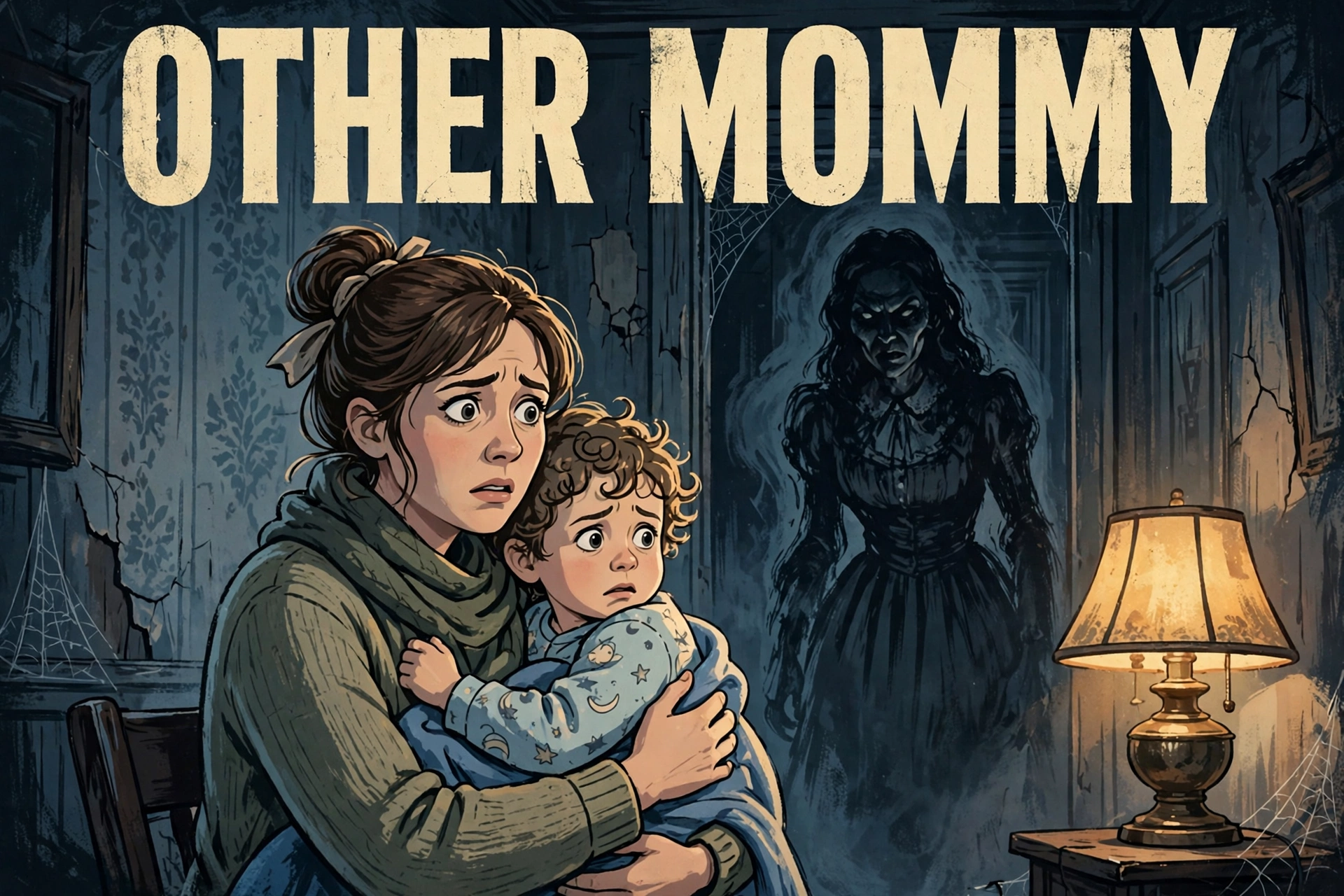
Bela (Arabella Olivia Clark) is seven years old, and her home is already strained: her parents’ marriage is troubled, and the adults around her are distracted by their own problems. Into this vulnerable household comes a presence Bela calls “Other Mommy” — an entity that emerges from her closet looking uncannily like her own mother, Ursula, and that keeps asking, with terrible politeness, “Can I go inside your heart?”
Bela refuses, and the refusals are where the film’s best material lives. The entity’s campaign is not a simple haunting but a slow act of manipulation: it exploits a child’s emotional vulnerability, her need for attention, and the gaps between her parents to wear the family down. The film is told predominantly from Bela’s perspective, and that choice is its smartest one — the audience, like Bela, is never quite sure which adult to trust, whether what is happening is real, or whether the grown-ups’ explanations are comfort or cover-up.
The trouble is that the film does not trust its own idea for long. Where Malerman’s novel builds dread through a child’s partial understanding, Savage’s film repeatedly reaches for volume: loud set pieces, digital grotesquerie and, by the director’s own cheerful admission, something like fifty jump scares. The paranoia that should be the film’s engine — is that Ursula or Other Mommy? can Bela trust any grown-up? — gets buried under incident, and by the climax the scares have become, as one reviewer put it, an endurance test rather than a nightmare. The central concept deserved better, and the film’s occasional glimpses of the quieter, more disturbing movie it might have been make the shortfall sting more.
Jessica Chastain as Ursula / Other Mommy — Chastain’s dual role is the film’s obvious draw, and she commits to it fully. As Ursula she is warm, tired and recognisably human — a mother stretched thin by a failing marriage. As Other Mommy she is something else: the same face worn wrong, with a stillness and a smile that never quite reach the eyes. The distinction is played through small choices — posture, timing, the way the entity holds a gaze a beat too long — and Chastain’s craft keeps the two figures distinct even when the script around her gets muddled. Even critics who disliked the film found little fault with her.
Arabella Olivia Clark as Bela — The film rests on a seven-year-old’s shoulders, and Clark carries it with remarkable steadiness. Bela is not a precocious movie child but a believable one: confused, loyal, frightened, and trying to make sense of adult behaviour that makes no sense to her. The film’s best scenes are the quiet ones between Bela and the entity, where Clark’s reactions do the work the effects cannot.
Jay Duplass as Daddo, and the supporting cast — Duplass plays Bela’s father as a man whose attention is elsewhere, which is both the character’s tragedy and, dramatically, part of the problem: the adults are written thinly enough that the family’s emotional stakes never fully land. Dichen Lachman, as paranormal investigator Lois Anthony, brings welcome authority to the film’s later stretch, Arian Moayed is solid as family friend Uncle Frank, and screen legend Karen Allen, as Bela’s grandmother Ruth, lends warmth that the film could have used more of.
Savage, who made his name with the lockdown horror Host and went on to direct The Boogeyman, directs with energy and a clear love of the genre’s machinery. The film is technically polished: Lowell A. Meyer’s cinematography keeps the house shadowy and plausible, John Cutler’s editing is brisk across a tight 93 minutes, and Patrick Jonsson’s score does its job. Principal photography took place in Dublin, Ireland, beginning in May 2025, and the production design makes the family home feel like a real place before it starts feeling like a trap.
The problem is one of proportion. Savage has said the film is “full of dread, full of set pieces”, and the set pieces keep winning. A horror film built on a child’s uncertain perspective needs quiet and patience; Other Mommy keeps interrupting its own tension with louder, uglier shocks, and the digital effects work — the entity’s transformations and manifestations — often looks less frightening than the simple idea of a mother-shaped thing standing in a doorway. The result is a film that is rarely boring but rarely scary either, which for a horror film is the more damning verdict.
One honest caveat: viewers who enjoy loud, effects-driven horror may have a better time than the critical consensus suggests — the film’s box-office success suggests many did — and Chastain completists will find her dual performance worth the ticket alone. But viewers looking for the slow, psychological dread the premise promises should adjust expectations.
Jonsson’s score leans on low strings and dissonant textures, serviceable without being memorable. The sound design does stronger work in the quiet scenes — a closet door, a whisper, a child’s breathing — than in the loud ones, where volume substitutes for unease. As with the film generally, the quieter the moment, the more effective it is.
What we loved:
What could be better:
Other Mommy was made for a reported $18–19 million and grossed approximately $97 million worldwide — a clear commercial success for Blumhouse and Universal, and a reminder that horror audiences and horror critics often want different things. Contemporary reporting describes the critical reception as generally negative, with reviews praising Chastain and the premise while faulting the execution, but the box-office return — more than five times the budget — speaks for itself. For a mid-budget October horror release, that is a profitable result by any measure, and it would not be surprising to see the property continue in some form.
If you are a Jessica Chastain fan, a Malerman reader, or a horror completist, yes — there is a fascinating performance and a great idea here, and the film is short enough that its flaws never become punishing. If you are looking for the year’s scariest or smartest horror film, though, this is not it: the dread the premise promises keeps getting drowned out by noise. Go in for Chastain and the concept, not for a classic.
Our rating: 5.5/10 — A great horror idea and a strong Chastain performance undermined by loud, muddled execution; profitable, but not the nightmare it could have been.
What is Other Mommy about?
A seven-year-old girl, Bela, is targeted by a supernatural entity that looks exactly like her mother and keeps asking to “go inside her heart”, while her troubled family struggles to understand what is happening.
Is Other Mommy based on a book?
Yes. It adapts Josh Malerman’s 2024 horror novel Incidents Around the House, with a screenplay by Nathan Elston.
Who stars in Other Mommy?
Jessica Chastain in a dual role as Ursula and Other Mommy, Jay Duplass as Bela’s father, Arabella Olivia Clark as Bela, with Dichen Lachman, Arian Moayed and Karen Allen in support.
How much did Other Mommy earn at the box office?
Approximately $97 million worldwide against a budget of $18–19 million, making it a commercial success despite generally negative reviews.
Is Other Mommy suitable for family viewing?
No. It is a supernatural horror film about a child in danger, with frightening imagery and intense scenes; it is intended for adult and older-teen viewers.