★ LATEST REVIEWS

★★★★☆ Our Rating: 8/10
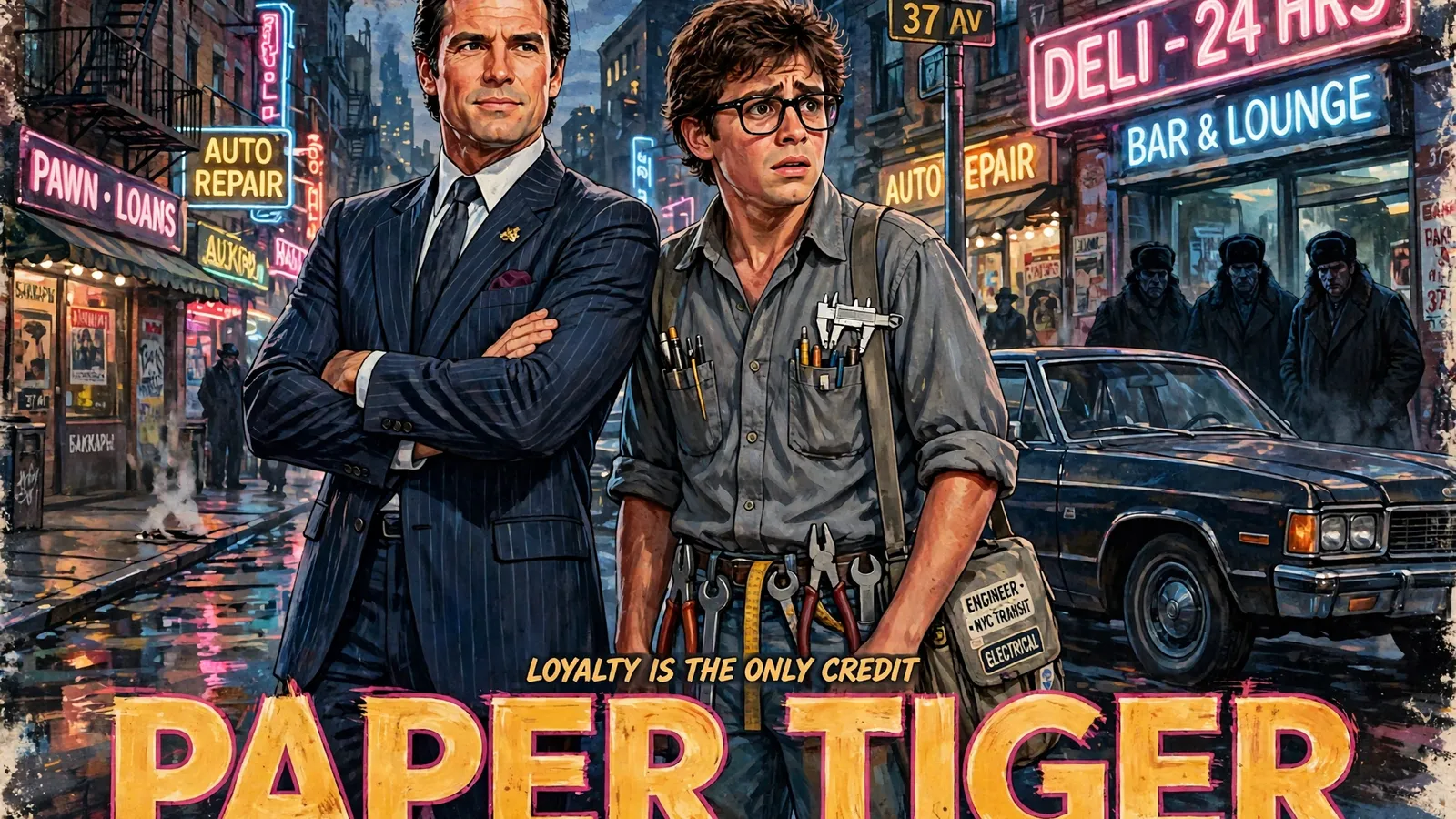
There is a particular kind of American crime film that does not announce itself with gunfire. It begins quietly, in a kitchen or a living room, with two people who love each other making a decision they will not be able to take back. Paper Tiger, written and directed by James Gray, is that kind of film. It arrives in American cinemas in a limited release on 13 November 2026 through Neon, with a nationwide expansion on 20 November, and it premiered at the Cannes Film Festival on 16 May 2026. It stars Adam Driver as Gary Pearl, a former cop turned security-consulting businessman, Miles Teller as his younger brother Irwin, an engineer, and Scarlett Johansson as Hester, Irwin’s wife. Set in Queens, New York, in 1986, it is a story about family, ambition and the moment a decent man steps across a line he cannot see until he is already on the other side of it. It is also, by some distance, the most acclaimed of this week’s new releases — 85 to 86% on Rotten Tomatoes and 79 on Metacritic — and that acclaim is earned.
This review is spoiler-free. It draws on reported facts about the film’s release, cast and critical reception, and the rating reflects the film as it stands on its opening weekend.
| Detail | Information |
|---|---|
| Theatrical release | 13 November 2026 (US limited, Neon); nationwide expansion 20 November 2026 |
| World premiere | 16 May 2026, Cannes Film Festival |
| Director | James Gray (also writer) |
| Genre | Crime drama |
| Language | English |
| Starring | Adam Driver (Gary Pearl), Miles Teller (Irwin Pearl), Scarlett Johansson (Hester), Roman Engel (Ben), Gavin Goudey (Scott) |
| Setting | Queens, New York, 1986 |
| Runtime | 1 hour 54 minutes |
| Rating | R (language, some violence) |
| Budget | Around $15 million reported |
| Rotten Tomatoes | 85–86% (93–114 critics, average 7.0/10) |
| Metacritic | 79 out of 100 (25 critics) |
| Notable reviews | IGN 8/10, Peter Travers 3.5/4 |
| Production | US–Brazil–Italy co-production |
| Box office | No verified figures yet — limited opening today |
| Our rating | 8/10 |
The story begins with an ordinary life. Irwin Pearl is an engineer, a careful man with a wife, Hester, and two sons, Ben and Scott. He is not rich, but he is respectable, and his life runs on the quiet routines of a middle-class family in Queens in 1986. His older brother Gary is a different kind of man: a former cop who has reinvented himself as a security-consulting businessman, confident, persuasive, and comfortable in rooms where money and power are negotiated. When Gary comes to Irwin with a proposition — lucrative, straightforward, the kind of opportunity that does not come twice — Irwin, who is naive in the ways that matter most, accepts it. That acceptance is the film’s hinge. Everything that follows turns on it.
The proposition pulls the two brothers into conflict with the newly emerging Russian mafia, a force consolidating its power in New York in the mid-1980s that does not forgive mistakes. The film’s tension comes not from shootouts or chases, though there are moments of violence, but from the slow, sickening realisation that Irwin has walked into a world he does not understand, and that his brother — the man he trusted — may not understand it either. Gray stages this as a family drama first and a crime film second: the scenes that matter most are the ones between the brothers, and between Irwin and Hester, as the consequences of the decision spread outward through the family.
Running alongside the crime story is a second thread that gives the film its emotional depth. Hester, Irwin’s wife, is dealing with a mysterious illness, and her condition adds a layer of vulnerability and urgency to every decision the family makes. Johansson plays this thread with a restraint that makes it land harder than any melodrama could: Hester is not a symbol of suffering, she is a woman trying to hold her family together while her own body betrays her. The illness is never explained in neat terms, and that ambiguity is deliberate — one more thing the family cannot control, in a story about people losing control of everything.
The script, which Gray has said echoes incidents from his own life, has the texture of lived experience. The details of Queens in 1986 — the streets, the accents, the small businesses, the way a family dinner can feel like both a refuge and a trap — are rendered with a specificity that only comes from a filmmaker writing about a world he knows from the inside. That authenticity is the film’s greatest strength: it makes the crime story feel like something that happened to real people, and it gives the film a weight that bigger, louder crime dramas often lack.
Adam Driver is the film’s anchor, and he gives one of the finest performances of his career. As Gary Pearl, Driver plays a man whose confidence is both his gift and his curse: a former cop who has learned to sell certainty, and who believes his own pitch so completely that he cannot see the danger in it. Driver has a rare ability to make a character’s intelligence visible — you can watch Gary thinking, calculating, persuading — and he uses it here to build a portrait of a man who is genuinely trying to help his brother and genuinely leading him into disaster at the same time.
Miles Teller, as Irwin, is Driver’s perfect counterpart. Where Gary is all confidence, Irwin is all caution — an engineer who trusts systems, rules and reason, and who discovers, too late, that the world his brother has led him into does not run on any of those things. Teller plays Irwin’s naivety without condescension: this is not a foolish man, it is a decent man in a situation he was never equipped to handle. The scenes between the two brothers are the film’s heart, and the chemistry between Driver and Teller is the reason the film works as well as it does.
Scarlett Johansson as Hester gives the film its emotional centre. Johansson has spent the last decade proving herself one of the most versatile actors working, and here she does some of her most quietly powerful work. Hester is a woman caught between her husband’s crisis and her own illness, and Johansson plays her with a stillness that makes every small gesture count. The film gives her fewer scenes than it gives the brothers, which is a shame, because her scenes are among its best. Roman Engel as Ben and Gavin Goudey as Scott, the couple’s sons, give the family a lived-in reality that keeps the stakes feeling personal rather than abstract.
James Gray is one of the most distinctive filmmakers working in American cinema, and Paper Tiger is a reminder of why. His films — Little Odessa, The Yards, We Own the Night, Two Lovers, The Immigrant, The Lost City of Z, Ad Astra, Armageddon Time — are all, in different ways, about families, loyalty and the gap between the life a person wants and the life they end up living. Paper Tiger fits squarely in that tradition, and it may be his most personal film since Armageddon Time. Gray’s direction is patient and unshowy: long takes, careful compositions, a camera that watches people rather than chasing them. The effect is to make the audience feel like a witness to a family’s slow unraveling.
The period recreation is superb. Queens in 1986 is not presented as a nostalgic postcard; it is presented as a working place, with its particular light, its particular sounds, its particular mix of ambition and limitation. The production design — the kitchens, the offices, the streets — feels lived-in rather than dressed, and the costumes give the characters a grounded reality. The Russian mafia, as Gray presents it, is not a cartoon of villains in fur coats; it is a business, run by men who understand power, and the film’s refusal to sensationalise it makes it more frightening, not less.
The film’s pacing is deliberate, and that deliberateness will divide some viewers. Gray takes his time, and there are stretches where the film moves slowly by the standards of a modern crime drama. But the slowness is the point: the film wants the audience to feel the weight of each decision, to sit with the brothers as they realise what they have done. The violence, when it comes, is brief and shocking precisely because the film has not been building to it with a drumbeat of action. It arrives the way violence arrives in real life — suddenly, and with consequences that cannot be undone.
The score is restrained and effective, working in the background rather than announcing itself. Gray’s films have always used music carefully, and Paper Tiger is no exception: the score underscores the emotional weight of the family scenes without telling the audience how to feel, and the sound design — the hum of a Queens street, the clatter of a family kitchen, the silence of a room where a bad decision has just been made — does as much storytelling as the dialogue.
What we loved:
What could be better:
Paper Tiger premiered at Cannes on 16 May 2026, and the critical response since then has been the strongest of any new release this week. On Rotten Tomatoes the film holds 85 to 86% from 93 to 114 critics, with an average of 7.0 out of 10 — a broad, solid consensus that reflects genuine admiration rather than polite approval. On Metacritic it sits at 79 out of 100 from 25 critics, a score that places it firmly in the range of the year’s best-reviewed dramas. The individual reviews are equally strong: IGN gave it 8 out of 10, and Peter Travers gave it 3.5 out of 4. For a crime drama opening in limited release, that level of critical support is a real advantage, and it is the reason the film’s nationwide expansion on 20 November is worth watching.
There are no verified box-office figures yet — the film opens in limited release in the United States today, 13 November 2026, through Neon — so its commercial prospects are still an open question. A reported budget of around $15 million is modest by the standards of a film with this cast, which gives it a realistic path to profitability if the critical praise translates into audience interest. The limited opening is a deliberate strategy: build word of mouth among critics and early audiences, then expand nationwide on 20 November.
Yes — without hesitation. Paper Tiger is the best new release of the week, and one of the finest crime dramas of the year. Adam Driver and Miles Teller are superb, Scarlett Johansson is quietly devastating, and James Gray directs with the patience and personal feeling that have made him one of American cinema’s most distinctive voices. It is not a loud film, and it is not a fast one, but it stays with you long after the credits roll — a story about two brothers, one decision, and the price of trusting the wrong person at the wrong moment. Our rating: 8 out of 10.
When was Paper Tiger released?
Paper Tiger was released in cinemas in the United States in a limited release on 13 November 2026 through Neon, with a nationwide expansion on 20 November 2026. It premiered at Cannes on 16 May 2026.
Who directed Paper Tiger?
James Gray wrote and directed the film. His previous films include We Own the Night, Two Lovers, The Lost City of Z, Ad Astra and Armageddon Time.
Who stars in Paper Tiger?
Adam Driver stars as Gary Pearl, Miles Teller stars as his brother Irwin Pearl, and Scarlett Johansson stars as Hester, Irwin’s wife. Roman Engel plays their son Ben, and Gavin Goudey plays their son Scott.
What is the story of Paper Tiger?
Set in Queens, New York, in 1986, the film follows Irwin Pearl, a naive engineer who accepts a lucrative proposition from his older brother Gary, a former cop turned security consultant. The brothers are pulled into conflict with the newly emerging Russian mafia, while Hester deals with a mysterious illness.
What are the critic scores for Paper Tiger?
The film holds 85–86% on Rotten Tomatoes (93–114 critics, average 7.0 out of 10) and 79 on Metacritic (25 critics). IGN gave it 8 out of 10, and Peter Travers gave it 3.5 out of 4.
What is Paper Tiger rated?
The film is rated R for language and some violence. It runs 1 hour 54 minutes.
What is the budget of Paper Tiger?
The film’s budget is reported at around $15 million.