★ LATEST REVIEWS

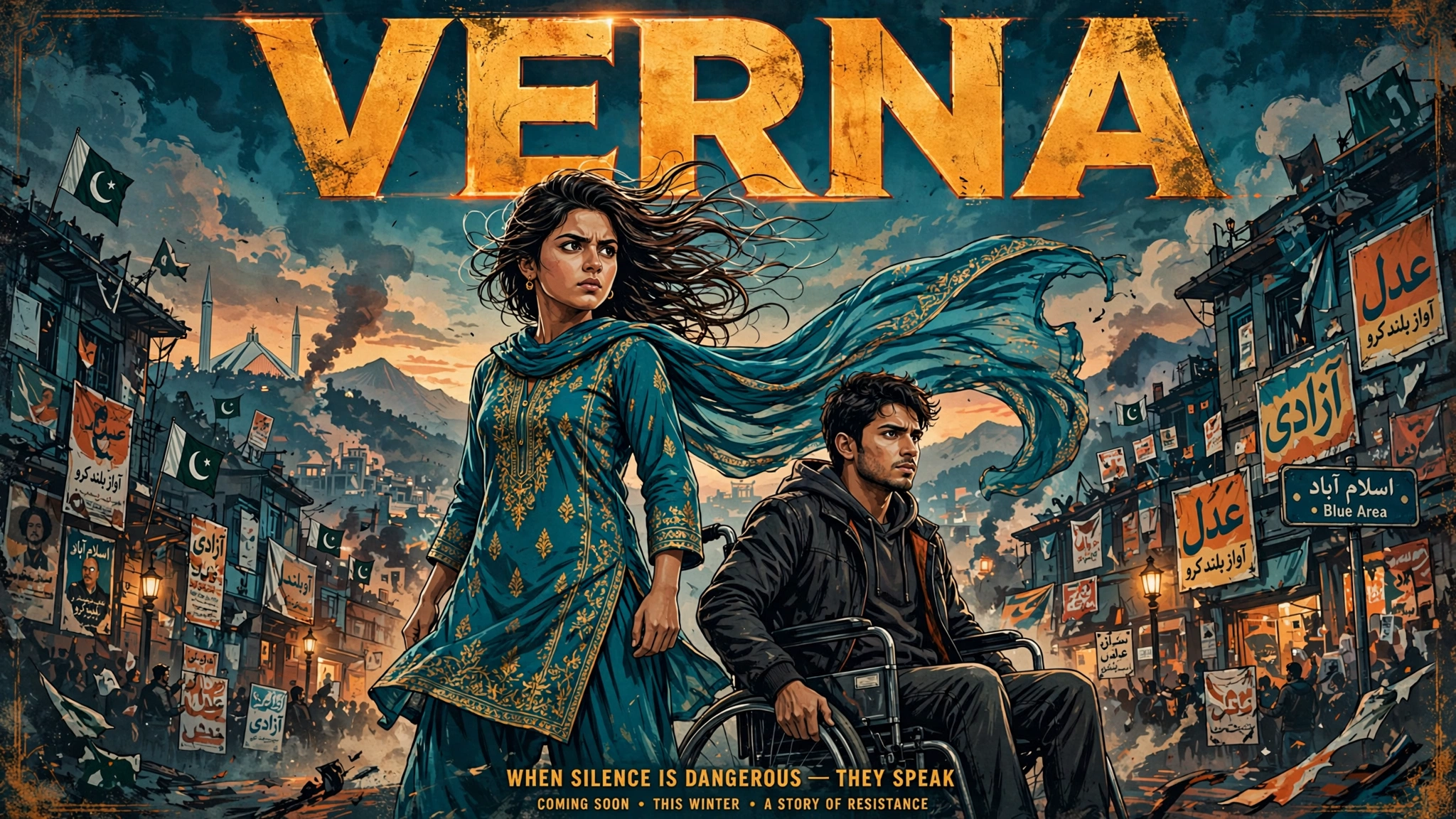
★★★☆☆ Our Rating: 6/10
Shoaib Mansoor does not make comfortable films. After Khuda Kay Liye (2007) and Bol (2011), two of the most consequential Pakistani films of their era, he turned to a subject most commercial filmmakers avoid entirely: rape, and the machinery of power that protects rapists. Verna — the title means “Or Else” — arrived in 2017 wrapped in controversy, briefly threatened with a ban by the censor board, and then released to packed houses and sharply divided opinion. It is a flawed film carrying an urgent message, and nearly a decade later it remains worth arguing about, which may be exactly what its director intended.
A content note before we begin: this review discusses a film about sexual assault. It describes the premise in general terms and avoids graphic detail, but readers sensitive to the subject should be aware of it.
| Detail | Information |
|---|---|
| Release date | 17 November 2017 (worldwide) |
| Director | Shoaib Mansoor |
| Writer | Shoaib Mansoor |
| Genre | Drama, social thriller |
| Language | Urdu |
| Runtime | Around two and a half hours (contemporary reviews describe a 2.5-hour film) |
| Budget | Rs. 5 crore as publicised, though later insider reporting suggested the actual spend was far lower |
| Lead cast | Mahira Khan, Haroon Shahid, Zarrar Khan, Naimal Khawar |
| Our rating | 6/10 |
Sara (Mahira Khan) and Aami (Haroon Shahid) are a young, happily married couple. Aami, who lives with the effects of polio, and Sara share an easy, affectionate marriage, and the film’s opening stretch takes its time establishing their ordinary happiness — which is precisely the point, because what follows destroys it.
On an outing in Islamabad, Sara is abducted at gunpoint by two men. She is held captive and raped over several days, and when she returns, she discovers that the crime is only the beginning of her ordeal. Her husband’s conservative family treats her as disgraced; the police and the justice system offer little help; and the men who attacked her appear to act on the orders of someone powerful — the son of a governor. Sara’s decision, after weeks of being hushed up and disrespected, is to fight: with the help of a lawyer, she takes her case forward, and the film follows her battle against a system in which, as one contemporary review put it, truth is not power — only power is power.
Without spoiling the film’s later turns, it is fair to say Verna becomes a revenge story as much as a courtroom story. That shift is where the film is most divisive: some viewers found Sara’s transformation empowering, others found the film’s second half uneven and its methods troubling. What is not in doubt is the courage of the premise itself — a mainstream Pakistani film, starring the country’s biggest female star, putting rape and institutional failure at its centre.
Mahira Khan as Sara — Mahira Khan gives the film its spine. She plays Sara not as a symbol of suffering but as a specific woman: urban, educated, feisty, funny in the early scenes, and then furious. In interviews around the release, Khan said the intention was that audiences should root for Sara rather than pity her, and that is largely what she delivers. Her best scenes are the quiet ones — the aftermath, the humiliation of a forensic examination handled with bureaucratic indifference, the slow hardening of resolve. If the film around her sometimes wobbles, she never does.
Haroon Shahid as Aami, and the supporting cast — Haroon Shahid, a singer making his acting debut, plays Aami as a decent man trapped between love for his wife and the pressures of his conservative family. It is an underwritten role in places, but Shahid brings sincerity to it, and the film is honest about Aami’s failures rather than excusing them. Zarrar Khan, also debuting, plays the powerful governor’s son with the right kind of entitled menace, and Naimal Khawar, as Aami’s sister Mahgul, gives the family scenes their warmth.
Mansoor directs Verna with the same earnest, issue-first approach that defined his earlier films, and that is both its strength and its weakness. The film’s heart is unmistakably in the right place: it wants Pakistani audiences to talk about rape, about victim-blaming, about the way wealth and political connections bend justice. Contemporary reviewers across the spectrum — even those who disliked the film — acknowledged that the subject mattered and that the film’s provocation had value.
But the craft does not always match the conviction. Critics at the time pointed to a disjointed script, weak audio in places, and storytelling that sermonises when it should dramatise. The film is overly long, and its second half, where the revenge-thriller elements take over, feels less sure-footed than its first. There are powerful individual scenes — the doctor’s waiting room, the family confrontations, Sara’s courtroom resolve — but they do not always cohere into a fully satisfying whole. Mansoor’s earlier films managed the balance between message and drama more gracefully; here, the message occasionally shouts the drama down.
The film’s production history is part of its story. Shot mostly in Islamabad, largely in daylight and at real locations as a cost-saving measure, Verna was made cheaply by design. It was also nearly banned: just hours before its scheduled release, the censor board’s objections threatened to stop it, before it was cleared without cuts on the morning of release. The publicity around the ban meant many cinemas sold out before the decision was even announced — an irony the film’s supporters noted with some satisfaction.
The music, by Mansoor himself with Haroon Shahid, is functional rather than memorable — it serves the film’s emotional beats without producing a standout soundtrack in the manner of Bol. This is one area where the film’s low budget shows: contemporary criticism singled out weak audio as a recurring problem, and some dialogue scenes suffer for it. The score does its job in the dramatic moments, but viewers should not come to Verna expecting a musical showcase.
What we loved:
What could be better:
Verna‘s commercial story is a case study in why reported figures for Pakistani releases of this period need careful reading. The film opened on 17 November 2017 to a strong first weekend by local standards — contemporary trade reporting put the opening weekend at around Rs. 2.7 crore (Rs. 0.68 crore on Friday, Rs. 1.12 crore on Saturday, Rs. 0.90 crore on Sunday) — before falling on Monday. The widely cited lifetime total is around Rs. 9.35 crore, though later insider reporting argued the actual business was lower than that figure. The budget, too, is disputed: the publicised figure was Rs. 5 crore, while a later insider account claimed the film was actually made for under Rs. 1 crore, with Mahira Khan reportedly working for far below her usual fee and much of the crew drawn from the director’s circle.
What is clear is that Verna did not match the commercial success of Mansoor’s earlier films, and that its real impact was cultural rather than financial. It was, as one contemporary commentator put it, a film that may not have won many awards but was “provocative enough to make Pakistani audiences think, question and discuss power, politics and rape” — and for a film on this subject, that is a meaningful achievement in itself.
Yes, with the right expectations. Verna is not Shoaib Mansoor’s best film — Bol remains the high-water mark of his social dramas — but it is an important one, and Mahira Khan’s performance alone justifies watching it. Go in expecting a flawed but fearless film about a subject that still needs talking about, rather than a polished thriller, and you will find plenty to respect and plenty to argue with. That argument is arguably the film’s true legacy.
Our rating: 6/10 — A brave, imperfect film: Mahira Khan is superb, the subject is vital, but the storytelling does not always live up to either.
Who directed Verna?
Shoaib Mansoor, who also wrote and produced it under his Shoman Productions banner. It was his third film after Khuda Kay Liye and Bol.
Who stars in Verna?
Mahira Khan as Sara, Haroon Shahid as her husband Aami, with Zarrar Khan and Naimal Khawar in key supporting roles.
What is Verna about?
A young married woman, Sara, is abducted and raped by men acting for a powerful politician’s son, and then fights for justice against a system stacked against her.
Was Verna banned in Pakistan?
It was briefly threatened with a ban by the censor board just before release, but was cleared without cuts on the morning of 17 November 2017, and released as scheduled.
How much did Verna earn at the box office?
The widely cited lifetime total is around Rs. 9.35 crore, but later insider reporting suggested the actual business was lower; treat the figure as approximate.
Is Verna suitable for family viewing?
No. It deals with sexual assault, violence and adult themes, and is intended for mature viewers.
