★ LATEST REVIEWS

★★★★☆ Our Rating: 8.5/10
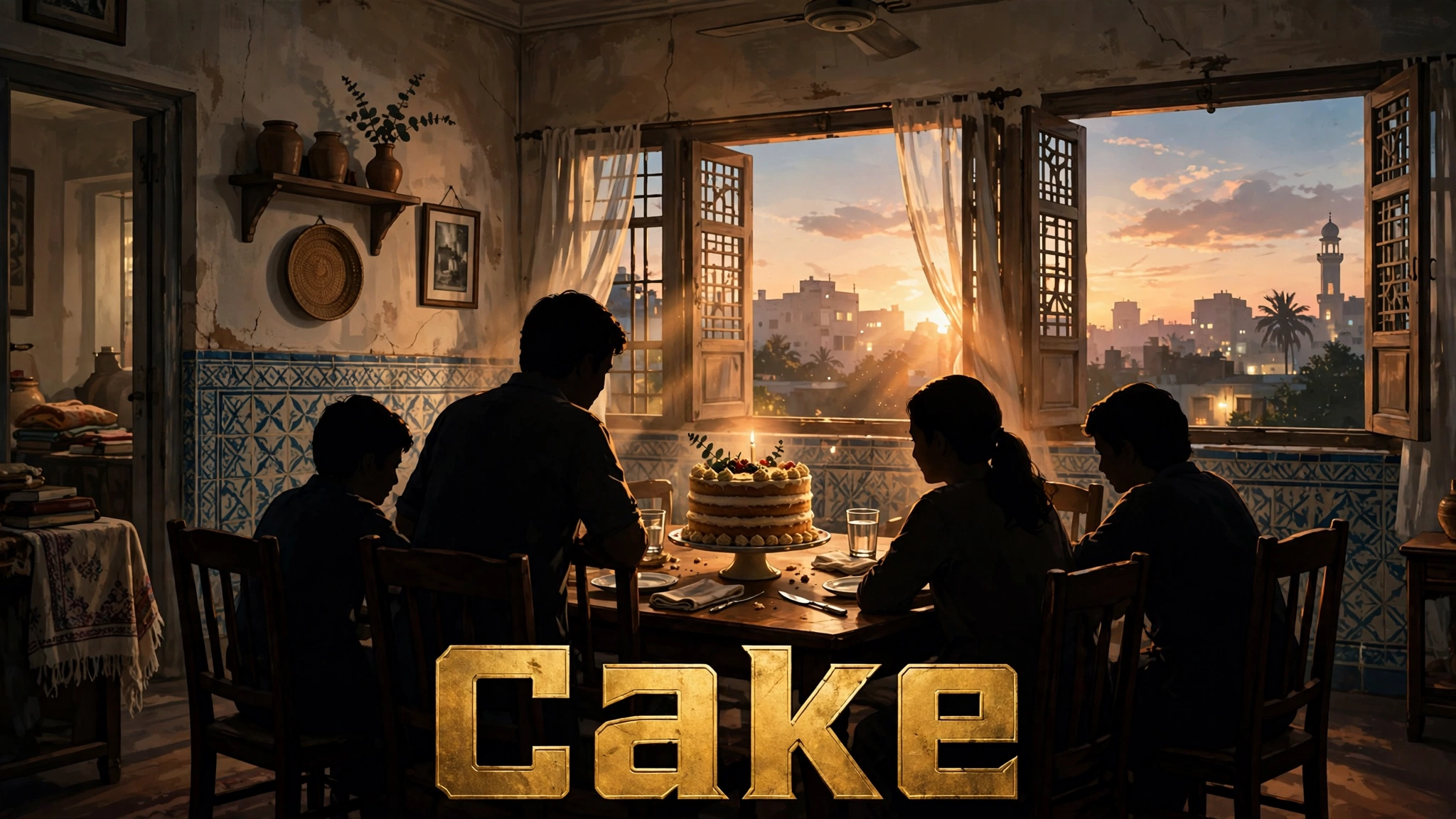
There is a kind of family drama that exists in almost every Pakistani household, and it is rarely the one shown on screen. It is the drama of the daughter who stayed and the daughter who left, of parents growing old in a house that feels emptier every year, of old arguments served alongside dinner. Cake, released on 30 March 2018, built an entire film out of exactly that drama — and did it with a wit, honesty and visual confidence that made critics at home and abroad sit up and pay attention.
Written and directed by Asim Abbasi, Cake became the first Pakistani film to hold its world premiere in London’s Leicester Square, won its director a Best Director award at the UK Asian Film Festival, and was selected as Pakistan’s official entry for Best Foreign Language Film at the 91st Academy Awards. The Guardian called it “quietly revolutionary”. Strong words. But does the film itself — away from premieres and prizes — actually earn them?
In this review, we look closely at the story, the performances, the direction, the music and the box office journey of Cake, and give you our honest verdict on one of the most talked-about Pakistani films of its decade.
| Detail | Information |
| Release date | 30 March 2018 |
| Director | Asim Abbasi |
| Writers | Asim Abbasi |
| Genre | Drama, Comedy-Drama |
| Language | Urdu, Sindhi |
| Runtime | 125 minutes |
| Budget | Rs. 5 crore |
| Lead cast | Aamina Sheikh, Sanam Saeed, Adnan Malik, Beo Zafar, Syed Muhammad Ahmad |
| Our rating | 8.5/10 |
The Jamali family home in Karachi is large, comfortable and quietly coming apart. The ageing father of the family is unwell, and the practical weight of his care sits almost entirely on one pair of shoulders: Zareen, the elder daughter, who lives in Pakistan, manages the household, deals with doctors, staff and relatives, and hides her own exhaustion behind dry humour and relentless competence.
Her younger sister Zara lives in London. Zara is the one who got away — building a life abroad, at a distance from the daily grind of hospitals and family obligations, but carrying her own guilt and her own unfinished business back home. When their father’s condition worsens, Zara returns to Karachi, and the two sisters are forced back into each other’s lives after years of polite distance.
That reunion is the film. Old resentments surface: who sacrificed more, who escaped, who their parents really needed, and who they actually favoured. Around the sisters, a wider family world turns — their mother Habiba, relatives, old connections, and a man known to everyone as Romeo, whose presence stirs feelings and complications that nobody in this house is quite ready to discuss. There are secrets in this family, the way there are secrets in most families, and Abbasi lets them emerge the way they do in real life: sideways, at the wrong moment, often in the middle of an argument about something else entirely.
We will not reveal what those secrets are, or how the family faces them. What matters is the approach. Cake finds its drama not in villains or melodramatic twists, but in recognition. If you have ever sat in a hospital corridor with a sibling you love and resent in equal measure, this film will feel uncomfortably familiar — and that is meant as the highest compliment.
Aamina Sheikh as Zareen gives the performance of the film, and one of the finest in modern Pakistani cinema. Zareen is the responsible one, and Sheikh understands that responsibility, worn for years, curdles into something complicated: pride, bitterness, tenderness and a very funny, very sharp tongue. She rarely raises her voice. She does not need to. Watch how she handles a room — organising, deflecting, caring — and how, in unguarded seconds, the tiredness shows through. It is a performance built from small truths, and it anchors everything around it.
Sanam Saeed as Zara is the perfect counterweight. Saeed plays the returning sister with a mix of confidence and defensiveness that anyone who has lived abroad will recognise instantly: Zara performs independence a little too hard, because the guilt underneath it is real. Her scenes with Sheikh crackle precisely because neither actress reaches for the easy version of the confrontation. These are two people who know exactly where to hurt each other and mostly — mostly — choose not to. Saeed’s comic timing, often underrated, also gives the film some of its warmest laughs.
Adnan Malik as Romeo, in his film debut, brings an easy, gentle charm to a role that could easily have become a standard romantic device. Romeo matters to this story as more than a love interest; he represents a road not taken, and Malik plays him with a lightness that makes the heavier scenes around him land harder. He is not as technically polished as his two co-stars, but his naturalism suits the film’s tone.
Syed Muhammad Ahmad as the father and Beo Zafar as Habiba give the older generation real presence rather than stock-parent duty. Ahmad conveys frailty and faded authority with great dignity, while Beo Zafar steals moments with a comic instinct that never tips into caricature — her Habiba is vain, funny, sharp and, when it counts, unexpectedly moving. Mikaal Zulfiqar appears in a special appearance that adds a jolt of star familiarity without disturbing the film’s delicate balance. As an ensemble, this is one of the best-acted Pakistani films of its era.
Asim Abbasi directs Cake with a confidence that marked him out immediately as a filmmaker to watch. His most important decision is one of trust: he trusts the audience to understand a look, a pause, an unfinished sentence. Where much of Pakistani commercial cinema explains every emotion twice, Abbasi lets scenes play at the speed of real conversation, with people talking over each other, changing the subject, and saying the opposite of what they mean.
The visual style, from cinematographer Mo Azmi, matches that realism with warmth. Karachi is not postcard-glossy here; it is lived-in — sunlit courtyards, cluttered drawing rooms, hospital corridors, and the family’s interior Sindh connections giving the film a rooted sense of place. The camera moves with the family rather than performing for them, and the result is an intimacy that bigger, louder films rarely achieve. Long, patient takes allow the actors to build scenes like theatre, and editor Aarti Bajaj — a major name from Indian cinema — cuts with a sure sense of when a moment has said enough.
If there are technical criticisms, they are minor. The film’s deliberate pacing in its first half may test viewers expecting faster incident, and a subplot or two is sketched more lightly than the central relationship deserves. The much-discussed use of an unbroken, extended take in a key emotional passage is a gamble that mostly pays off, though it will divide audiences: some will find it immersive, others will feel the technique calling attention to itself. On balance, this is directing of real maturity — the work of a filmmaker with a voice, not just a skill set.
The music, by the Sindhi folk-influenced band The Sketches, is one of Cake‘s most distinctive choices. Instead of a conventional film album of romantic duets and dance numbers, Abbasi weaves folk textures, earthy vocals and regional flavour through the film, grounding the Jamali family’s story in the soil of Sindh and Karachi rather than in generic Bollywood-style romance.
The songs function as emotional commentary rather than spectacle. They arrive at moments of memory, travel and reflection, and their raw, rootsy quality gives scenes a texture that a polished studio soundtrack simply could not. The trade-off is commercial: this is not an album that produced chart-dominating singles, and viewers who judge a film’s music by its wedding-season hits may find it understated. But judged by the only standard that matters — does the music deepen the film? — The Sketches’ work is a complete success, and one of the reasons Cake feels like nothing else in Pakistani cinema.
What we loved:
What could be better:
Cake was a modest production by blockbuster standards, made on a reported budget of around Rs. 5 crore, and its commercial performance should be judged on that scale. It opened to packed urban shows and strong word of mouth, taking a reported Rs. 3 crore over its opening weekend in Pakistan, and it showed unusual staying power — still running in its eighth week, when trade coverage put its global gross at roughly $1.4 million, with reported worldwide totals in the region of Rs. 12 crore. Those are not record-breaking numbers, but for an intimate, dialogue-driven family drama with no action, no item songs and no Eid release slot, they represent a genuine success — and proof that an audience existed for this kind of filmmaking. Its larger victories were reputational: the Leicester Square premiere, festival awards, international reviews in publications such as The Guardian and Sight & Sound, and Pakistan’s official submission to the Academy Awards. It was not nominated, but its selection alone marked how far the industry’s ambitions had come.
Absolutely — and especially if you have ever cared for an ageing parent, argued with a sibling, or lived far from home with a guilty heart. Cake is funny, sad, beautifully acted and quietly brave about subjects Pakistani cinema usually avoids or shouts about. It is not a film of big moments; it is a film of true ones, and true moments stay with you longer. If more Pakistani films were made with this much honesty and craft, the industry would not need to talk about a revival. It would simply be living one.
Our rating: 8.5/10 — a funny, moving, beautifully acted family drama, and a landmark for Pakistani cinema.
Was Cake really Pakistan’s Oscar entry?
Yes. Cake was selected as Pakistan’s official submission for Best Foreign Language Film at the 91st Academy Awards. It was not ultimately nominated, but the selection was a significant honour for a debut-era production of its scale.
Is Cake based on a true story?
No. It is an original screenplay by Asim Abbasi. Its situations — ageing parents, siblings divided by distance, family secrets — are fictional but drawn from experiences many families will recognise.
What languages is Cake in, and are subtitles available?
The film is mainly in Urdu with elements of Sindhi, reflecting its Karachi setting and the family’s roots. International releases, including its UK run, were presented with English subtitles.
Where can I watch Cake?
Availability changes over time and differs by country. Following its theatrical run, the film has circulated through television and digital platforms in various regions, so check your local streaming services and digital stores for current options.
How long is Cake, and who is it suitable for?
It runs about 125 minutes. There is no graphic content, but its themes — illness, family conflict and loss — are mature and emotionally direct. It is best suited to adult viewers and older teenagers who enjoy character-driven drama.