
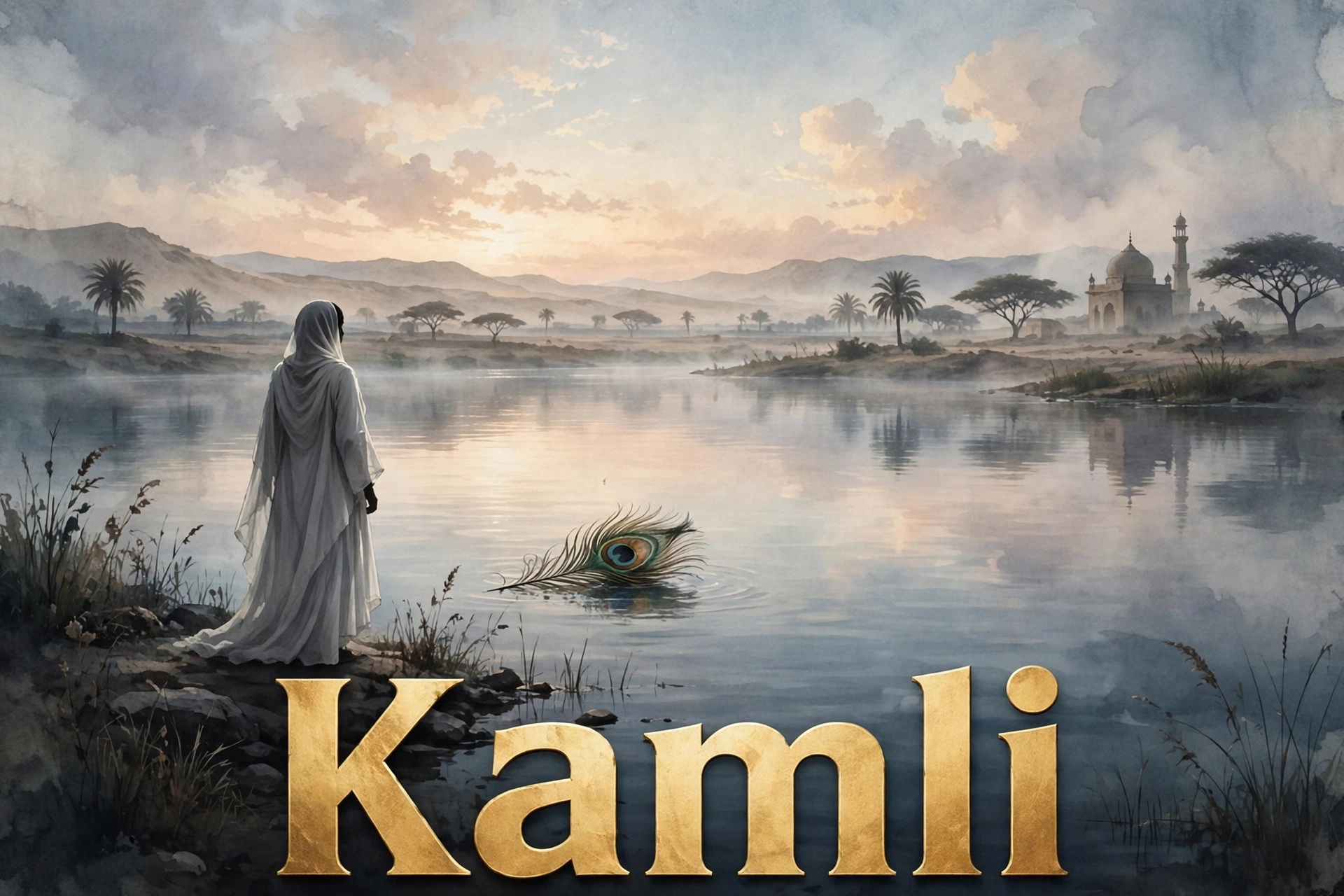

Kamli (2022) Review – Saba Qamar’s Haunting Tale of Love and Longing
Most Pakistani films shout to be heard. Kamli whispers, and somehow that whisper stays with you for days. Released on 3 June 2022, at a time when cinemas were still recovering and big Eid releases were dominating the conversation, this quiet Urdu drama from director Sarmad Khoosat arrived without item numbers, without a larger-than-life hero, and without any interest in playing safe. What it offered instead was poetry, patience, and three women whose inner lives are treated with a seriousness our cinema rarely allows them.
The film went on to win major honours, including Best Film (Viewers’ Choice) and Best Actress at the Lux Style Awards, and it screened at the International Film Festival Rotterdam. Awards, however, only tell half the story. The real question is whether Kamli works as a film, not just as a statement. Does its dreamlike style deepen the story, or does it sometimes drift into indulgence? Is Saba Qamar really as extraordinary here as everyone says?
In this review, we look honestly at the story, the performances, the craft, the music and the commercial run of Kamli, and we tell you plainly who this film is for — and who may walk out restless.
Quick Facts: Kamli at a Glance
| Detail | Information |
|---|---|
| Release date | 3 June 2022 |
| Director | Sarmad Khoosat |
| Writers | Fatimah Sattar (screenplay); based on a short film by Mehar Bano, with additional story and dialogues by Sarmad Khoosat |
| Genre | Drama, Romance |
| Language | Urdu |
| Runtime | 130 minutes |
| Lead cast | Saba Qamar, Sania Saeed, Nimra Bucha, Hamza Khawaja, Omair Rana |
| Our rating | 8/10 |
The Story: Three Women, One Quiet Storm (Spoiler-Free)
Hina, played by Saba Qamar, lives in a small settlement near Kallar Kahar with her sister-in-law Sakina. Her husband left for work in Bahrain eight years ago and has never returned. There are no letters that bring comfort, no clear answers, only a waiting that has quietly become her whole identity. Sakina, who is visually impaired, runs the household with strict discipline, and her rules are the walls inside which Hina’s life is lived.
Around them is Zeenat, a painter who invites local women to sit as models for her work. Zeenat’s own marriage, to the wealthy Malik Nadir, looks comfortable from the outside, but it carries its own emptiness, including the pain of not having a child. Through Zeenat’s studio, Hina glimpses a slightly wider world — colour, conversation, and a brief escape from routine.
Then comes a turning point. Hina slips near the water on her way home and is pulled out by a wandering young man who calls himself Amaltas. He is gentle, mysterious, and seems to belong more to a folk tale than to real life. A connection forms quickly, and Hina begins to steal time to be near him. For a woman who has spent eight years being defined by an absent man, even the possibility of being seen by someone present feels dangerous and alive at once.
That is as far as we will go. Kamli is built less on plot twists than on mood, suggestion and folklore, and its later passages ask the viewer to decide what is real, what is remembered, and what might be imagined. Go in knowing little, and the film’s spell works far better.
Performances: Performances That Carry the Silence
Saba Qamar as Hina gives one of the finest performances of her career, and that is saying a great deal. She does not play longing in big speeches. She plays it in posture, in the way Hina lowers her eyes in one room and raises them in another, in small moments of defiance that surprise even Hina herself. Qamar makes repression physical — you can almost feel the weight she is carrying — and when emotion finally breaks through, it feels earned rather than performed. Her festival and Lux awards for this role were not charity; they were recognition.
Sania Saeed as Sakina is the film’s secret weapon. A lesser script would have turned Sakina into a simple villain, the cruel sister-in-law of a thousand dramas. Saeed refuses that shortcut. Her Sakina is controlling, yes, and sometimes harsh, but she is also a woman managing blindness, abandonment and social pressure with the only tools she trusts: order and denial. Saeed delivers whole paragraphs in a pause or a tightened mouth, and some of the film’s most painful scenes belong to her.
Nimra Bucha as Zeenat brings a different energy — restless, artistic, a little theatrical, and quietly unhappy beneath the polish. Bucha is excellent at suggesting a woman who has material comfort and creative freedom, yet still feels trapped by what her marriage has not given her. Her scenes with Qamar have a delicate charge: friendship, envy, curiosity and unspoken understanding all at once.
Hamza Khawaja as Amaltas, in his feature debut, has the hardest assignment in the film. Amaltas must be believable as a man and plausible as a mirage. Khawaja leans into stillness and softness rather than romantic-hero swagger, which is the right choice. He is not as seasoned as his co-stars, and occasionally that shows in scenes that need more layers, but the casting works because Amaltas is supposed to feel slightly apart from the ordinary world.
Omair Rana as Malik Nadir completes the triangle of quiet tensions. Rana plays wealth and entitlement without turning Nadir into a caricature, and his restrained presence makes the social danger around these women feel real rather than melodramatic. The supporting players, including Adeel Afzal and a memorable voice contribution from the director himself, fill out the community convincingly.
Direction and Technical Craft
Sarmad Khoosat directs Kamli like a painter who trusts the audience to look closely. After his acclaimed work in television and the biopic Manto, expectations were high, and his control of tone here is remarkable. He is in no hurry. Scenes breathe. A doorway, a courtyard, a stretch of water — these spaces are allowed to mean something. For viewers raised on faster cutting, the patience may feel demanding, but the slowness is not empty; it mirrors Hina’s life, where days repeat and tiny changes feel enormous.
Awais Gohar’s cinematography is the film’s other great strength. The area around Kallar Kahar is photographed with a lush, slightly heightened beauty: green hills, still water and golden light that make the setting feel half real, half remembered. That visual choice is not decoration. The lovelier the world looks, the crueller Hina’s confinement inside it feels. Indoor scenes, by contrast, are tighter and dimmer, so the audience feels the walls closing in without anyone needing to say so.
The editing, by Saim Sadiq and Nadeem Abbas, favours dissolves and gentle transitions over hard, explanatory cuts, reinforcing the folk-tale quality of the storytelling. Sound design deserves special mention too. Natural sounds — water, birds, wind, distant voices — carry scenes that in another film would be filled with dialogue or swelling strings. There are moments where the mix becomes almost too delicate, and a couple of transitions blur story information that a first-time viewer genuinely needs, but the overall craft is confident and unified. This is a film where every department appears to be serving the same idea.
Music and Soundtrack
The music, composed and produced by Saad Sultan, is not a separate attraction pasted onto the film; it is woven into its emotional fabric. The soundtrack draws on folk and Sufi textures, earthy vocals and minimal arrangements that suit the pastoral setting. Atif Aslam’s “Mukhra” is the most widely heard track, Zeb Bangash lends her unmistakable warmth to songs including “Kaash”, Sohail Shahzad’s “Naina” is woven closely into Hina’s inner world, and the late Reshma’s legendary voice returns in “Mainu Tu”, a choice that connects the film to a much older Punjabi storytelling tradition.
Crucially, the songs rarely stop the film for a performance. They arrive like thoughts — sometimes as background, sometimes as release for feelings the characters cannot speak aloud. If there is a criticism, it is that the soundtrack album, heard on its own, is moodier and less instantly catchy than mainstream film music. In context, though, that is a strength. Kamli is not trying to give you a wedding playlist. It is trying to put you inside a woman’s head, and the music does exactly that.
What Works and What Doesn’t
What we loved:
- Saba Qamar and Sania Saeed deliver performances of genuine international standard
- Gorgeous, purposeful cinematography that turns landscape into emotion
- A rare, respectful focus on women’s desire, grief and inner lives
- Music that serves the story instead of interrupting it
What could be better:
- The deliberate pace and ambiguity will frustrate viewers who want clear answers and faster plotting
- Amaltas is intentionally mysterious, but at times he is so underwritten that the central connection feels more symbolic than human
- A few story beats in the middle stretch repeat the same emotional note instead of developing it
Box Office: A Modest Run, A Major Reputation
Kamli was never built to compete with Eid blockbusters, and its numbers should be read in that context. Trade reporting at the time noted a respectable opening for a non-Eid, female-led drama, with collections of around Rs. 1.14 crore reported over its first three days — a solid start for a film with no conventional commercial formula. Reliable, complete worldwide totals for Pakistani films of this scale are rarely published by studios, so we will not invent a final figure. Qualitatively, Kamli performed as a respected niche success: it held its own in urban multiplexes, travelled to festivals including Rotterdam, won major domestic awards, picked up a television premiere on Hum TV, and later reached UK audiences through Channel 4’s South Asian film season. For a film of its budget and style, reputation — not raw gross — was the real return, and on that measure it succeeded handsomely.
Verdict: Should You Watch It?
Yes, if you believe Pakistani cinema can be more than noise and formula. Kamli is a slow, beautiful, sometimes frustrating film that treats its audience as adults and its heroines as full human beings. It will not work for everyone — viewers seeking pace and clarity may find it elusive — but for those willing to meet it halfway, it offers performances and images that linger long after the credits. This is the kind of film an industry needs alongside its blockbusters.
Our rating: 8/10 — a poetic, superbly acted drama that rewards patience.
Frequently Asked Questions
Is Kamli based on a true story?
No. It is a fictional story, developed from a short film by Mehar Bano, with a screenplay by Fatimah Sattar. Its themes — waiting, abandonment and unspoken desire — are drawn from real social experience, but the characters are invented.
Will there be a sequel to Kamli?
There has been no official announcement of a sequel, and the film’s story is self-contained. Its open, interpretive ending is deliberate rather than a setup for a second part.
What language is Kamli in, and are subtitles available?
The film is primarily in Urdu, with a strong folk and regional flavour in places. Festival, television and international screenings have generally been presented with English subtitles.
Where can I watch Kamli?
Availability changes over time and by country. The film has had a television premiere in Pakistan and international festival and broadcast screenings, so check your local streaming services, broadcasters and digital stores for current options.
How long is Kamli, and is it suitable for children?
The running time is around 130 minutes. It contains no graphic content, but its themes are adult and emotionally heavy, and its slow pace is aimed at mature viewers. It is best suited to teenagers and adults who enjoy serious drama.