★ LATEST REVIEWS

Our Rating: ★★★☆☆ 5.5/10
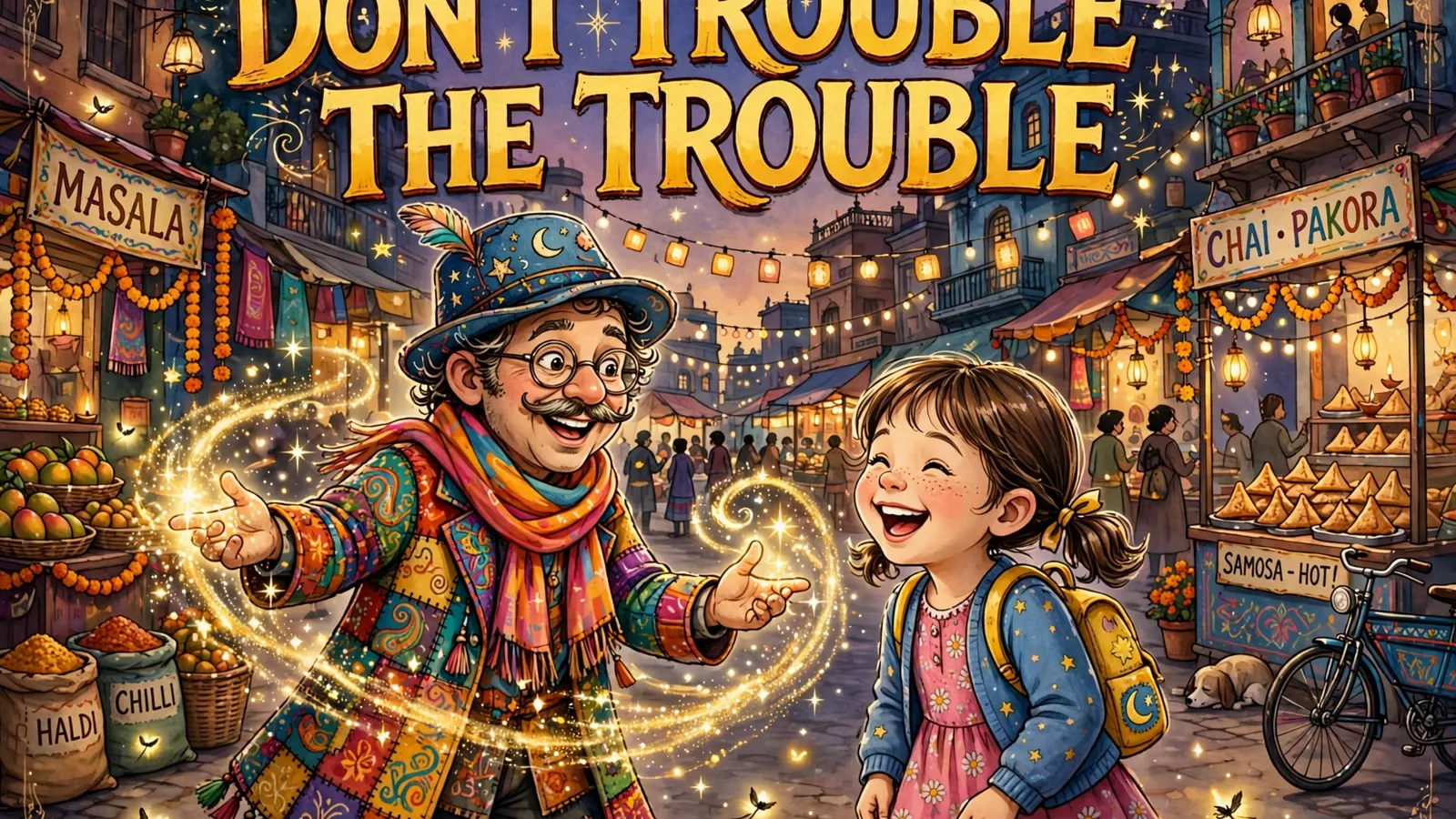
Some films are built on a single lovely idea, and Don’t Trouble the Trouble has one of the loveliest: that magic is not really about pulling rabbits out of hats, but about how love can transform a person. Fahadh Faasil, making his Telugu debut as a solo lead, plays Soori, an orphan and small-time conman who survives on clever tricks and shortcuts — until a young girl named Divya walks into his life and forces him to become the man his tricks have only ever pretended he is. Directed by Shashank Yeleti and presented by S. S. Rajamouli, the fantasy comedy-drama reached cinemas on 2 October 2026 and arrived on Netflix on 30 October 2026, where it has found a second life as a Diwali-weekend family watch. It is a film of real charm and real frustration in almost equal measure.
This review is spoiler-free on the film’s climax and on the truth about Divya. The central relationship is the film’s engine, and its revelations are best discovered while watching.
| Detail | Information |
|---|---|
| Release date | 2 October 2026 (cinemas); 30 October 2026 (Netflix, in Telugu, Malayalam, Tamil, Kannada and Hindi) |
| Director | Shashank Yeleti |
| Writers | Shashank Yeleti and Hamza Ali |
| Genre | Fantasy comedy-drama, urban adventure |
| Language | Telugu |
| Runtime | About 150 minutes (some listings give 158 minutes) |
| Lead cast | Fahadh Faasil, Ssara Palekar, Mahesh Manjrekar, Saurabh Sachdeva |
| Our rating | 5.5/10 |
Soori (Fahadh Faasil) is an orphan who has made a life out of easy money: small cons, clever tricks, shortcuts through a city that rewards the quick and punishes the slow. He is not a bad man, exactly — the film is careful about that — but he is a man who has never had to be a good one, because nobody ever stayed long enough to ask him to be. Then Divya (Ssara Palekar), a young girl with an innocence that refuses to be cynical, enters his life, and the film’s central question becomes whether a man who has spent his life performing magic can learn to believe in something real.
Yeleti and co-writer Hamza Ali keep the film grounded even as the fantasy elements grow: the magic here is deliberately small-scale — a trick that works, a moment that feels impossible, a relationship that changes both people — rather than a spectacle of effects. The first half is the film’s strongest stretch, full of situational comedy and a fresh urban-fantasy concept that feels genuinely different in an era of action spectacles. The scenes between Soori and Divya are the film’s anchor: their chemistry, by several accounts the heart of the movie, builds slowly from wariness to trust to something like family, and the film is at its best when it simply watches two people learn to care for each other.
The trouble arrives, as critics across the board noted, in the second half. The screenplay struggles to convert its concept into a consistently engaging experience: sequences stretch beyond what they need, magic set pieces repeat, and the emotional climax — which several reviewers called cheesy, drawn-out and increasingly illogical — loses much of the goodwill the first half built. The film never quite decides what it wants to be: not funny enough to work purely as a comedy, not emotional enough to function purely as a drama, not magical enough to become a compelling fantasy adventure. It remains stuck between genres, and the audience is left hoping the second half had been a little more magical.
Fahadh Faasil as Soori — Faasil is, by unanimous critical consent, the best thing about the film. His infectious energy, chaotic charm and sincerity elevate a simple script, and his handling of the Telugu dialogue — his first time carrying a Telugu film as solo lead — was widely praised as surprisingly assured. The Indian Express called him the best thing about the film, and the film’s standout sequence, a police-station episode in which Faasil finally gets material worthy of his talent, shows what the film could have been throughout. His amusement turning to panic in the scene where Soori discovers who Divya really is has been singled out as a banger of a moment. If the film around him were stronger, this would be remembered as one of his great comic performances; as it is, it is a great performance in search of a better film.
Ssara Palekar as Divya — The young actress is delightful: natural, unforced and innocent, and her chemistry with Faasil gradually becomes the emotional centre of the movie. Reviewers across the spectrum praised her presence, and the film’s warmest moments belong to the pair together.
Mahesh Manjrekar, Saurabh Sachdeva and the ensemble — The supporting cast is solid without ever stealing focus, which is the right balance for a film whose centre is a two-hander. The film also carries a curiosity in its voice casting: Mohanlal, Kamal Haasan and Balakrishna lent their voices to the Malayalam, Tamil and Telugu versions respectively, a mark of the faith the industry placed in the project.
Yeleti deserves credit for attempting something different: a gentle, magic-inflected urban fable in a marketplace dominated by action. The film’s first half shows real craft — the city feels lived-in, the tricks feel tactile, the fantasy feels earned rather than imposed. But the direction cannot solve the screenplay’s second-half problems: the pacing sags, the magic sequences repeat, and the climax’s emotional payoff is undercut by logic that stops holding together. The film’s runtime, about two and a half hours, is felt most in that second half, where several sequences are stretched far beyond what the story requires.
The music supports the film’s gentler register — warm, unobtrusive, and at its best in the Soori–Divya scenes — without producing a standout number that lives beyond the film. The sound design keeps the city present and the magic quiet, which suits a film whose fantasy is meant to feel intimate rather than epic.
What we loved:
What could be better:
Don’t Trouble the Trouble opened in cinemas on 2 October 2026 to mixed reviews — critics’ scores ranged from 2 to 3 out of 5, with Koimoi awarding 3 stars, Moneycontrol 2.5 and NewsBytes 2 — and its theatrical run did not set the box office alight. Its Netflix arrival on 30 October 2026, in five languages, is the film’s real opportunity: as a family-friendly, well-intentioned fantasy aimed largely at children and at Faasil’s considerable fan base, it plays considerably better as a relaxed at-home watch than as a theatrical event. No verified Netflix viewing figures were available at writing time, and this review reports none rather than guessing.
Yes, with adjusted expectations — and especially if you like Fahadh Faasil. Don’t Trouble the Trouble is a charming fantasy idea and two strong performances in search of a tighter second half. Watch it for Faasil and Palekar, forgive the sagging climax, and you will find a sweet, well-intentioned film underneath the mess.
Our rating: 5.5/10 — Faasil magical, the film not quite: a lovely idea and two delightful performances held back by a stretched, indecisive second half.
What is Don’t Trouble the Trouble about?
It follows Soori (Fahadh Faasil), a small-time conman and orphan who lives by tricks and shortcuts, whose life changes when a young girl named Divya (Ssara Palekar) enters it and forces him to confront what real magic — and real love — means.
Who directed Don’t Trouble the Trouble?
Shashank Yeleti, from a script he co-wrote with Hamza Ali. The film is presented by S. S. Rajamouli.
Who stars in Don’t Trouble the Trouble?
Fahadh Faasil as Soori and Ssara Palekar as Divya, with Mahesh Manjrekar and Saurabh Sachdeva in support.
When was Don’t Trouble the Trouble released?
It opened in cinemas on 2 October 2026 and arrived on Netflix on 30 October 2026 in Telugu, Malayalam, Tamil, Kannada and Hindi.
How long is Don’t Trouble the Trouble?
About 150 minutes, with some listings giving 158 minutes.
Is Don’t Trouble the Trouble Fahadh Faasil’s first Telugu film?
It is his first Telugu film as a solo lead.
Is Don’t Trouble the Trouble suitable for children?
Yes — reviewers described it as a sweet, breezy, family-friendly watch aimed largely at children, though its long runtime may test younger viewers.